Book by Fred Ebb & Bob Fosse | Music by John Kander | Lyrics by Fred Ebb
Based on the play Chicago by Maurine Dallas Watkins
German translation by Erika Gesell and Helmut Baumann
Performance rights held by Felix Bloch Erben GmbH & Co. KG, Berlin
CHICAGO is presented by special arrangement with Samuel French, Inc., New York
After more than 50 years, Chicago remains an iconic Broadway musical, blending fame, ambition, and the glitter of showbiz with unforgettable songs like “All That Jazz” and electrifying dance. Set in the 1920s Chicago, Roxie Hart kills her lover and lands in jail, meeting the ambitious Velma Kelly and the cunning Matron Morton. With lawyer Billy Flynn and journalist Mary Sunshine, Roxie is transformed into a media sensation – the “Jazz Murderess” – while lies and showmanship secure her triumph. Director Lotte de Beer frames Chicago as Brechtian storytelling, highlighting our fascination with evil and exposing how the media spins scandal into heroism. A darkly entertaining tale of ambition, deception, and unrelenting spotlight.
Leading Team
Stage direction Lotte de Beer
Choreography Arielle Smith
Set design Christof Hetzer
Costume design Jorine van Beek
Lighting design Alex Brok
Choir director Roger Díaz-Cajamarca
Stunt coordinator Ran Arthur Braun
Dramaturgy Lisa Kerlin
Cast on 24. October 2026
Further dates and cast
Chicago, in the 1920s: Nightclub singer Roxie Hart dreams of a big career on stage, of a life in the spotlight. When she shoots her lover in the heat of the moment, that dream seems to be over for good – at first. But in prison, Roxie discovers a world where a crime can become a ticket to fame.
There she meets Velma Kelly, a celebrated vaudeville star who is also on trial for murder. Velma already knows the rules of the game: whoever has the press on their side stays in the spotlight—and whoever stays in the spotlight has the upper hand in court. With the help of prison warden Mama Morton and star attorney Billy Flynn, trials become theatrical productions, life stories become headlines, and defendants become public figures.
Roxie learns quickly. She reinvents herself, plays with the reporters’ expectations, and discovers just how much power lies in a well-told story. But attention is a scarce commodity. A bitter rivalry breaks out between Roxie and Velma for front-page headlines and the public’s sympathy.
Eventually, the courtroom becomes a stage and the stage becomes a courtroom: in a city that craves ever-new sensations, the lines between truth and performance, crime and entertainment, begin to blur.
Photos and Videos
For all those who use a screen reader, a description of the visual aspects of the performance (set design, costumes...) follows here instead of the photo gallery.
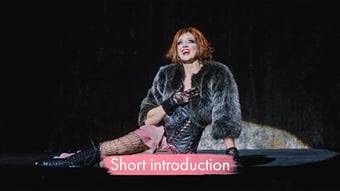
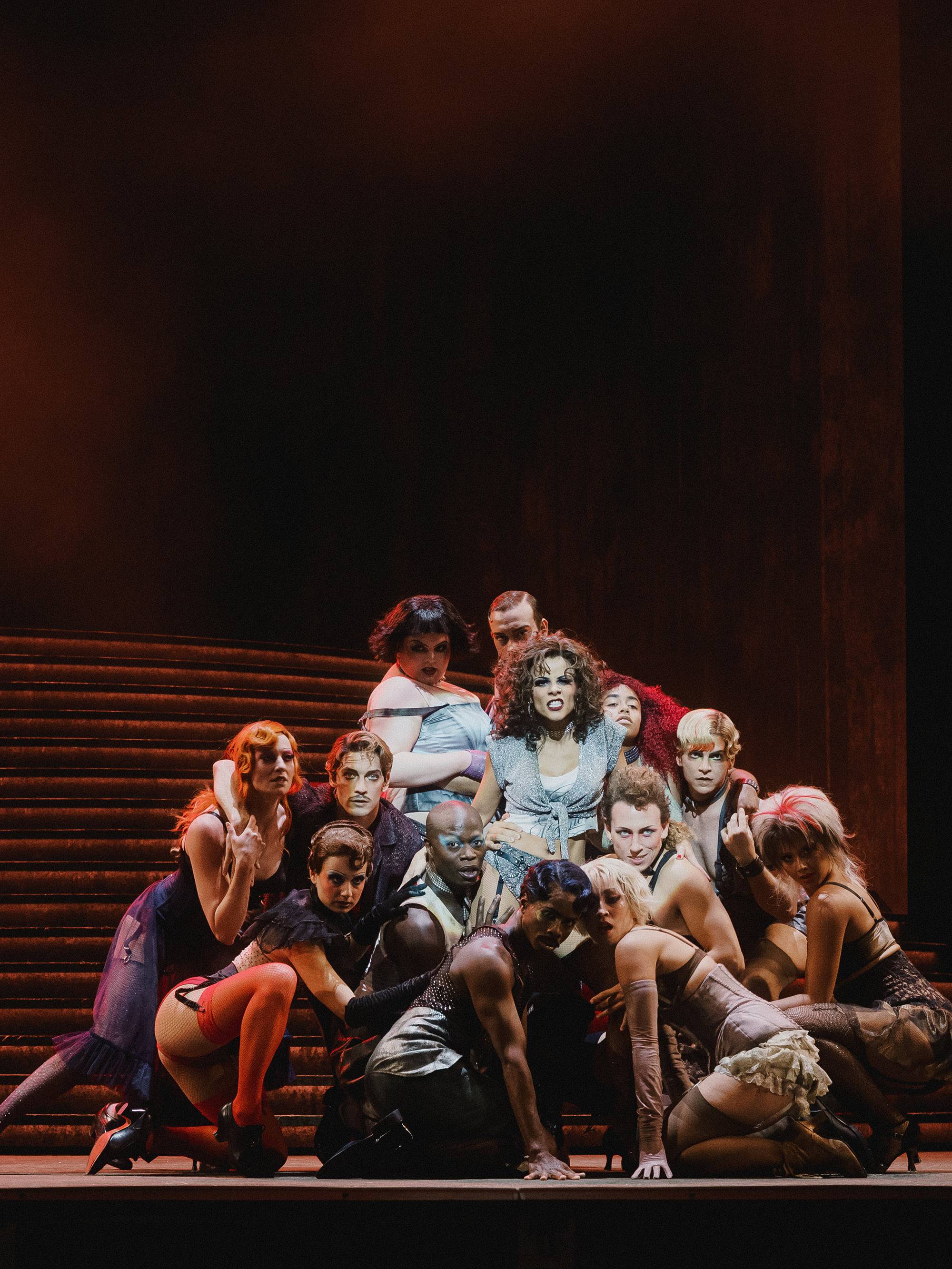
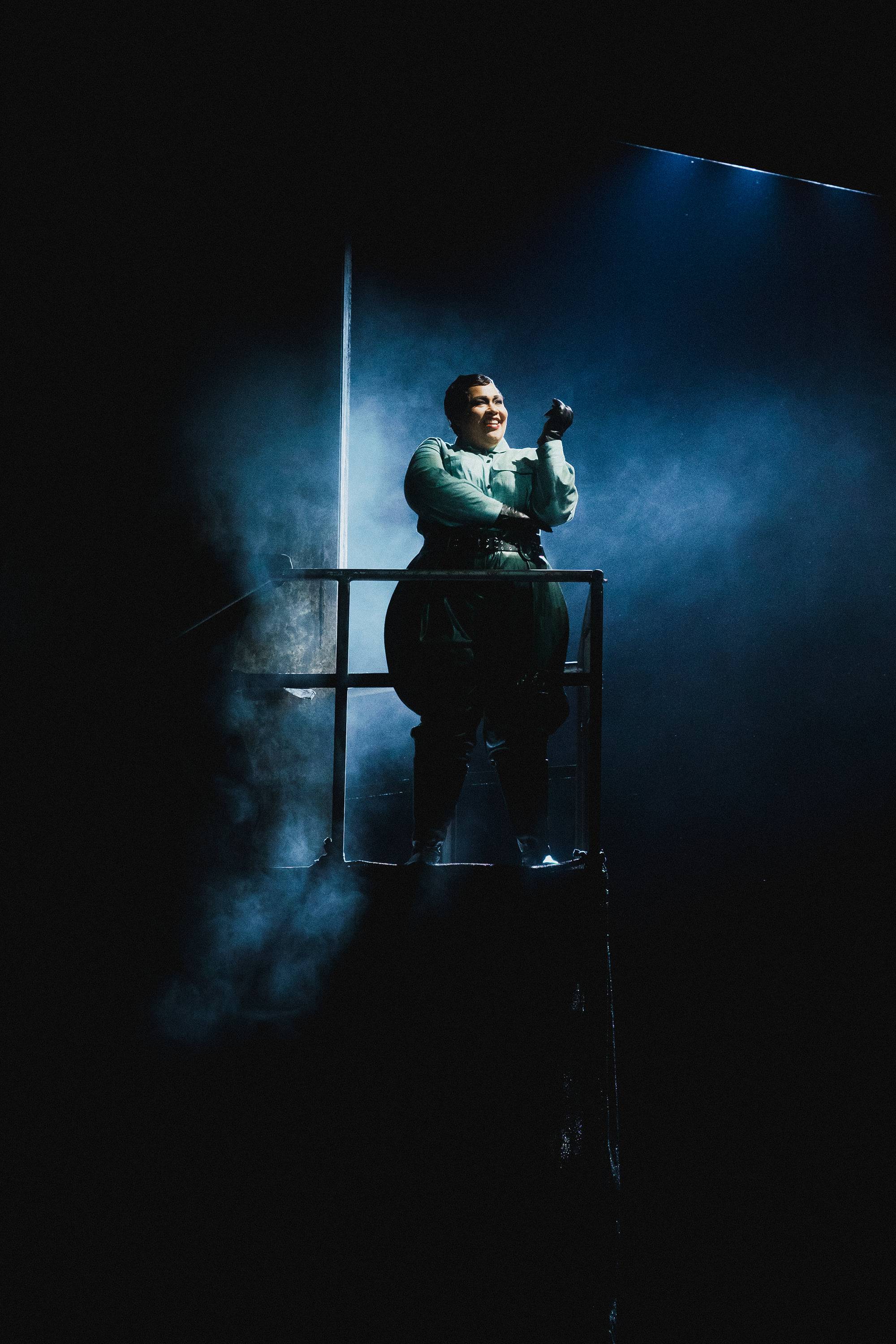
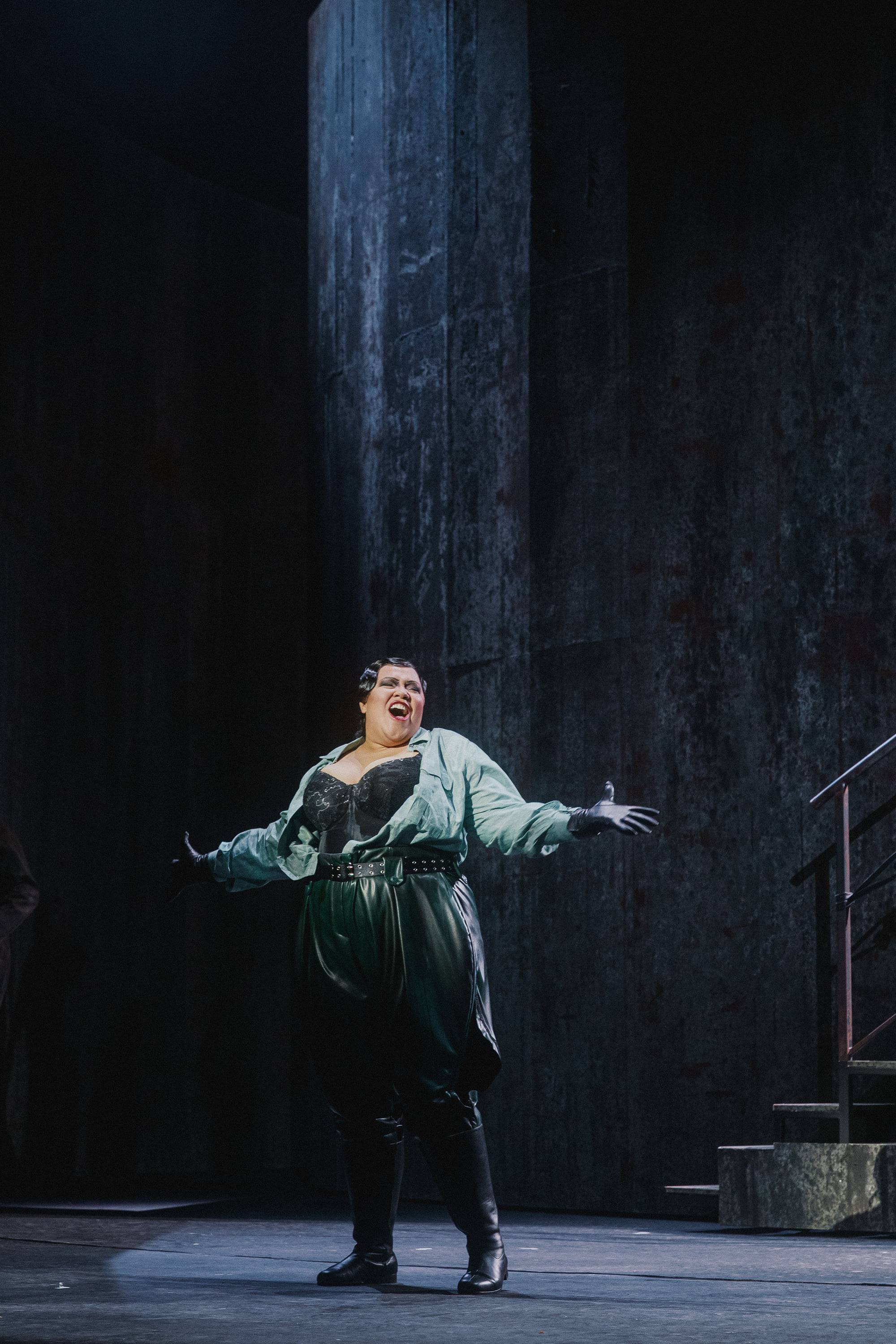
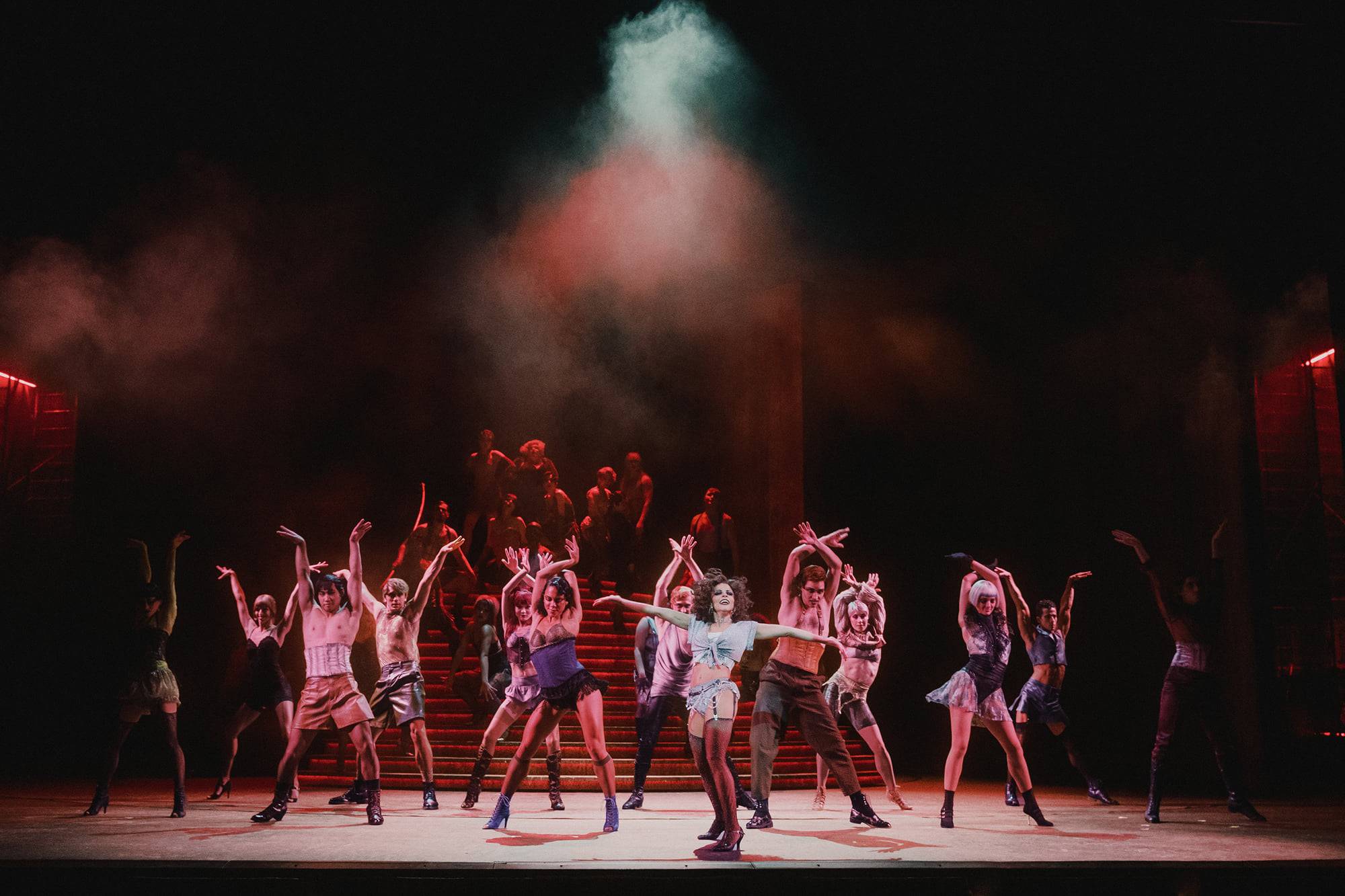
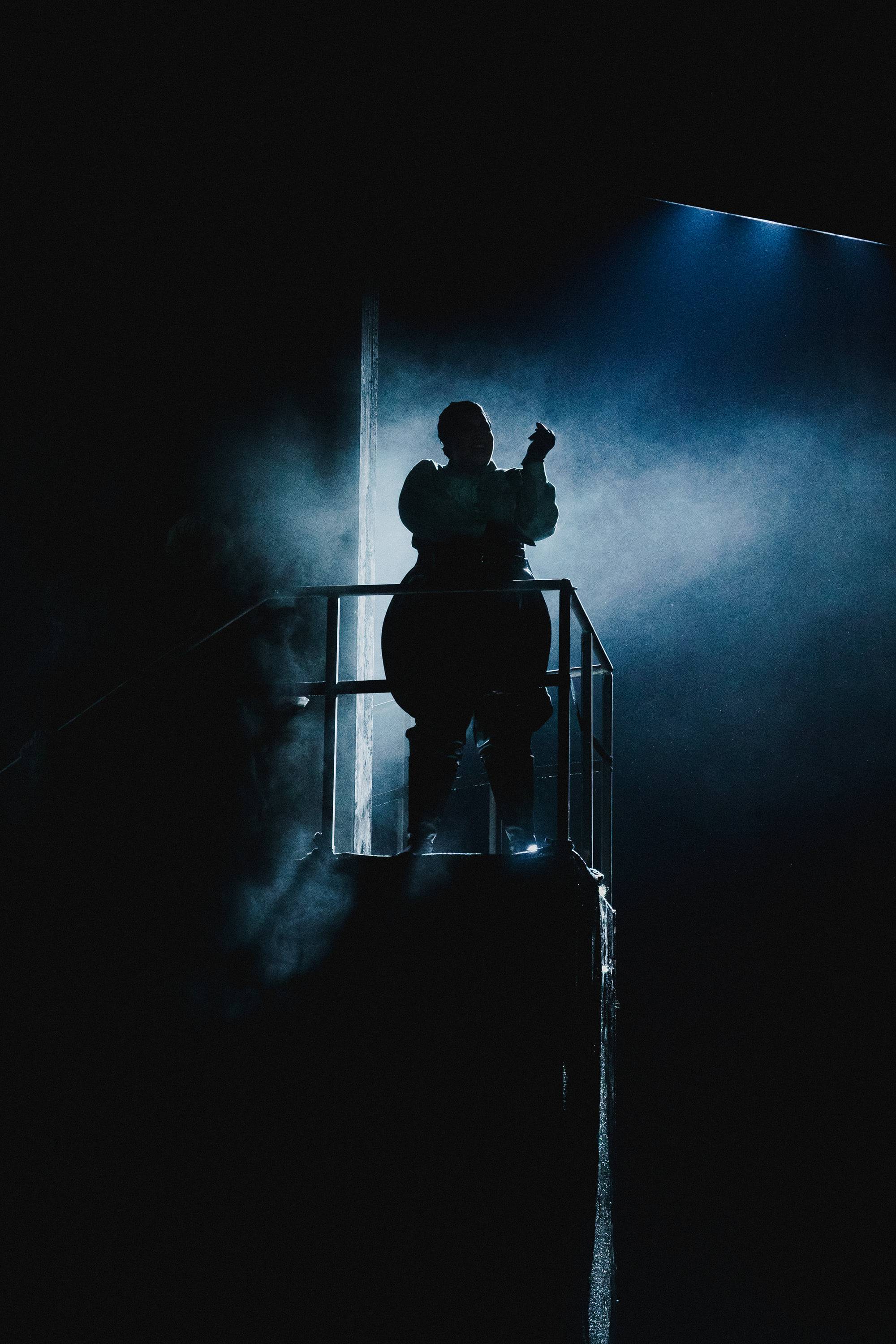
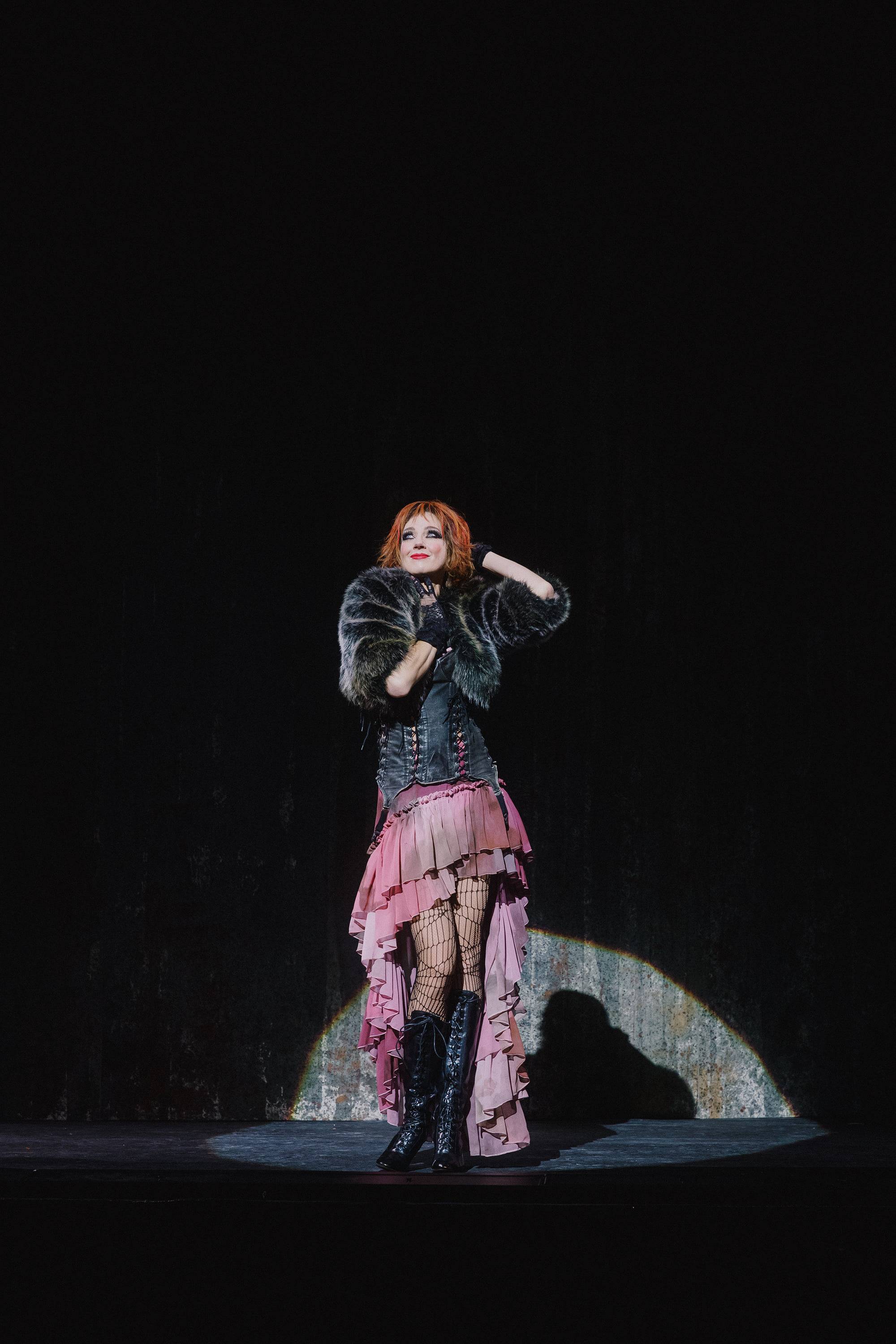
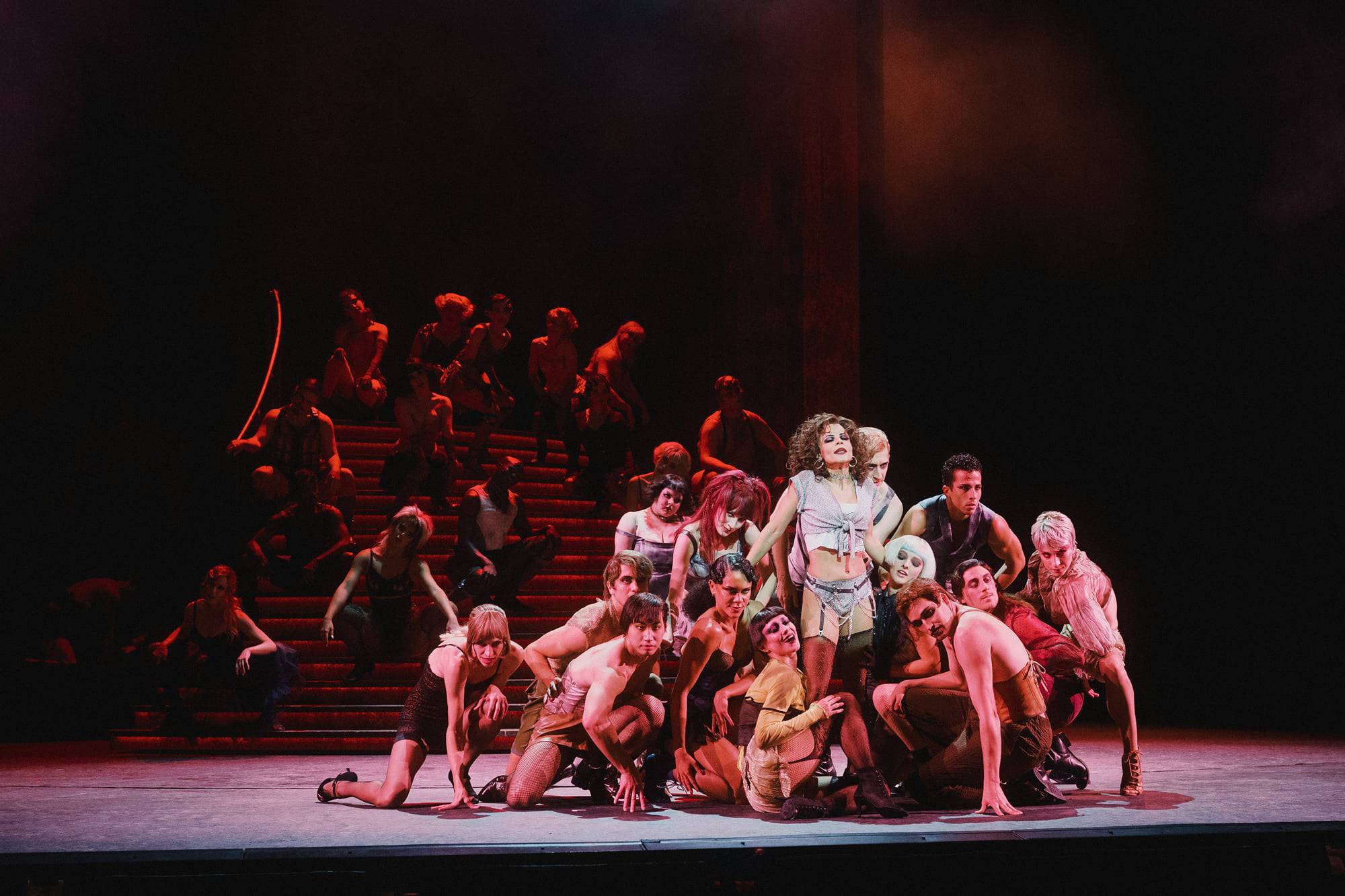
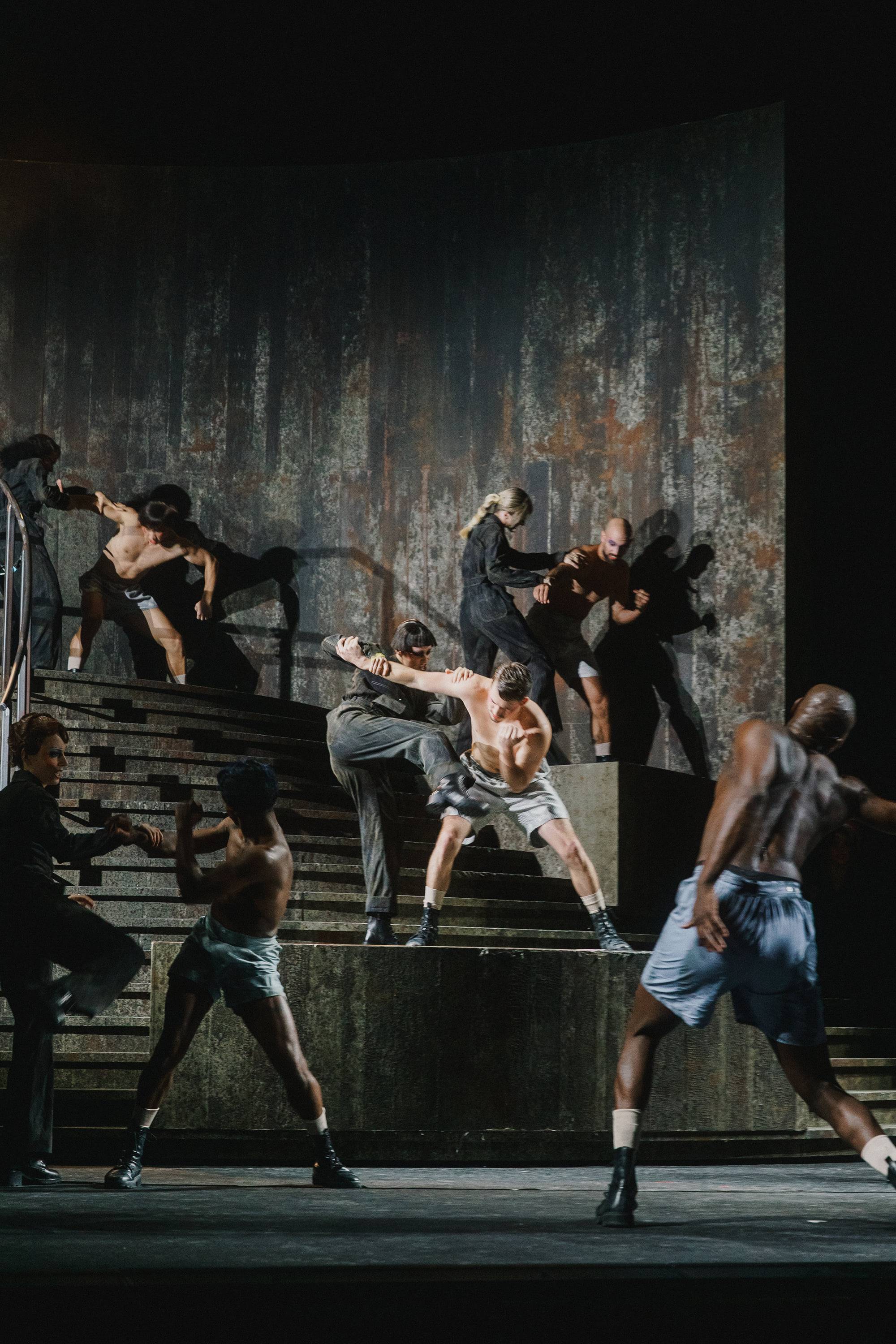
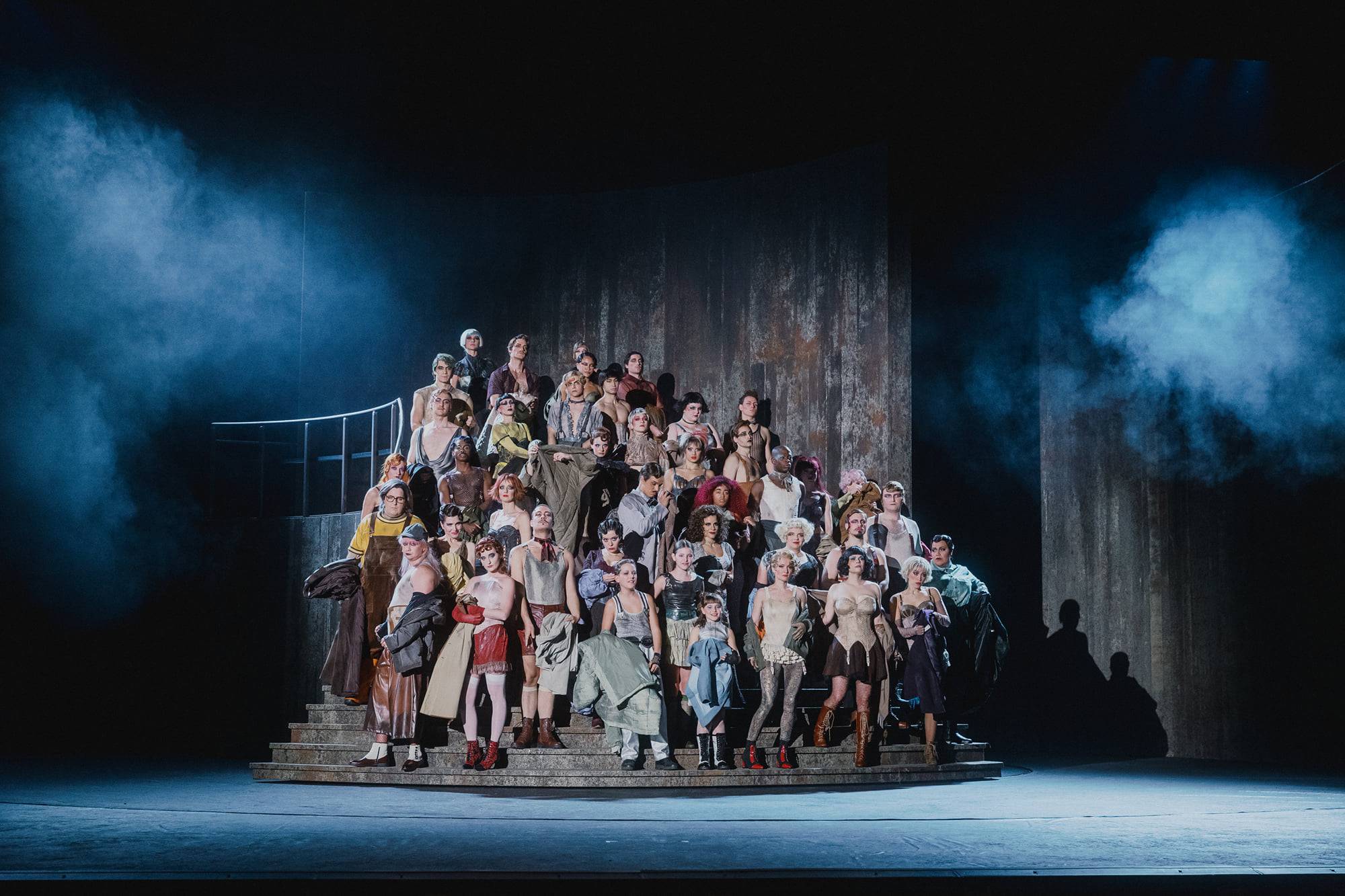
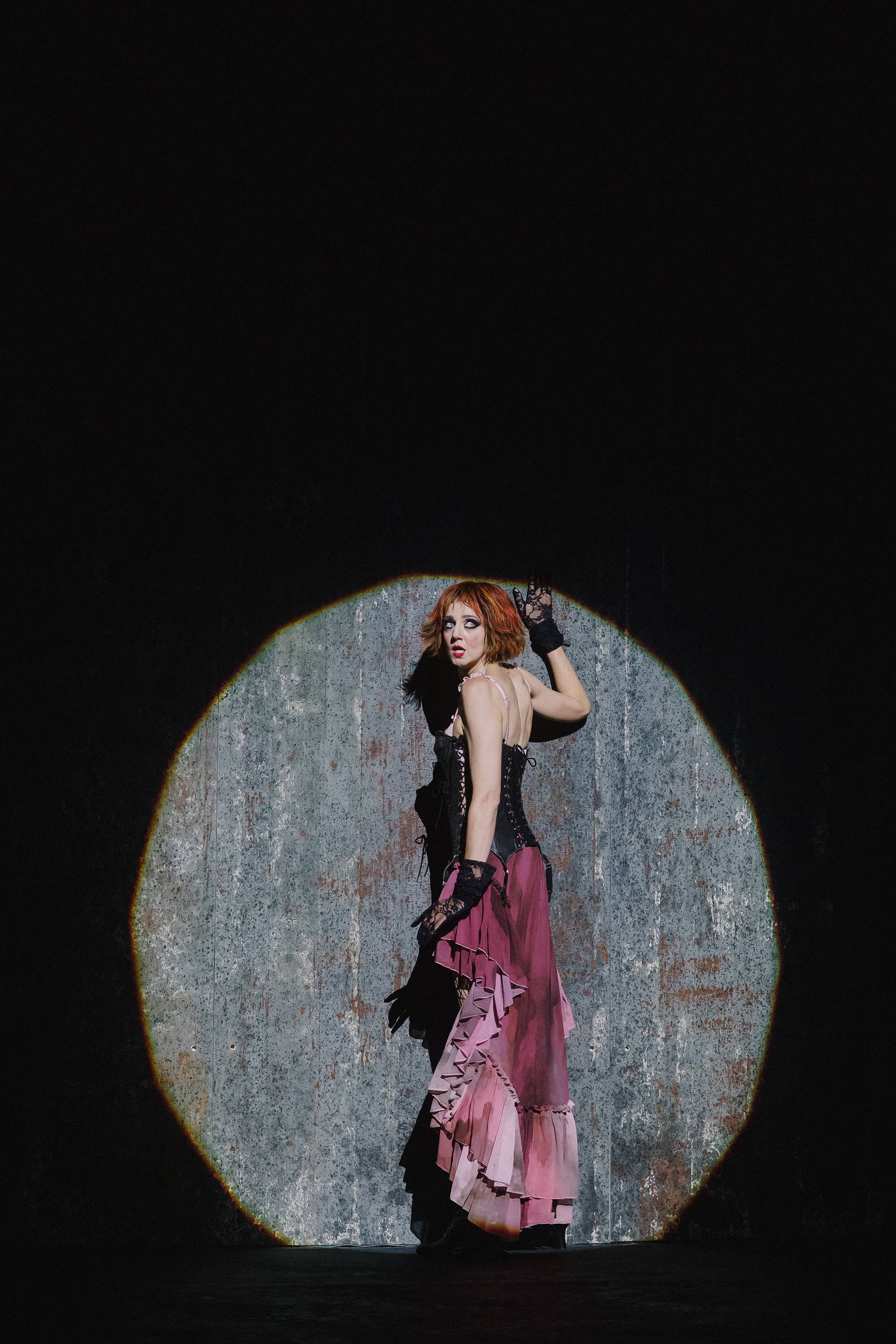
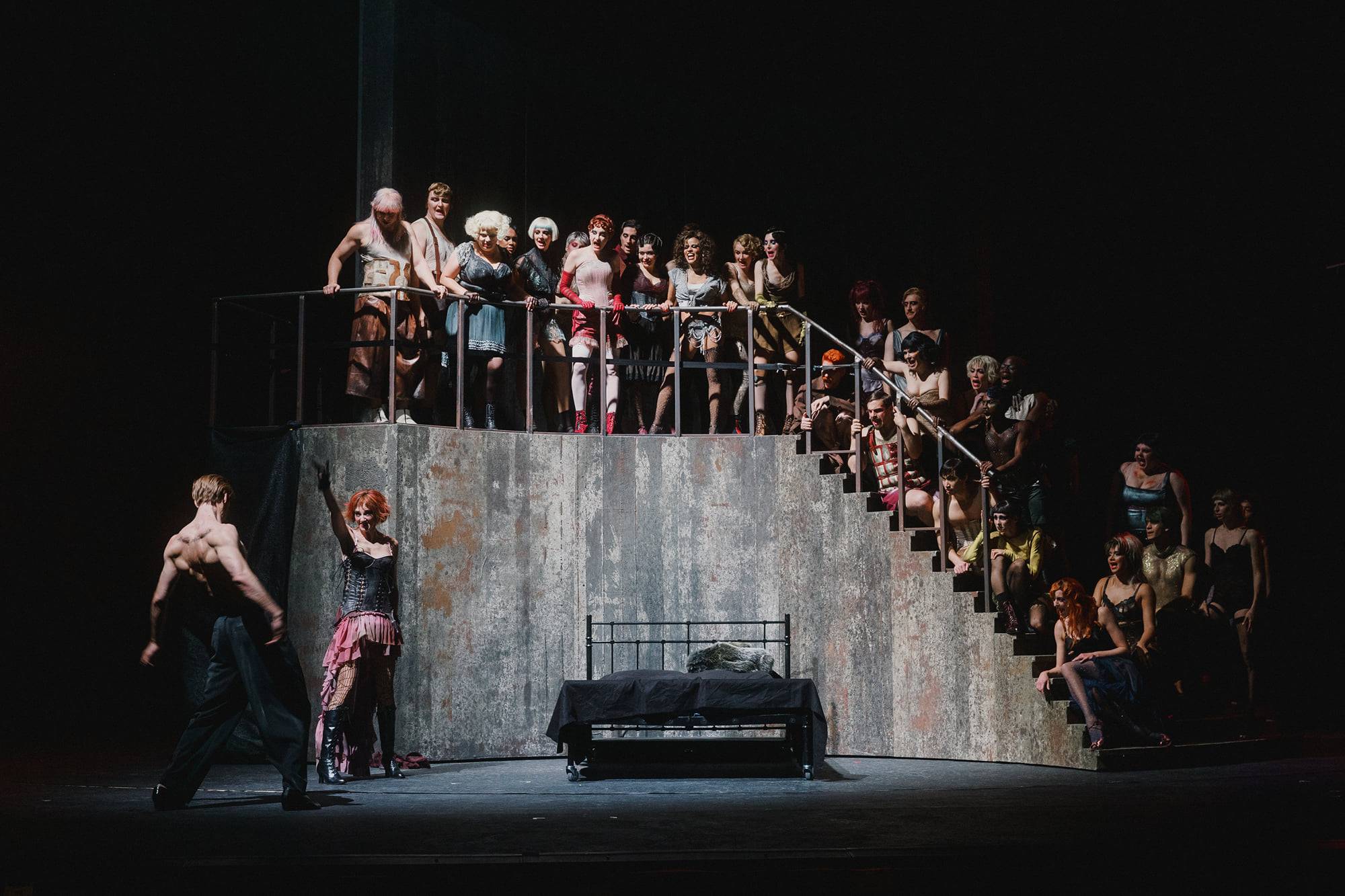
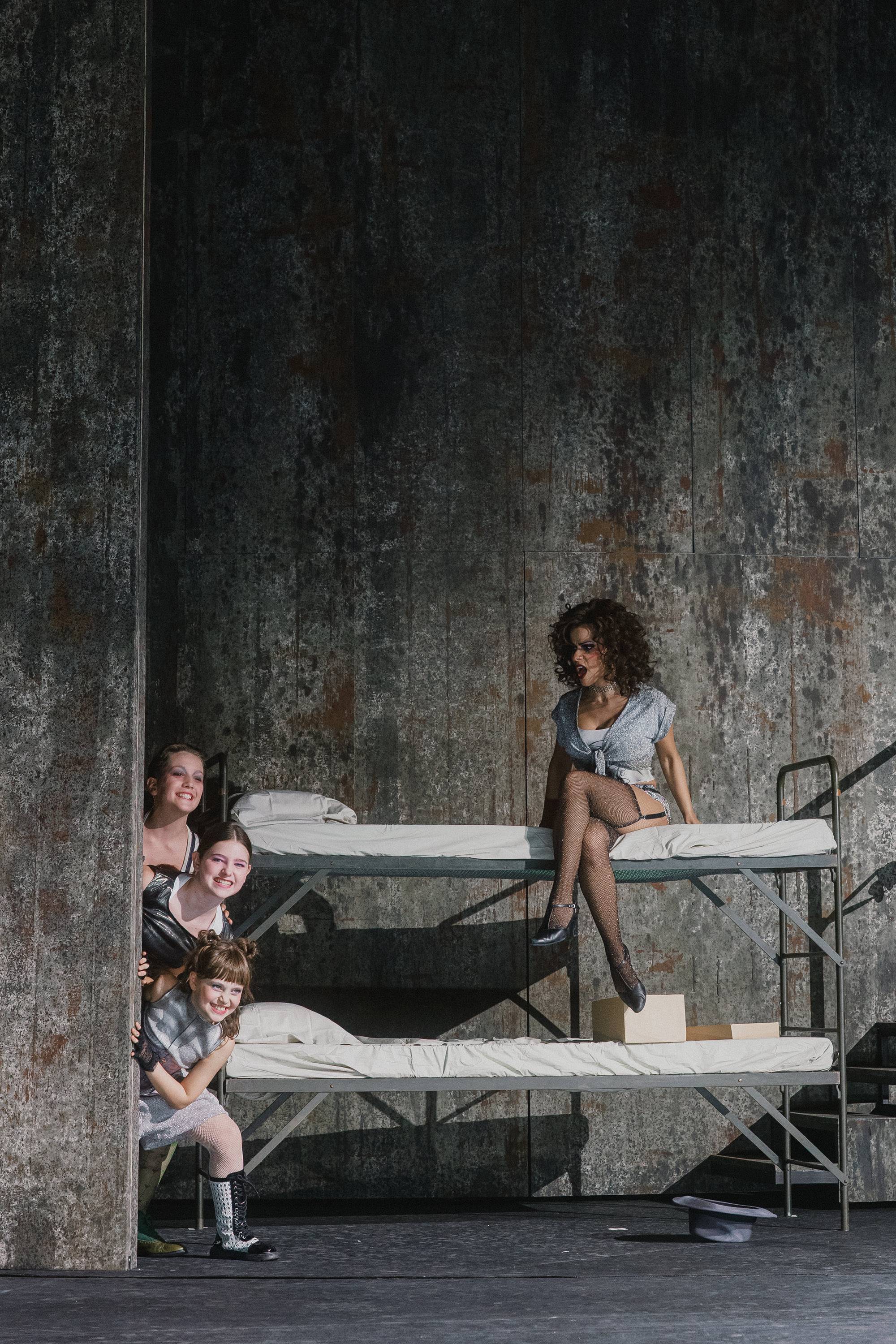
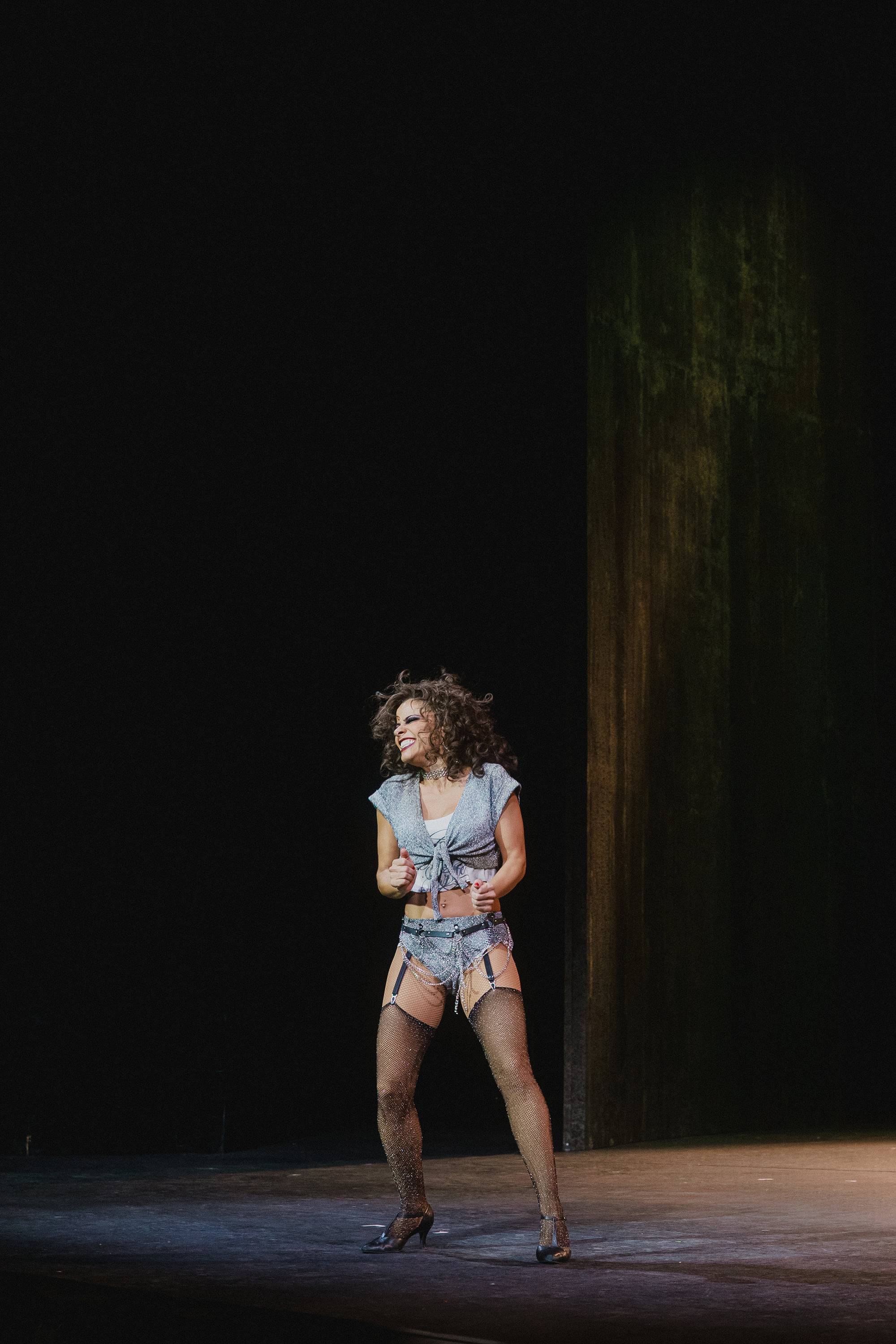
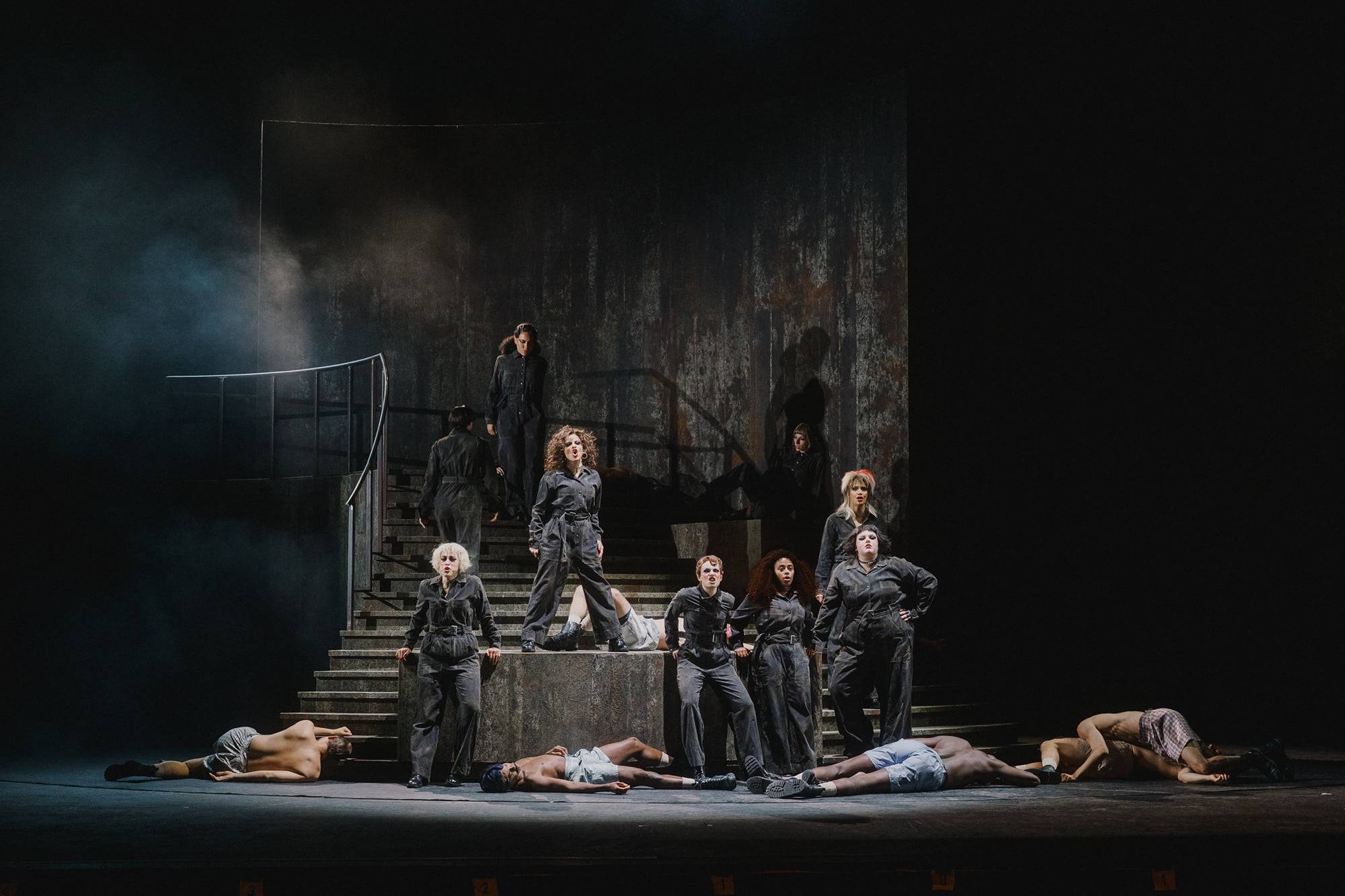
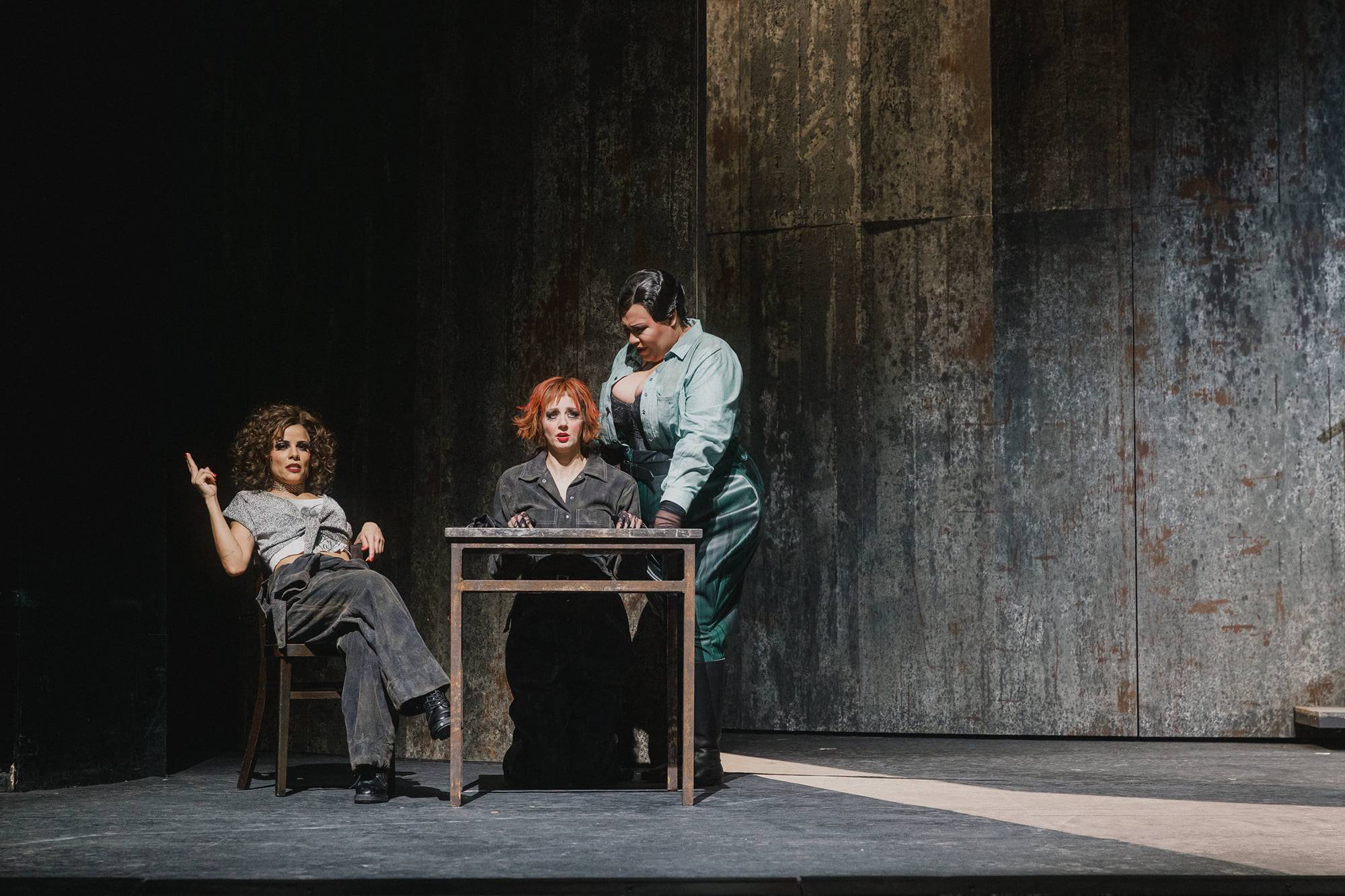
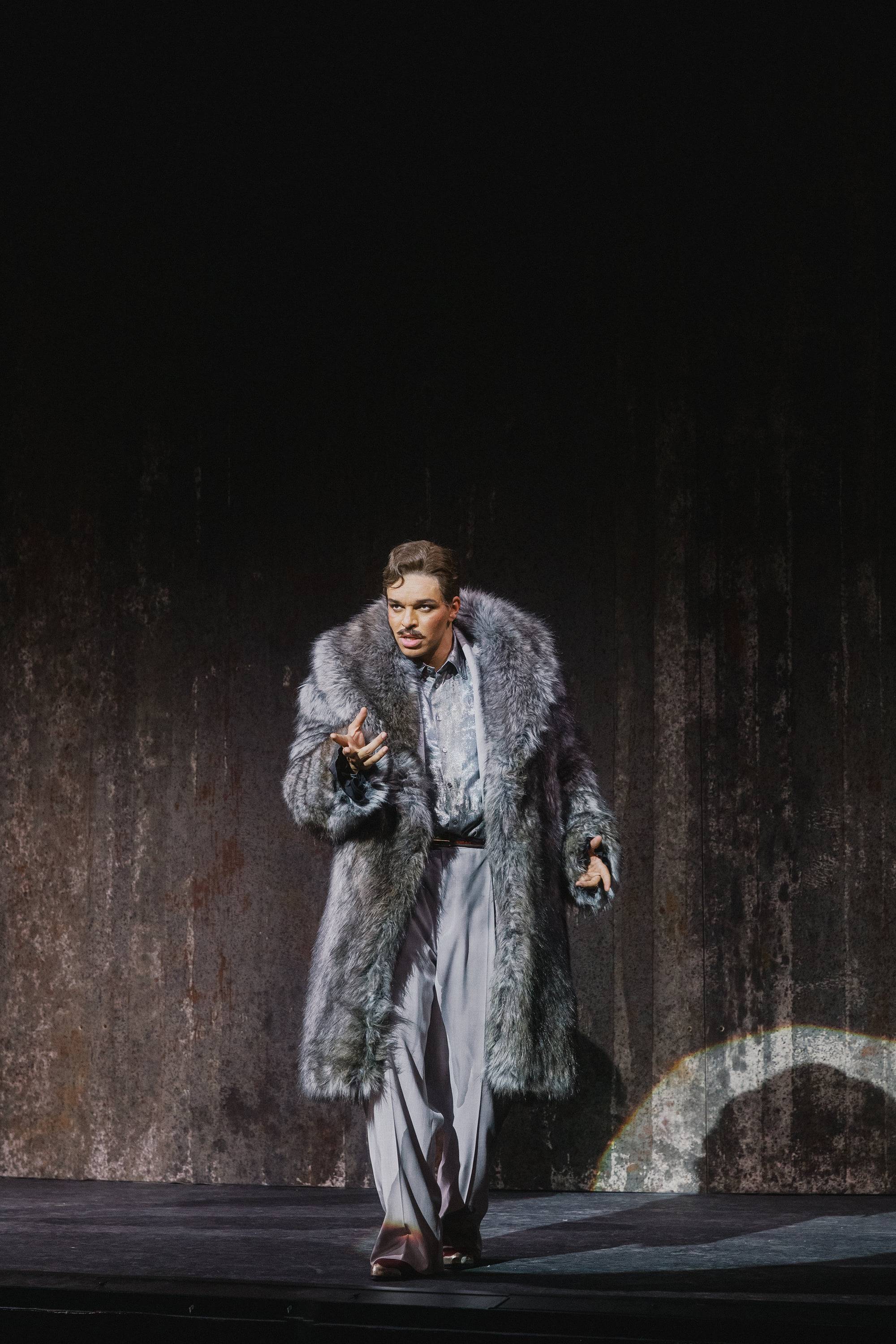
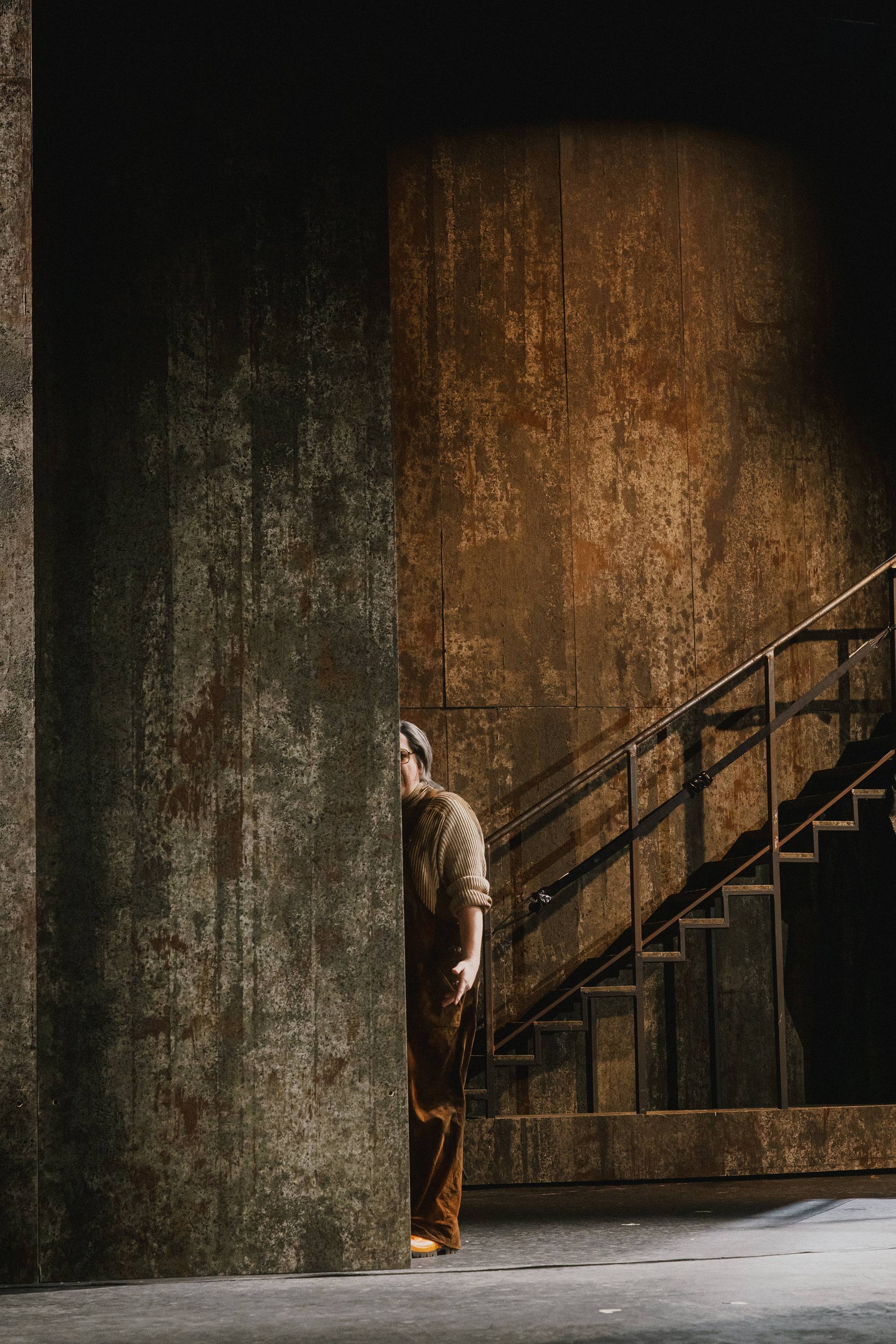
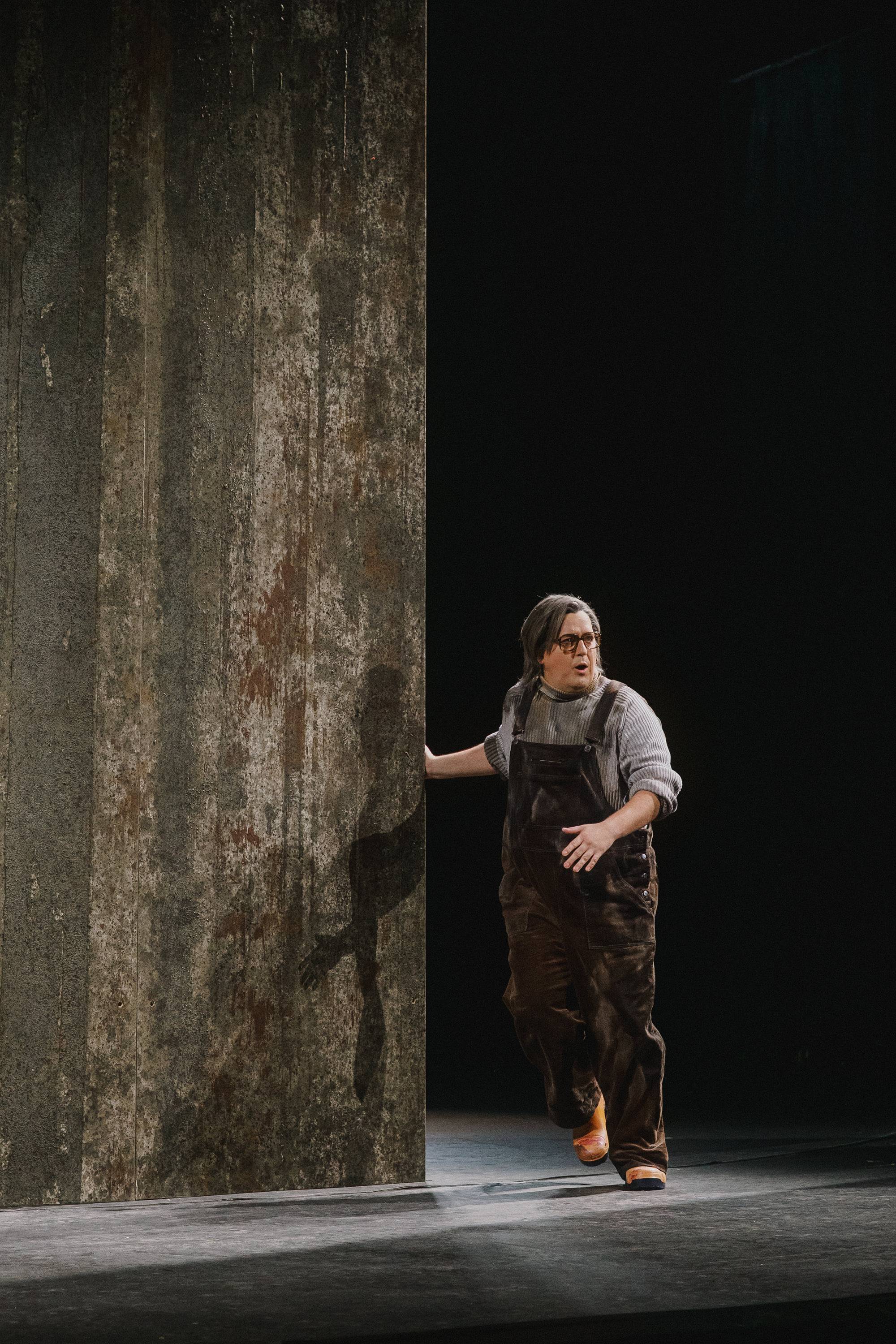
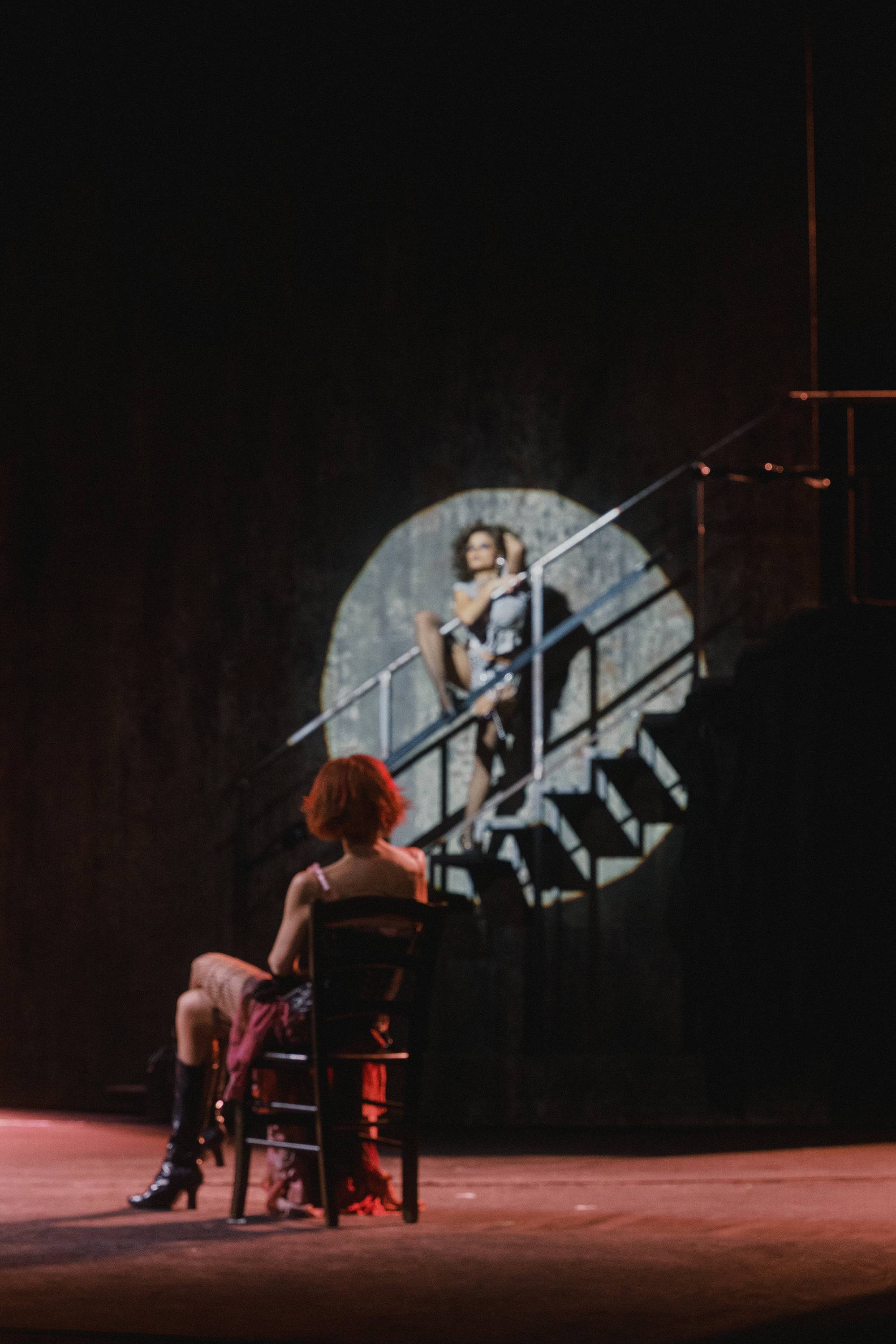
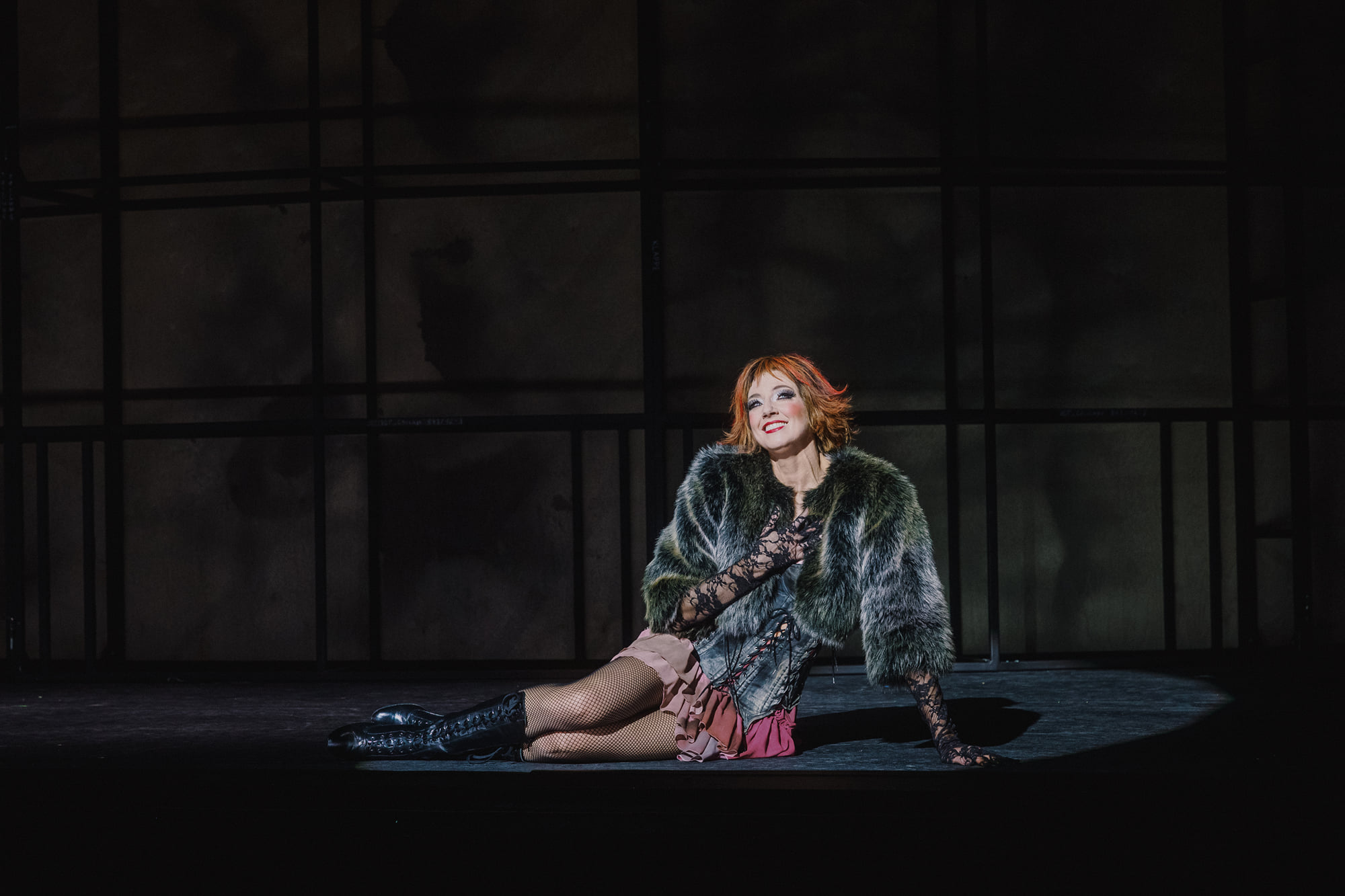
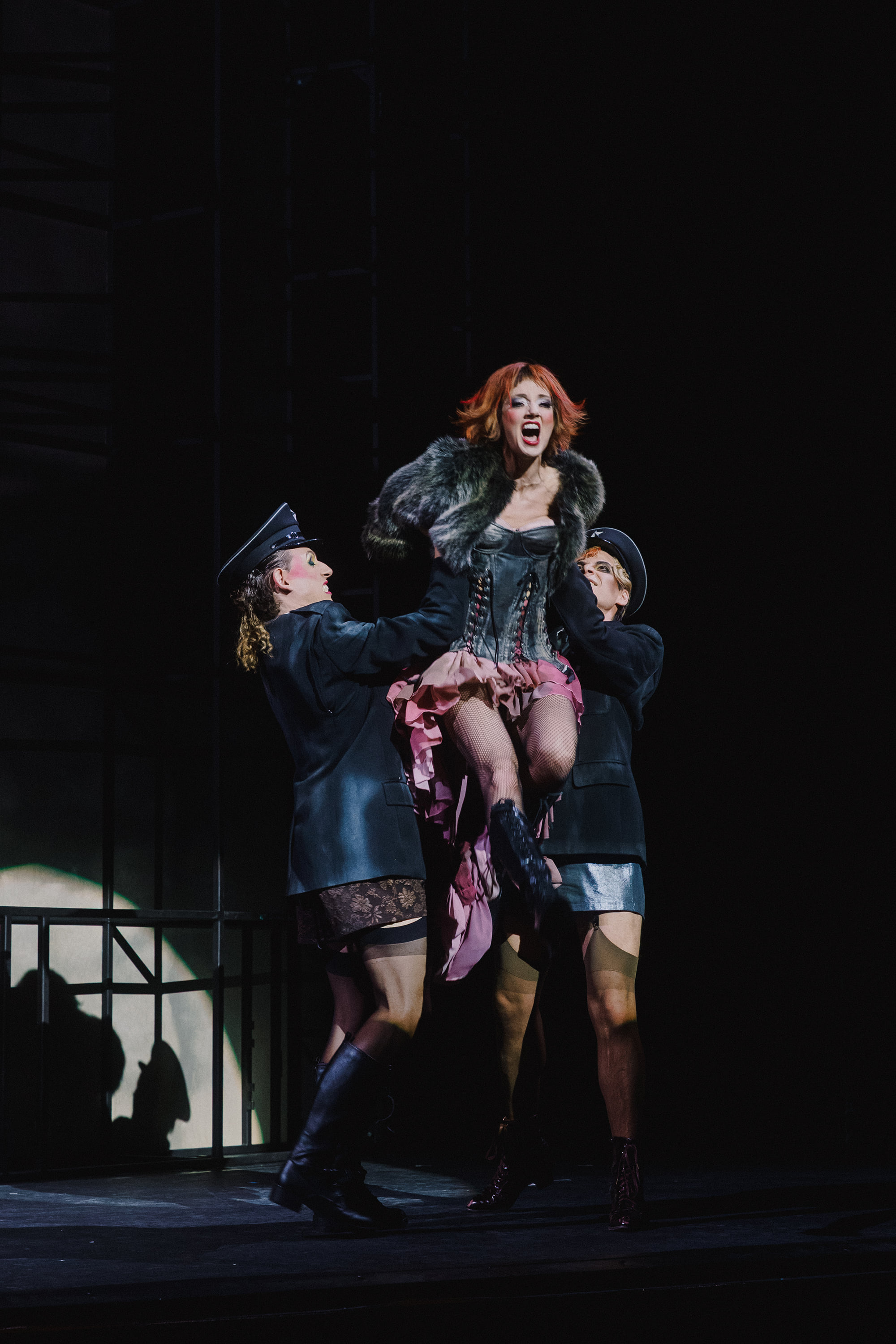
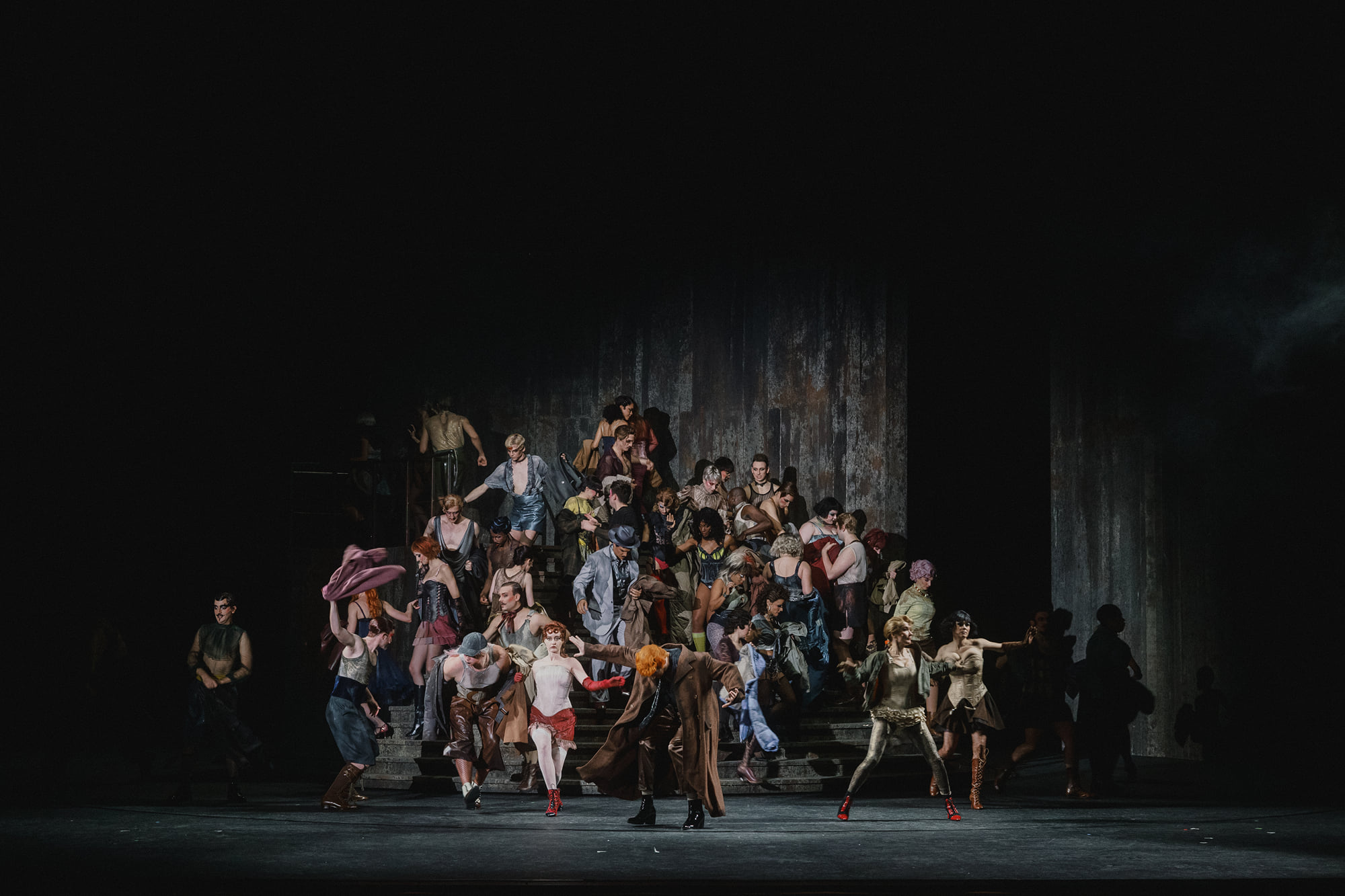
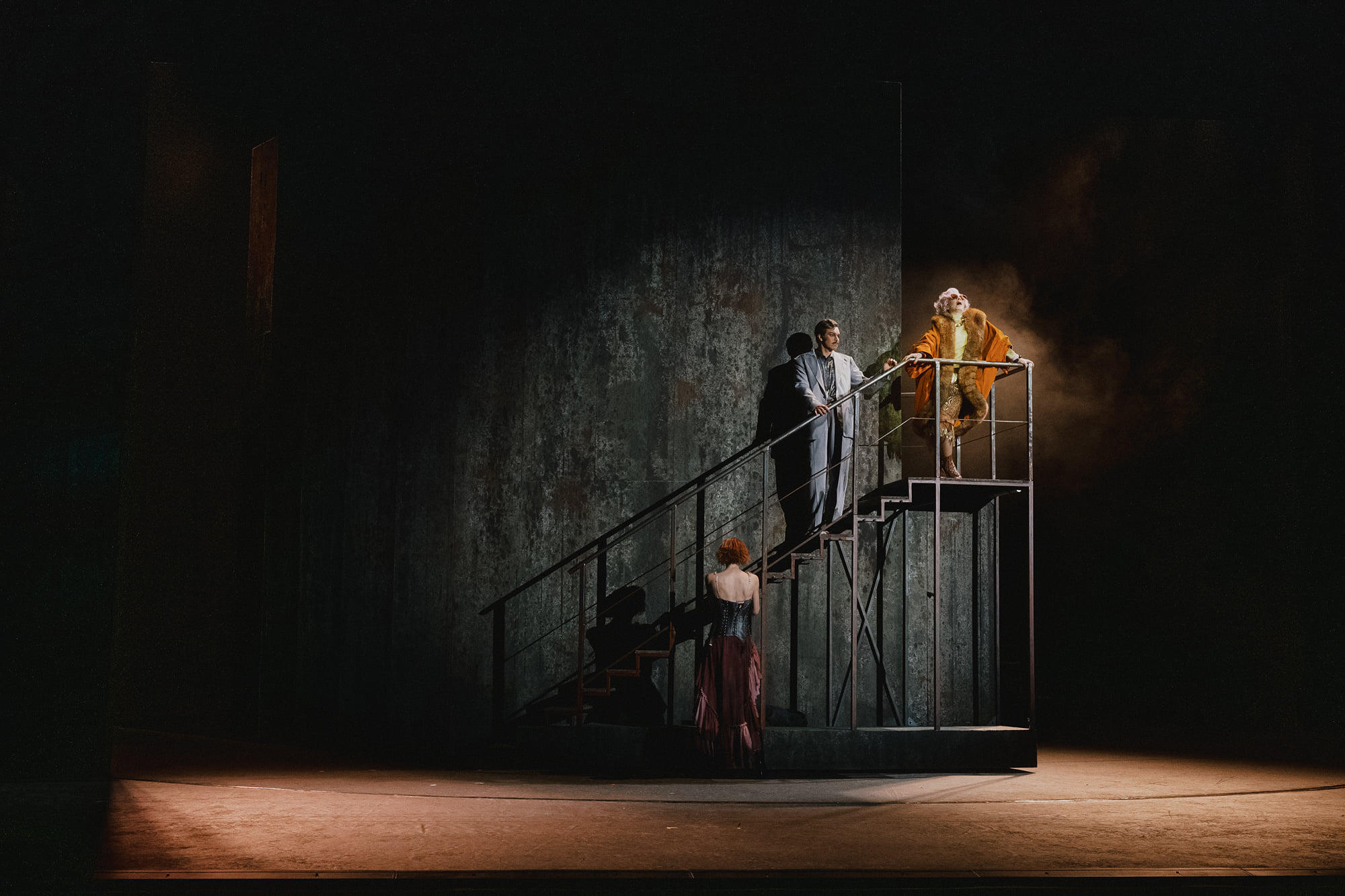
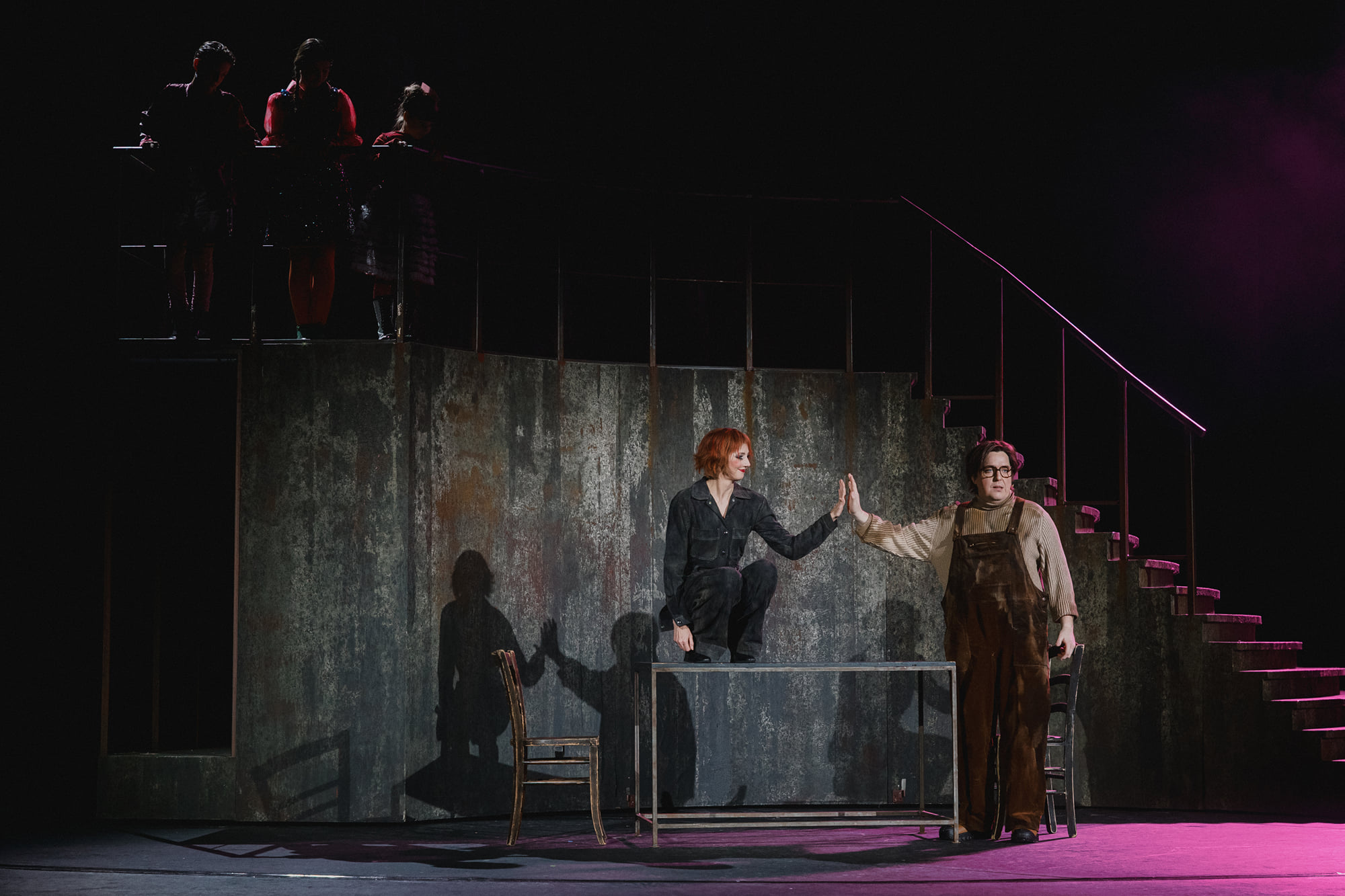
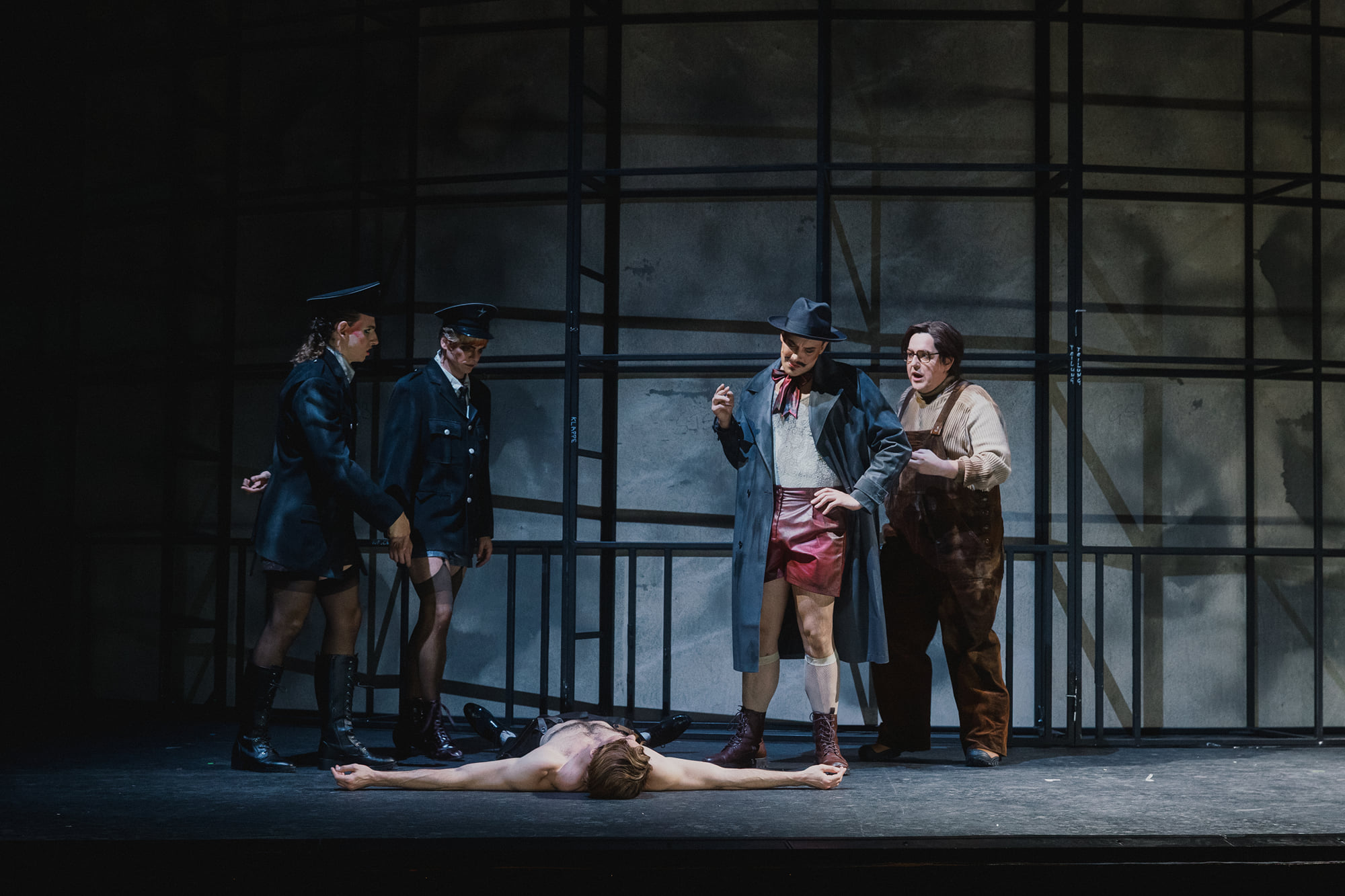
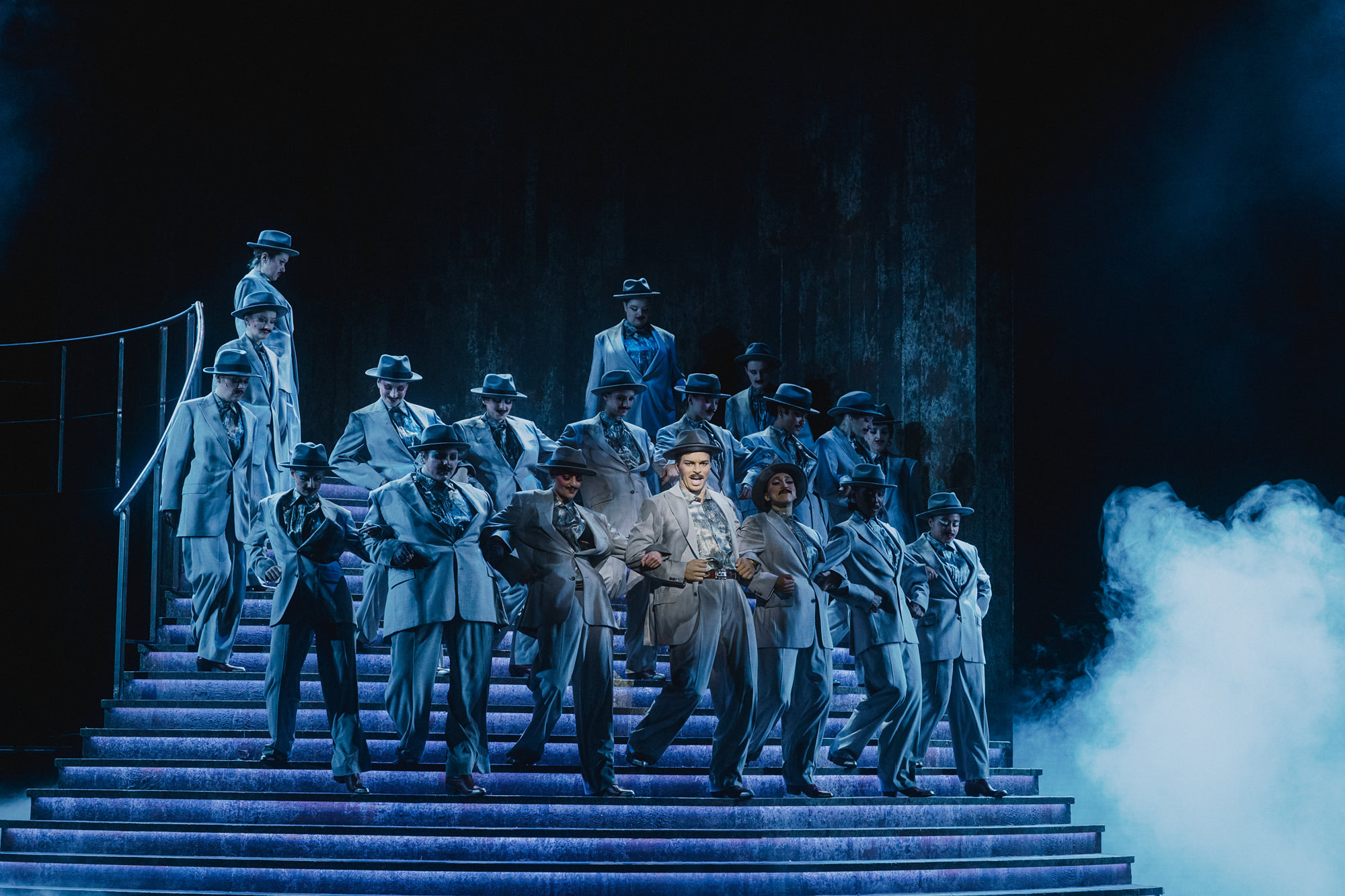
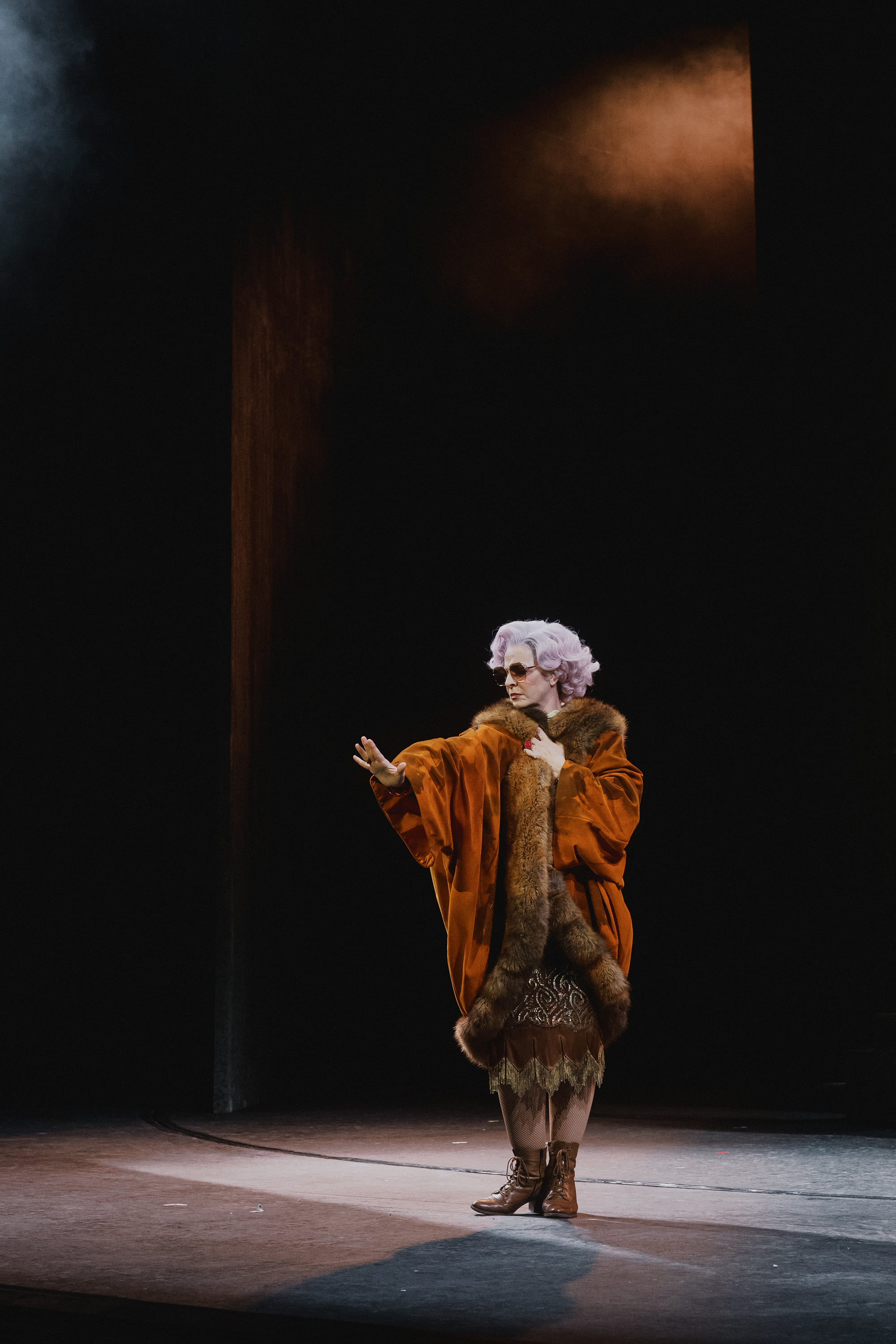
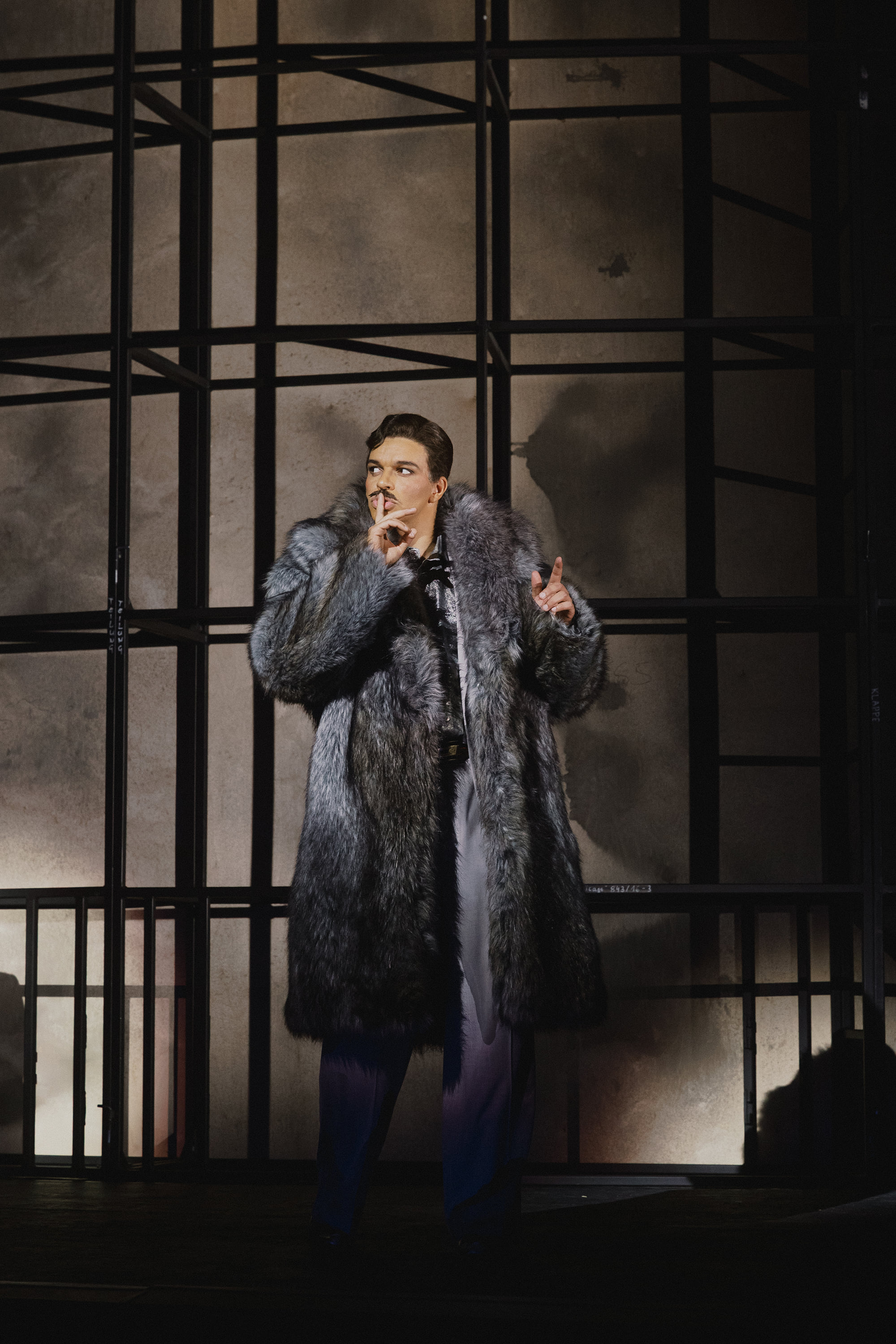
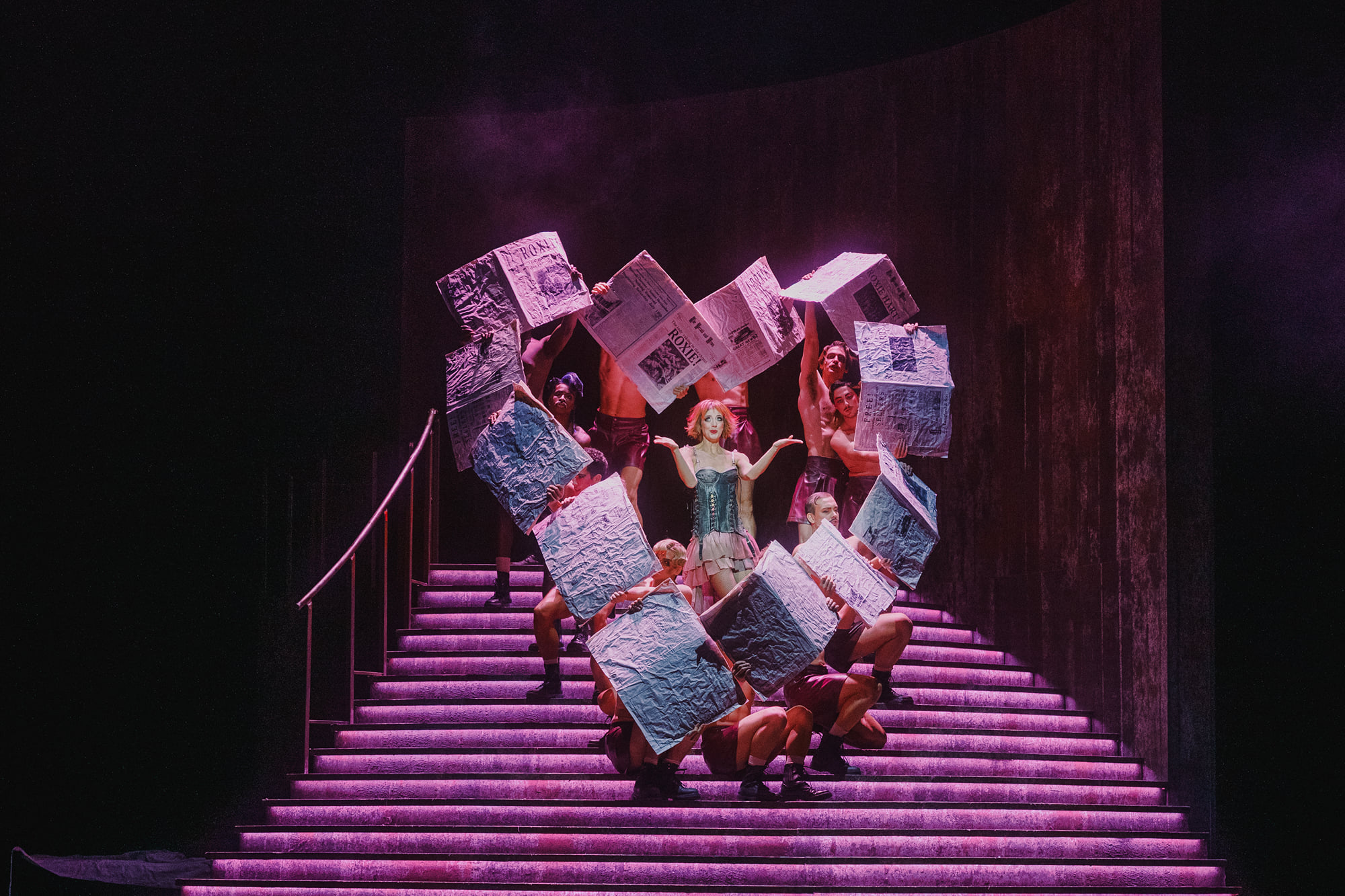
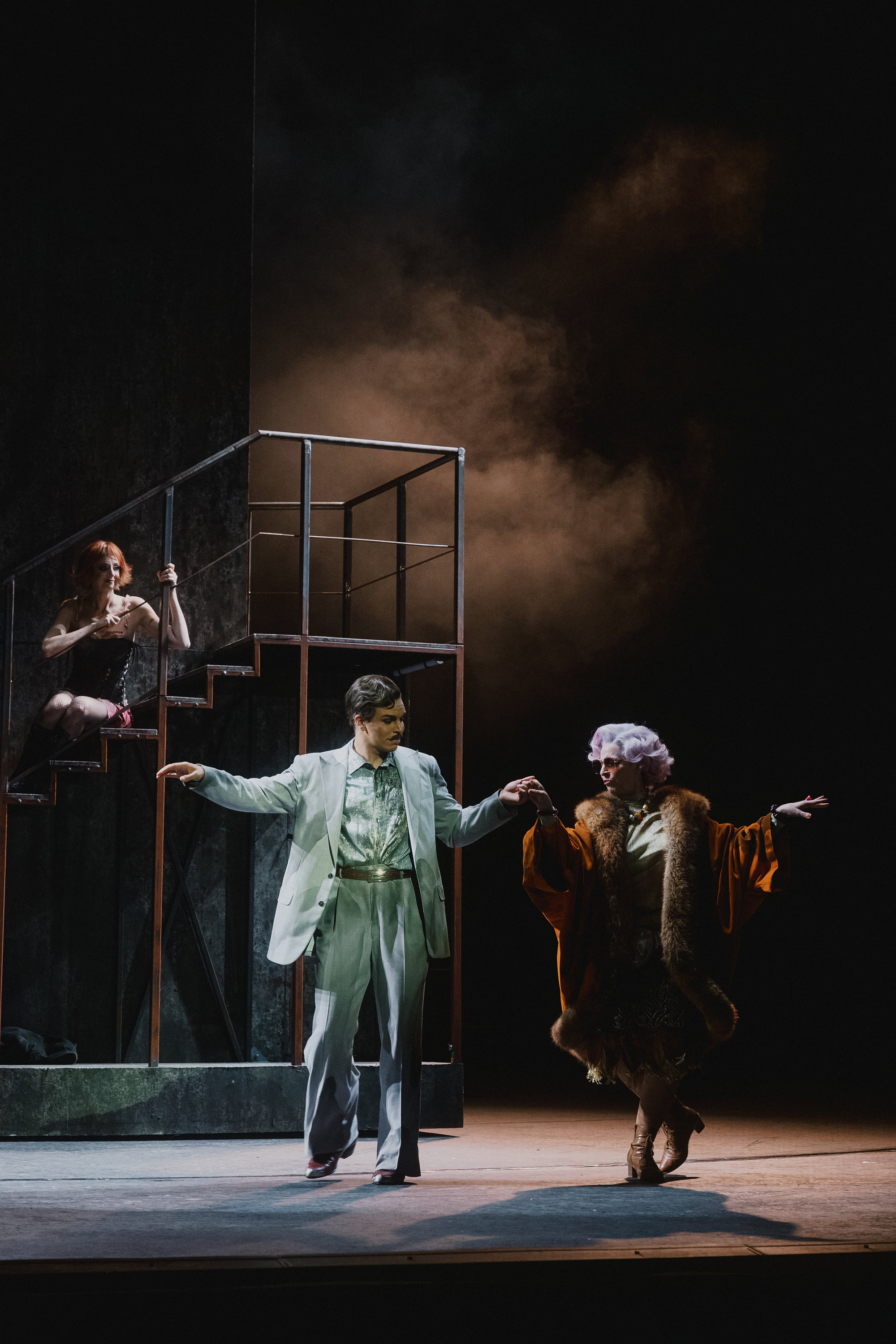
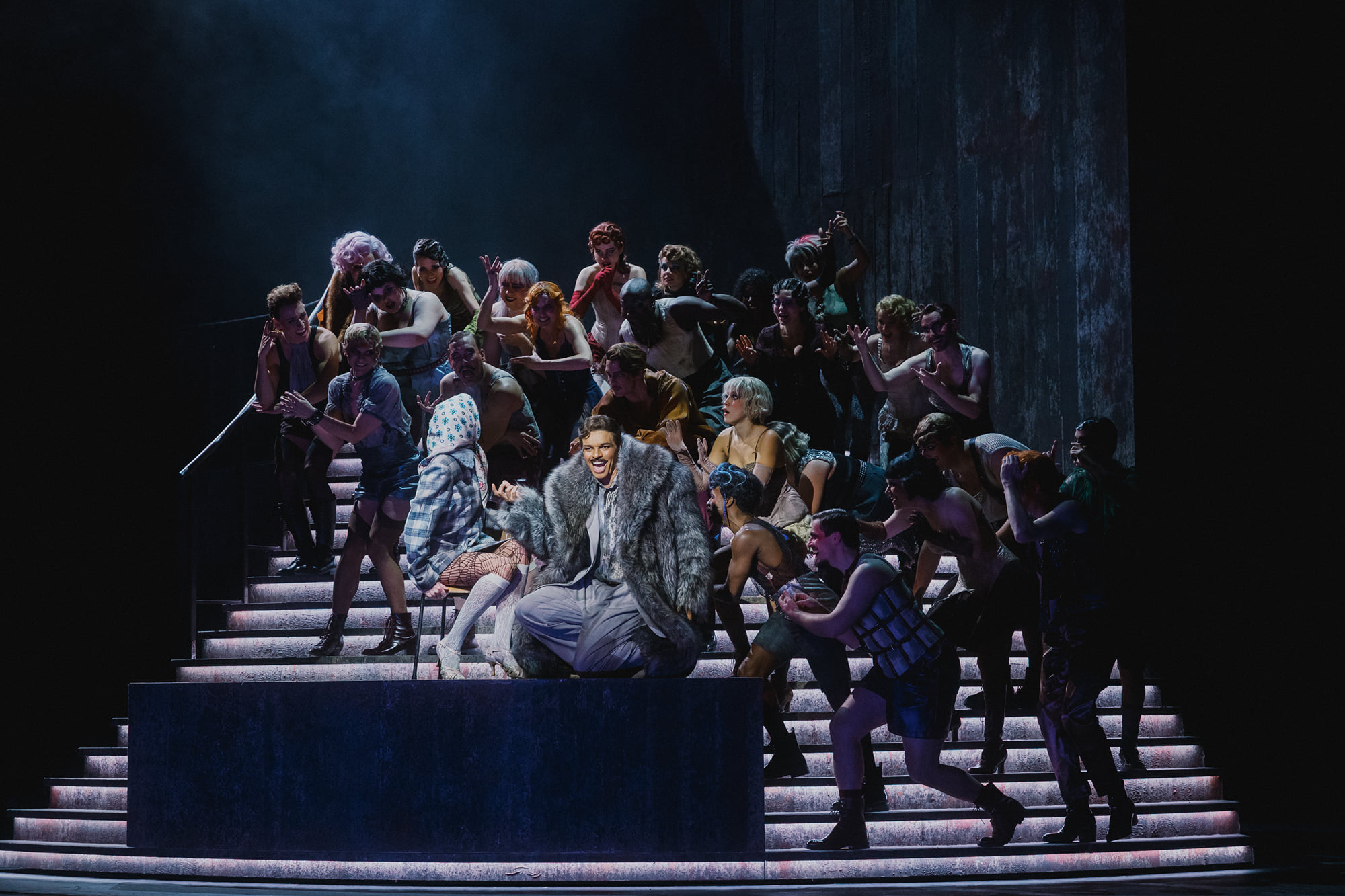
The play is set against a minimalist, dark stage design that depicts locations in 1920s Chicago. A tall, solid wall with a rough, mottled surface in shades of gray, brown, and rust dominates the stage. In front of it is a wide staircase leading to a raised platform with metal railings. This staircase is located on the revolving stage; as it turns, additional settings come into view. On the lower level stand simple metal bed frames, tables, and chairs—reminiscent of prison furnishings—which represent bedrooms or prison cells. During the show numbers, the stage’s appearance transforms. Suddenly, intense red spotlights bathe the stage in dramatic light. Wafts of fog rise as the stair steps glow reddish, and the scene evokes a grand show stage. The costumes also shift between the everyday and glamour. In the prison scenes, the performers wear gray, dark, or faded clothing, including plain pants and shirts. In the big show and dance numbers, however, they appear in skimpy, glittering outfits: silver and black sequins, short skirts, corsets, tights, and high-heeled shoes dominate the scene. Some characters wear eye-catching fur coats, hats, or elegant suits. The costumes accentuate the performers’ bodies and movements and evoke the vaudeville and jazz culture of the 1920s. The ensemble is often tightly grouped. The performers sit on the steps, kneel on the floor, or form expansive dance formations. The choreography is physically expressive and dynamic. The production makes its own theatrical elements visible. The set appears deliberately rough, and the props are limited to the essentials. Against this raw, open theatrical landscape, a dazzling world of glitz, light, and movement unfolds. The contrast between everyday prison life and glamorous entertainment becomes apparent.
Articles from our Weborello
5 reasons you shouldn't miss Chicago
Vienna is going to be Chicago! On October 24, 2026, the musical hit Chicago premieres at the Volksoper. We’ve put together 5 good reasons why you absolutely shouldn’t miss the show!


