Libretto von Jules Barbier, Spielfassung und Neufassung der Dialoge von Peter te Nuyl
In German and French language with German and English surtitles
The poet Hoffmann thinking of his beloved Stella, struggles with a writer’s block. His Muse, in disguise, is determined to steer Hoffmann away from his unhappy love and back to art. Hoffmann begins recounting the stories of three women he once loved: Olympia, Antonia, and Giulietta. In her staging, director Lotte de Beer creates a dialogue between Hoffmann and the Muse, a confrontation between art and the artist. Jacques Offenbach’s name remains synonymous with operetta, but at the end of his life, he worked on his most ambitious masterpiece: the fantastic opera Les contes d’Hoffmann.
Co-production with the Opéra National du Rhin, the Théâtre National de l'Opéra-Comique and the Opéra de Reims.
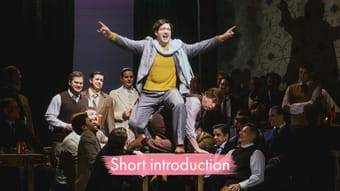
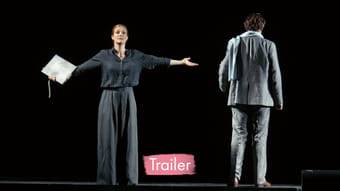
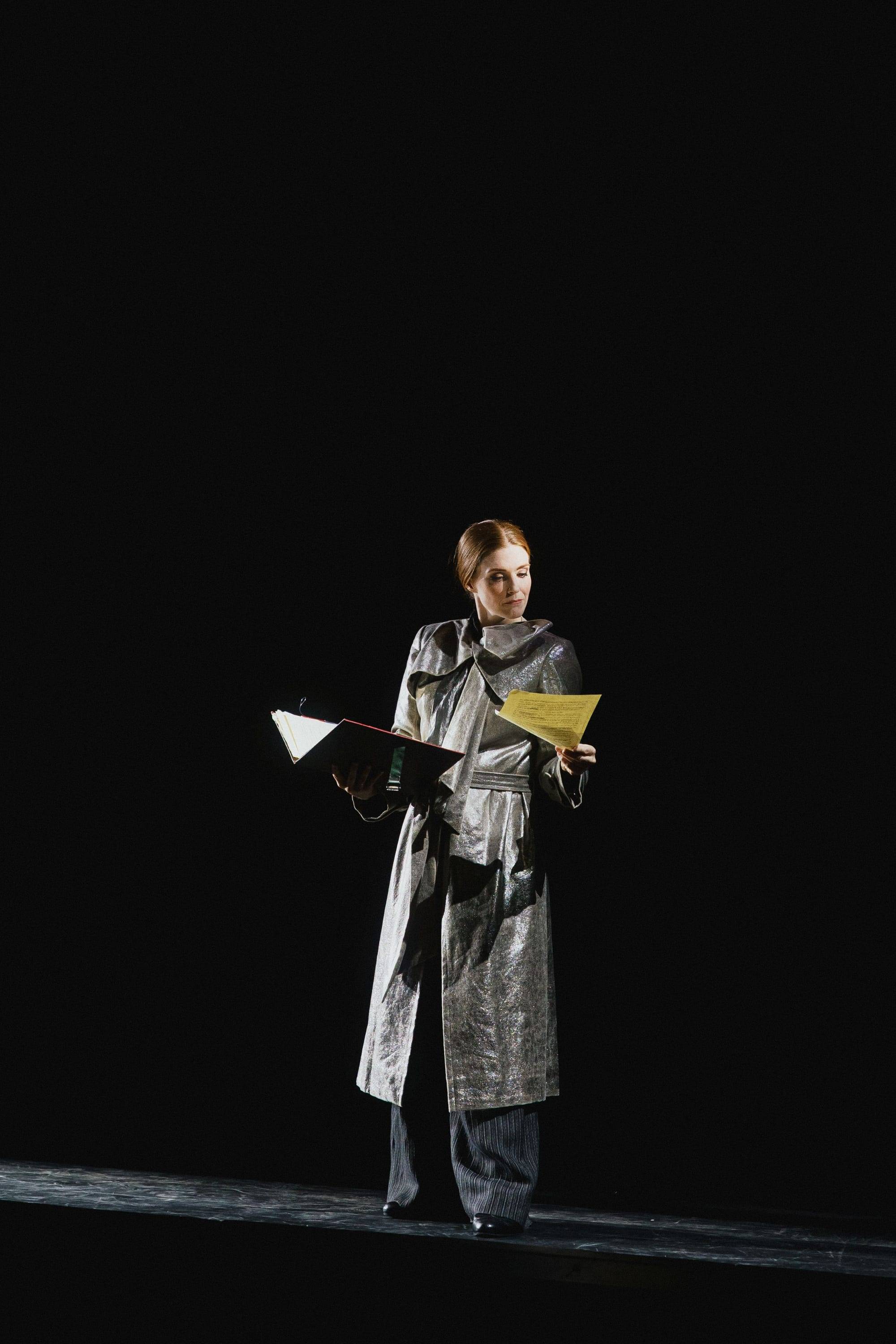
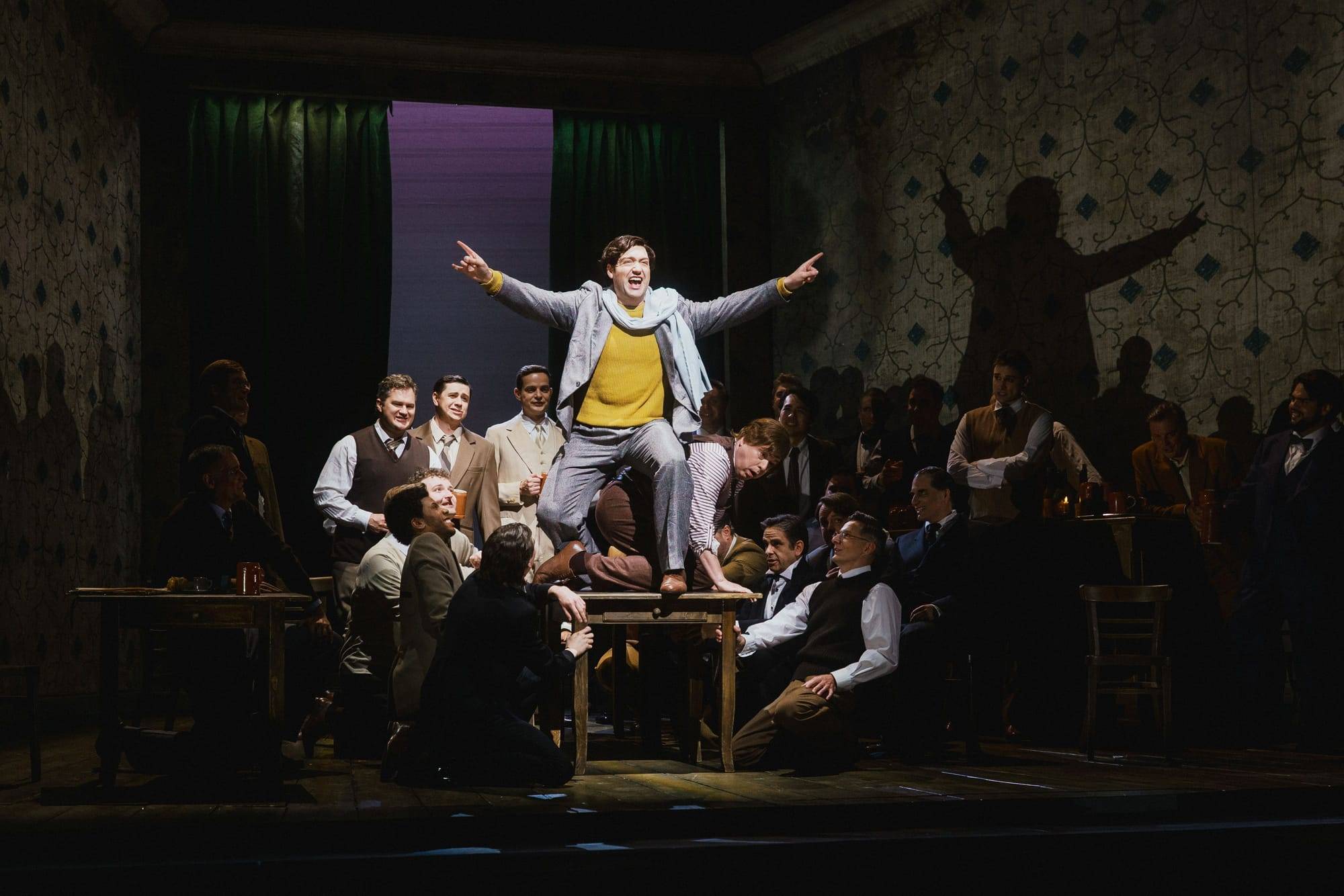
ACT 1 The air is thick with the smell of alcohol in Luther’s tavern, where the writer Hoffmann is waiting for the woman of his dreams: the opera singer Stella. Hoffmann is struggling with writer’s block. That is why the Muse of Poetry is leafing through his file. She is supposed to cure him of his morbid fantasies about women and lead him back onto the path of art. Hoffmann uses the interval in Stella’s opera performance to sing the song of ‘Klein-Zack’ to the guests in the wine cellar. Yet his thoughts wander to Stella. In Lindorf, his rival for Stella’s favour, Hoffmann suspects the Devil, his eterna adversary, whom he also holds responsible for the failure of his three previous love affairs. The Muse prompts him to recount these experiences: three tales of three women he once loved will confront him with his pathological inclinations.
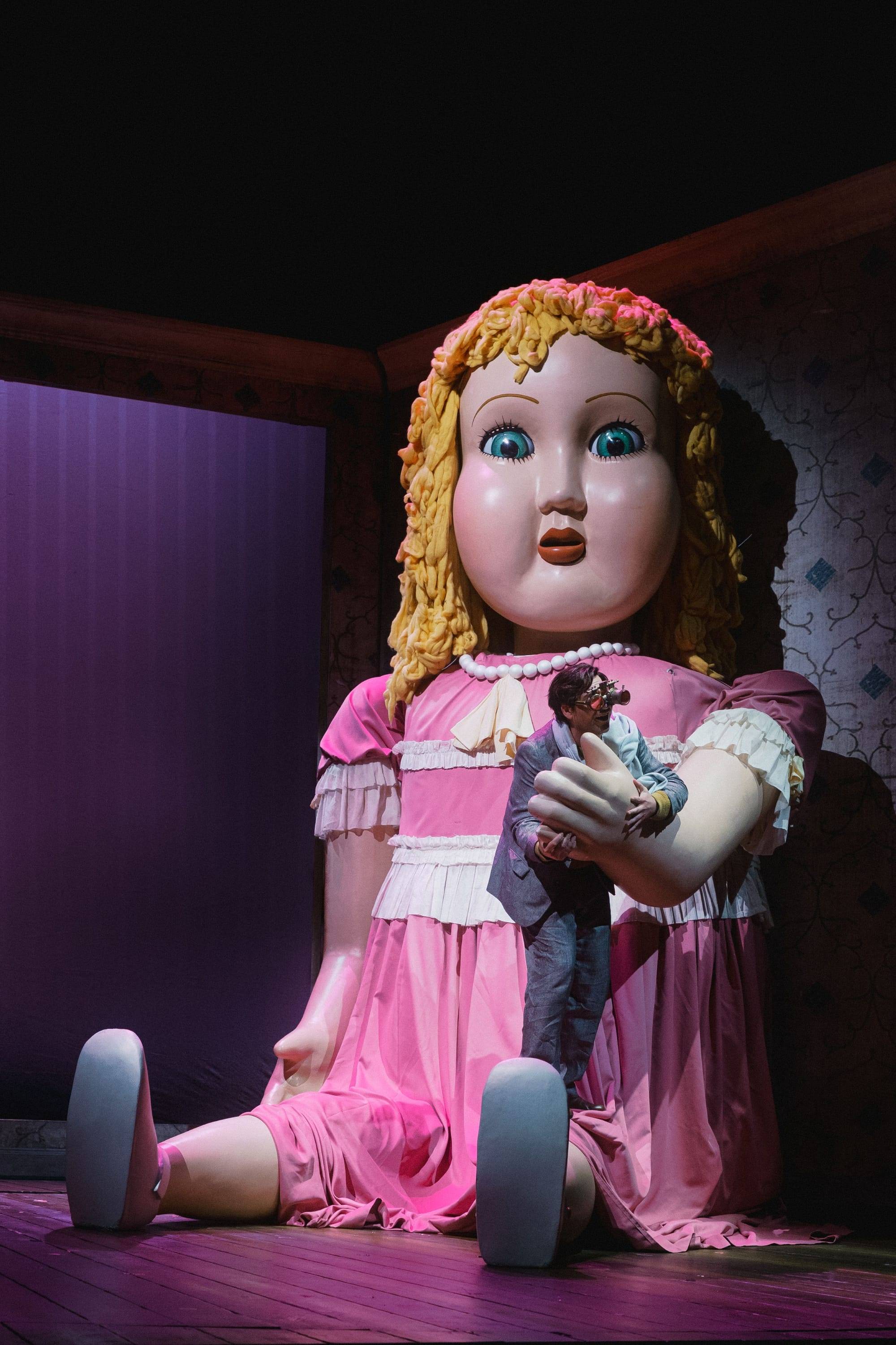
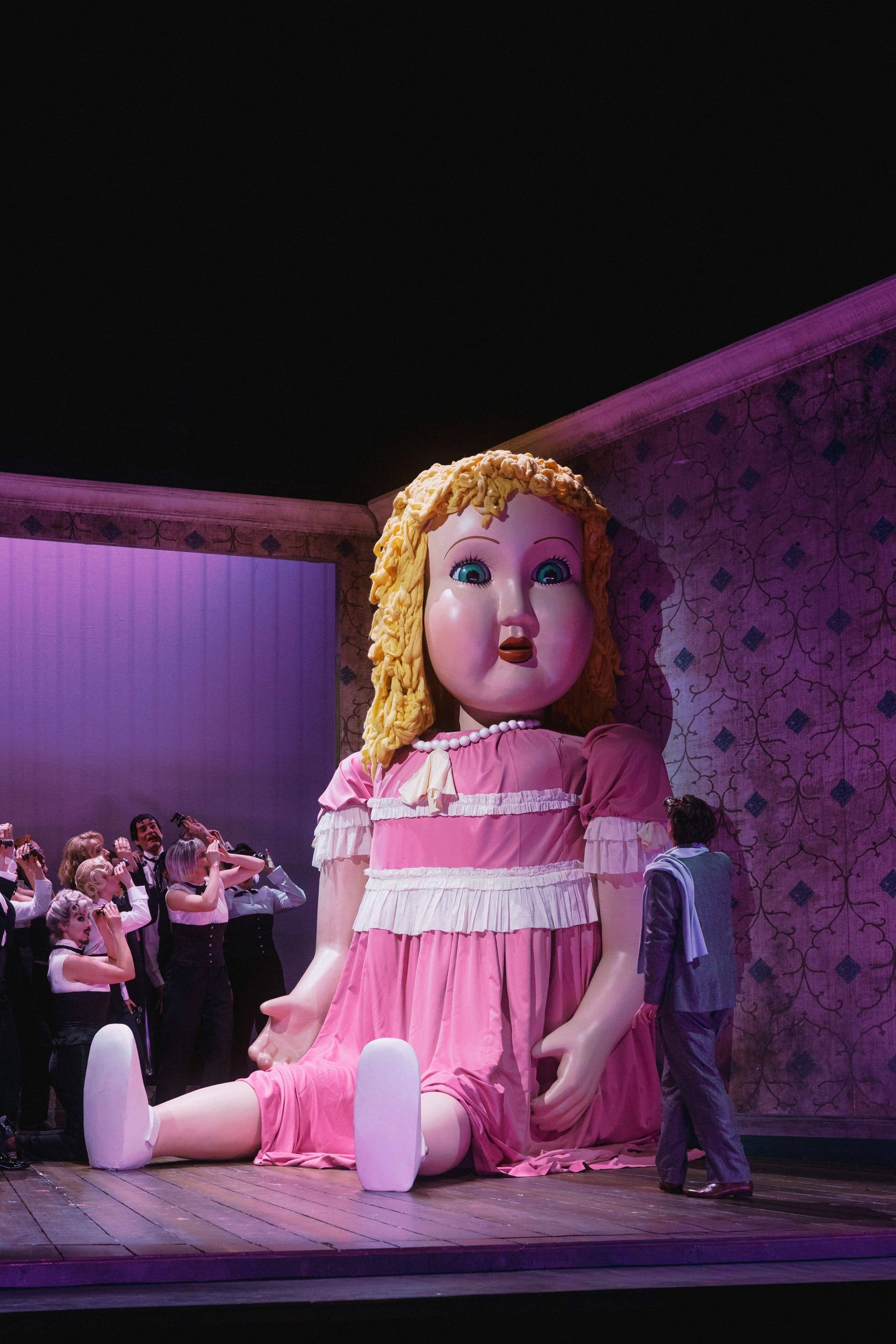
ACT 2 The Muse tries to find out just how autobiographical Hoffmann’s stories actually are. Hoffmann evades the question and begins to tell his tale: The physicist Spalanzani has created the automato Olympia, whom he refers to as his daughter. The optician Coppélius – the ‘devil’ in this tale – who supplied the eyes for the automaton, makes Hoffmann look through a pair of magic spectacles, causing him to believe Olympia is alive and to fall in love with her. The Muse accuses Hoffmann of confusing his imagination with reality.Spalanzani presents his creation, Olympia, to the assembled guests. Olympia sings. Hoffmann dances with her. Coppélius discovers that Spalanzani is a deceitful charlatan and destroys the automaton. Only now does Hoffmann realise that he has loved a soulless object The Muse emphasises the difference between the author and his character.
ACT 3 The Muse provokes Hoffmann by undermining the plot right at the start of his second tale. Hoffmann will tell it nonetheless: Antonia has inherited a beautiful voice from her mother, but also an incurable illness: she cannot sing without risking her life. To protect her, her father Crespel has forbidden her from seeing Hoffmann, who adores her singing voice. Crespel has fled the city with Antonia. Hoffmann recounts how he found Antonia again. They sing the song of their love. Hoffmann discovers the illness from which she suffers. The Muse criticises Hoffmann’s view on women. Doctor Miracle – the ‘Devil’ in this tale – once treated Antonia’s mother. Now he is treating Antonia by evoking the memory of her mother so strongly that she cannot help but sing as she has never sung before. The intoxicating power of the music proves fatal to her.
ACT 4 The Muse confronts Hoffmann with the fixed pattern according to which all his stories unfold. Hoffmann complains that the Devil is hot on his heels. He wants to give up love, both in his life and in his work. To put him to the test, the Muse sings a beautiful duet about love together with the courtesan Giulietta. Hoffmann explains that it is precisely this courtesan who, on the orders of Dapertutto – the ‘Devil’ in this tale – steals the shadows and mirror images of her lovers. The Muse realises that Hoffmann is once again being drawn into a tale. A tale with absurd elements, in which Hoffmann murder two of Giulietta’s lovers, his reflection is stolen by her, and he is forced to flee the city.
ACT 5 After a destroyed automaton, a dead singer and two murdered lovers, the Muse has one final act left to bring Hoffmann back to true art. When Stella’s performance is over, she enters the win cellar. Hoffmann sees her leaving with Lindorf. Now that all women have been taken from him or have rejected him, Hoffmann even tries to see his romantic muse in the Muse of Poetry. But the Muse makes it clear to him that no woman fits this role – neither in life nor in art. She will return to the Olympus. And whether Hoffmann wishes to become a good artist and a good person is now entirely up to him.
Photos and Videos
For all those who use a screen reader, a description of the visual aspects of the performance (set design, costumes...) follows here instead of the photo gallery.
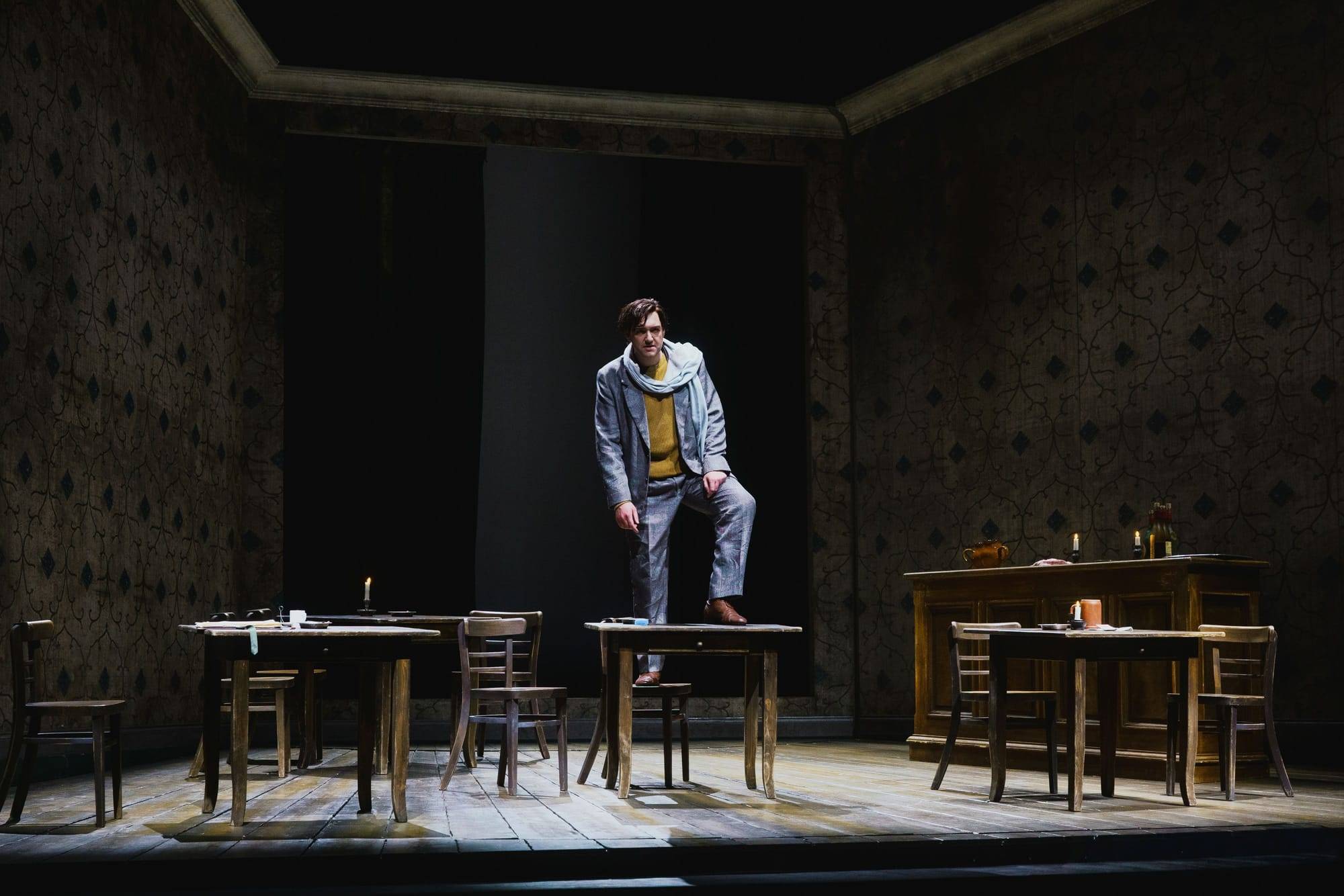
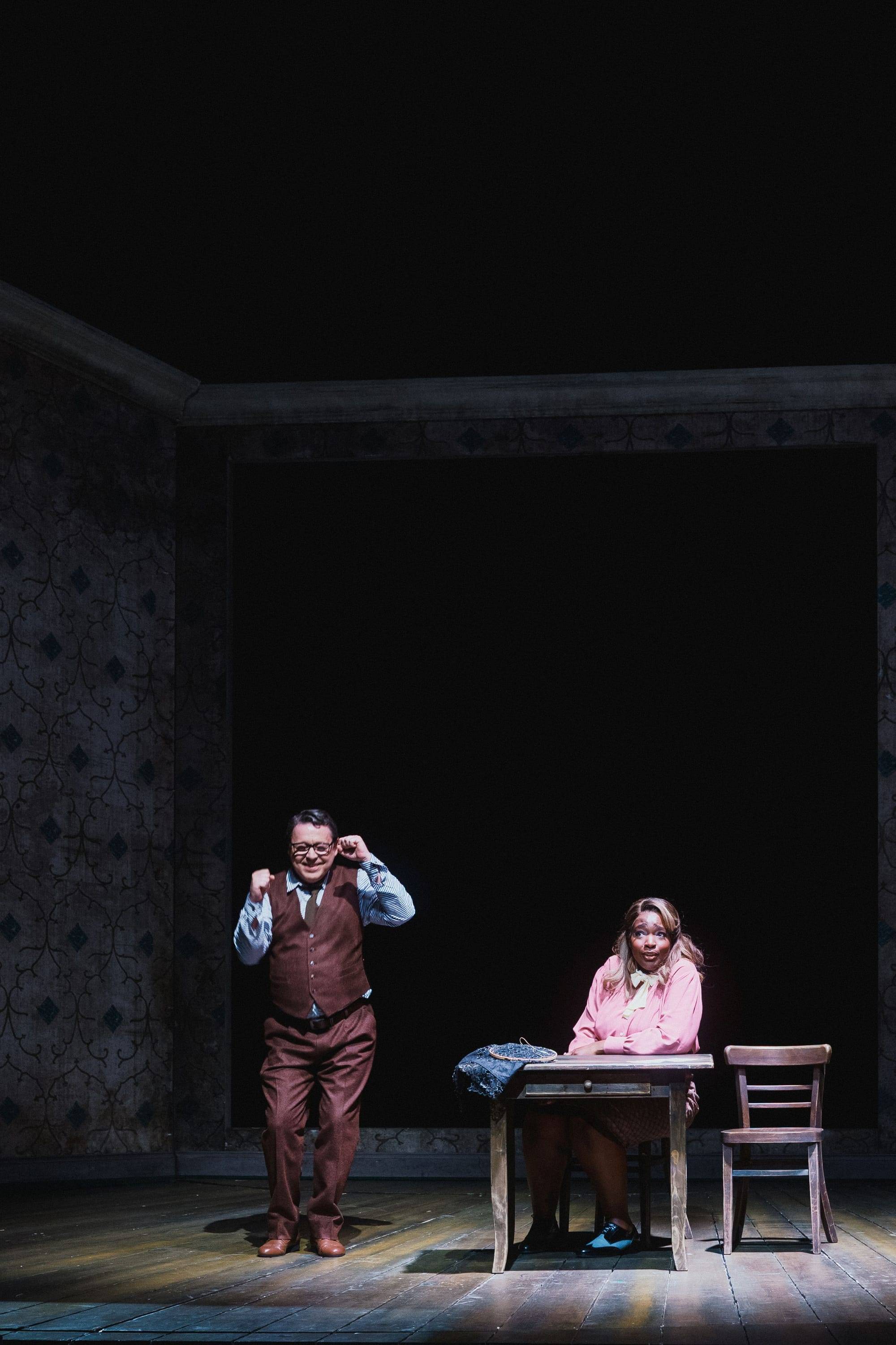
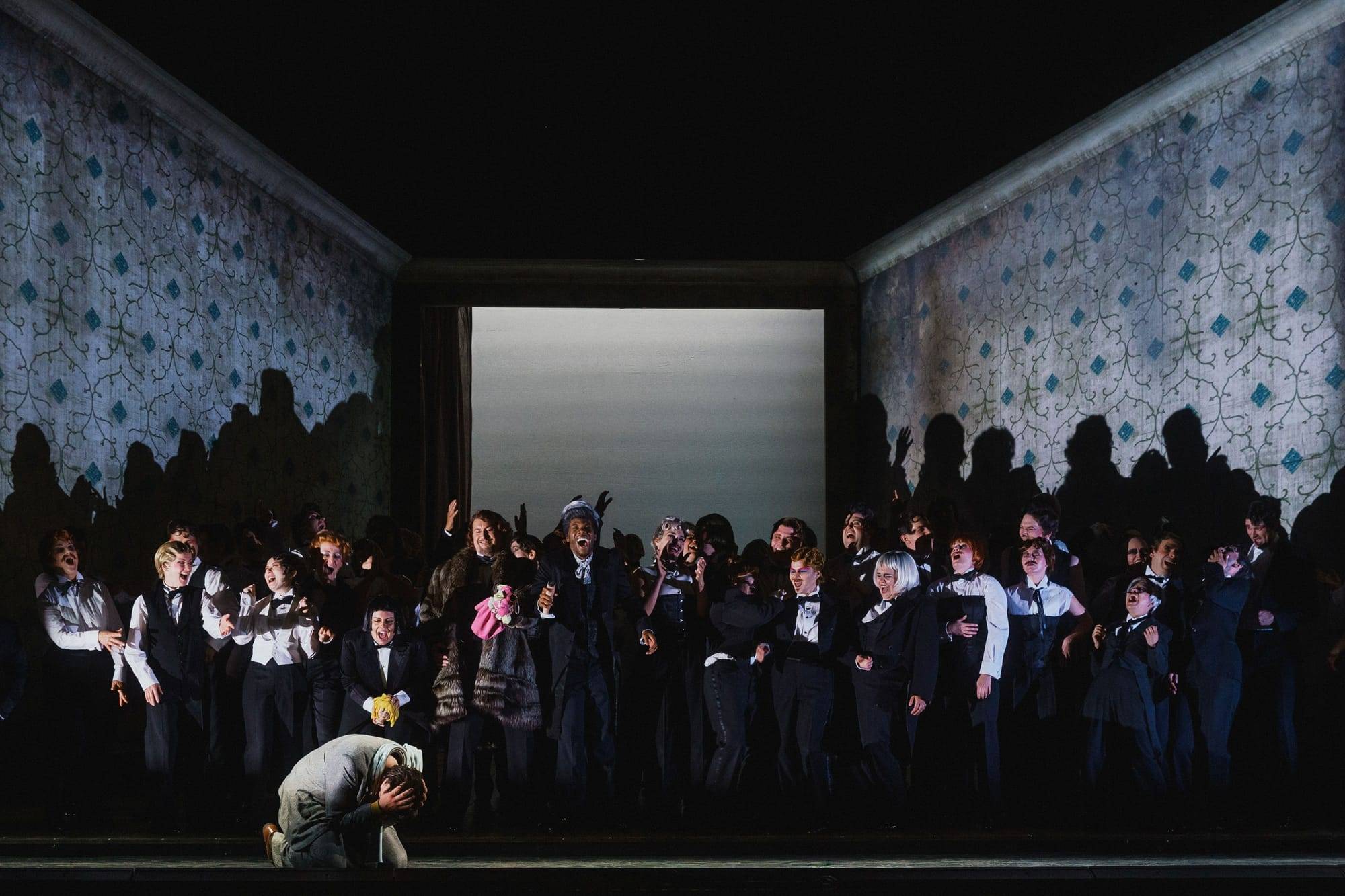
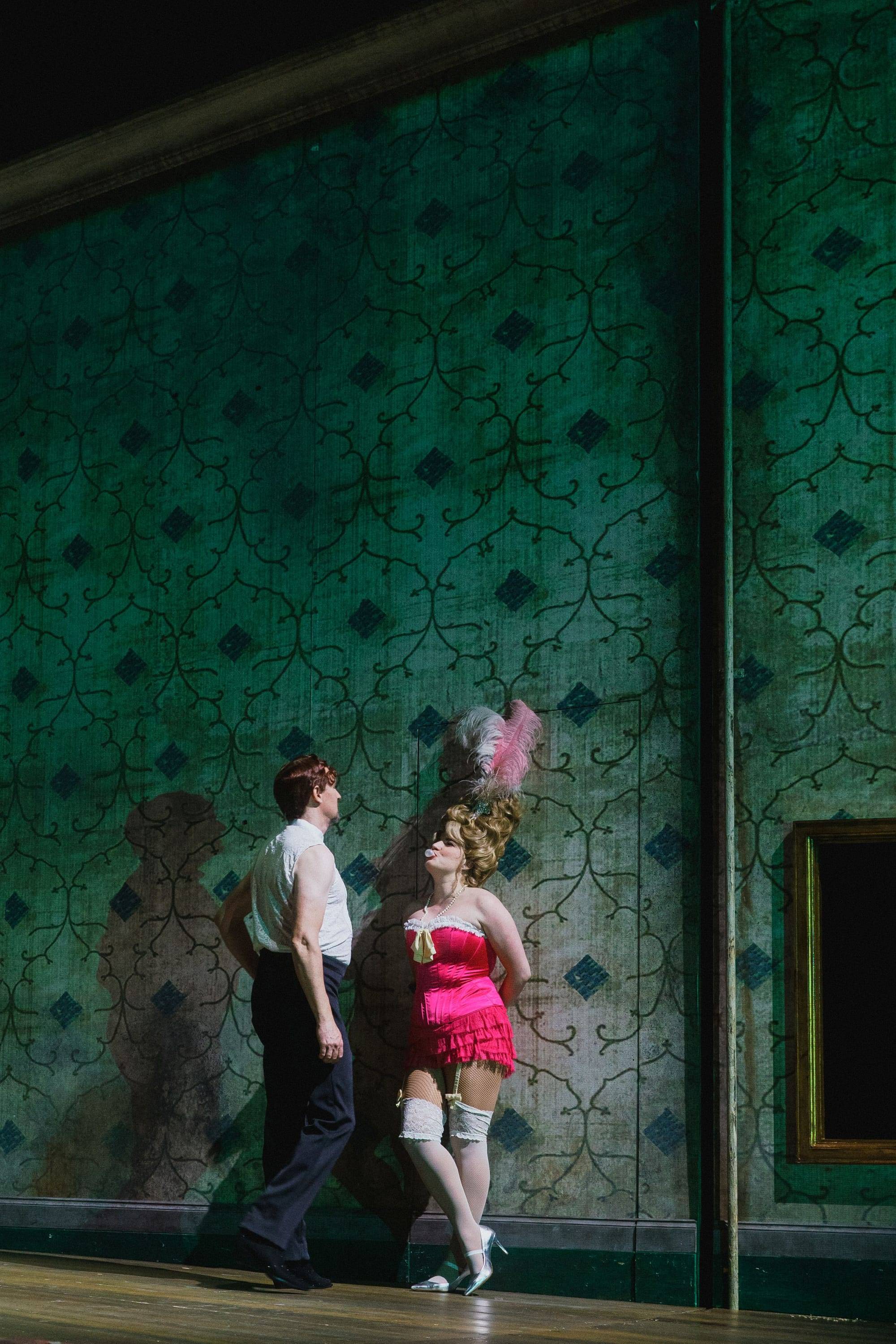
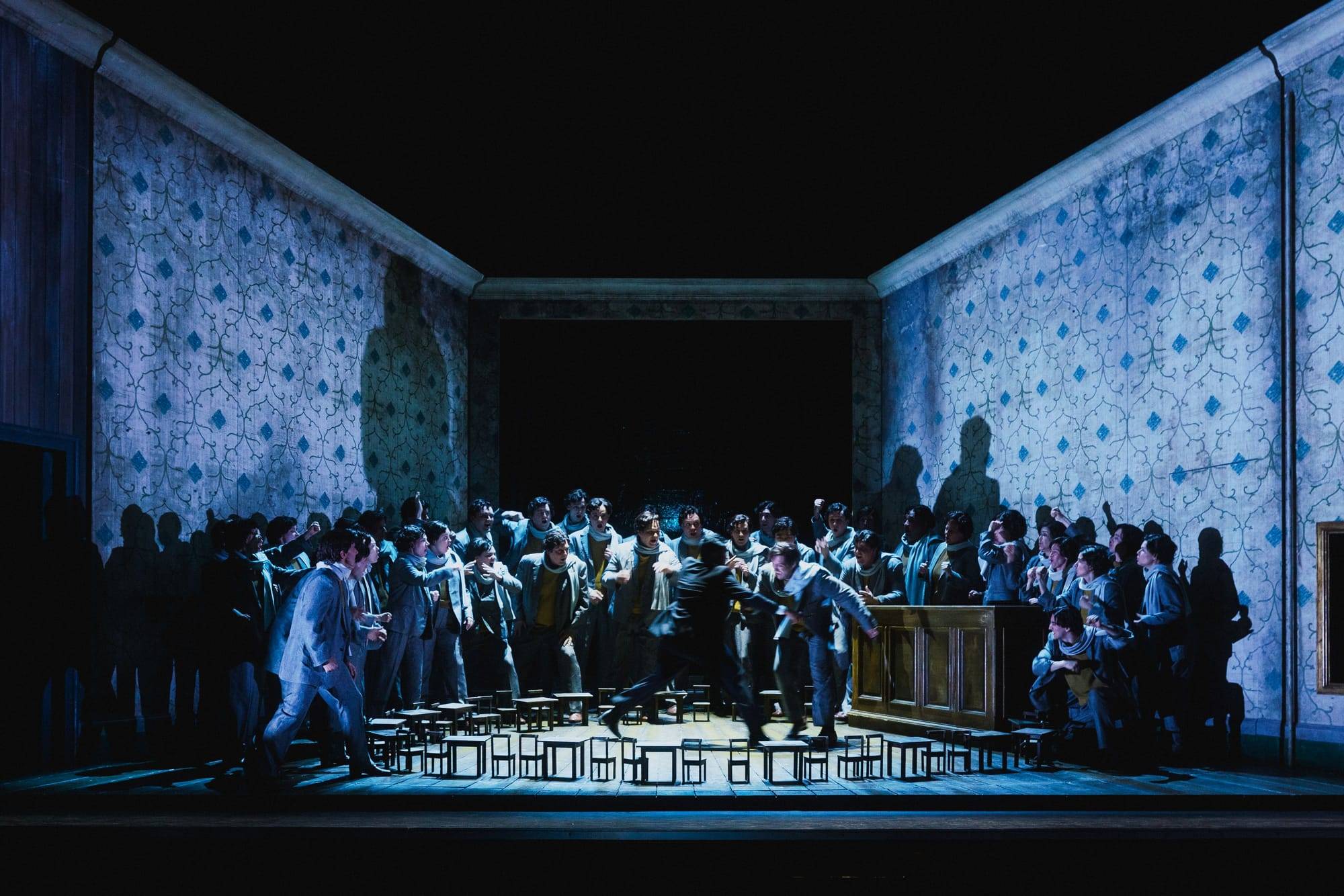
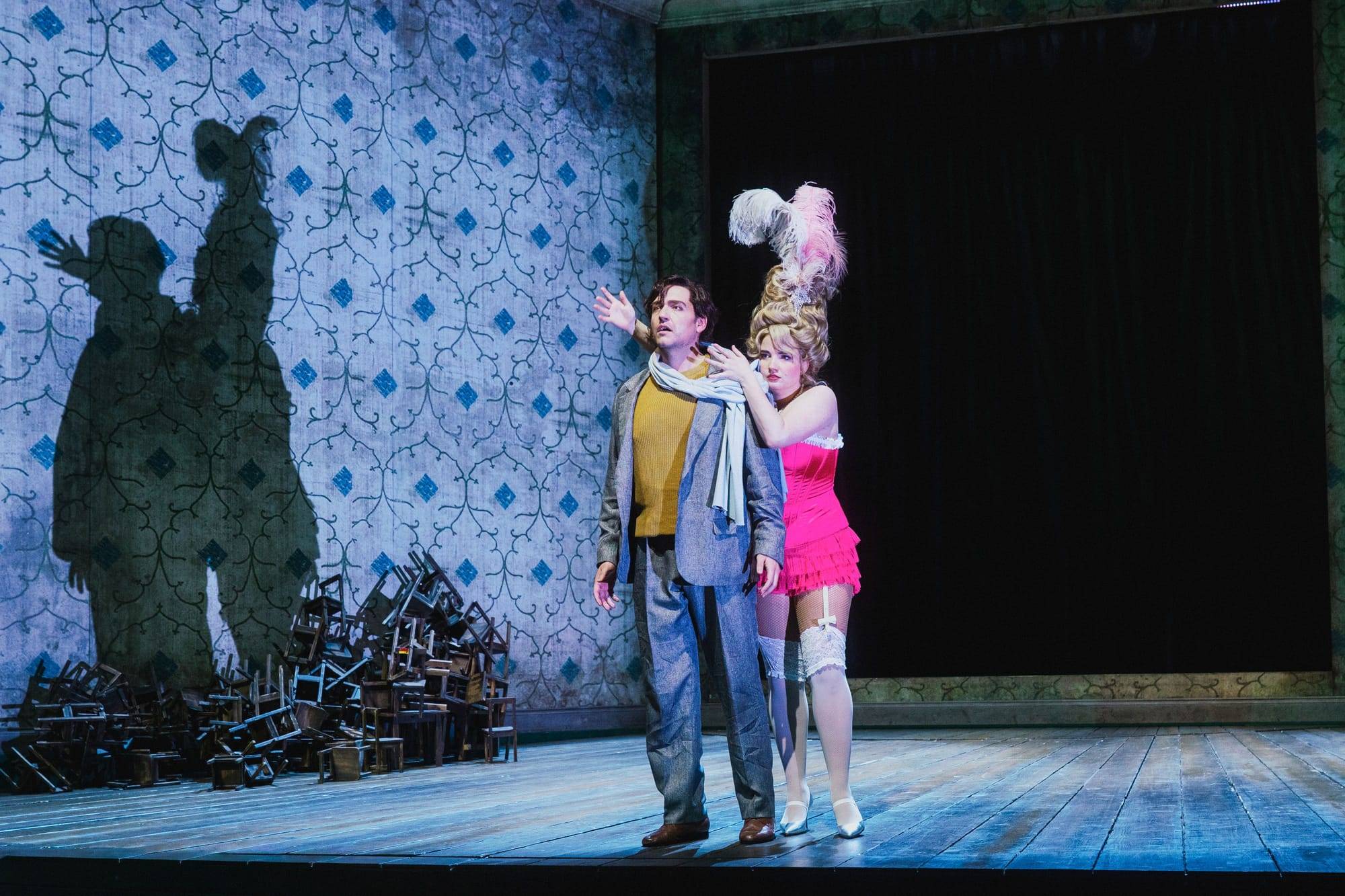
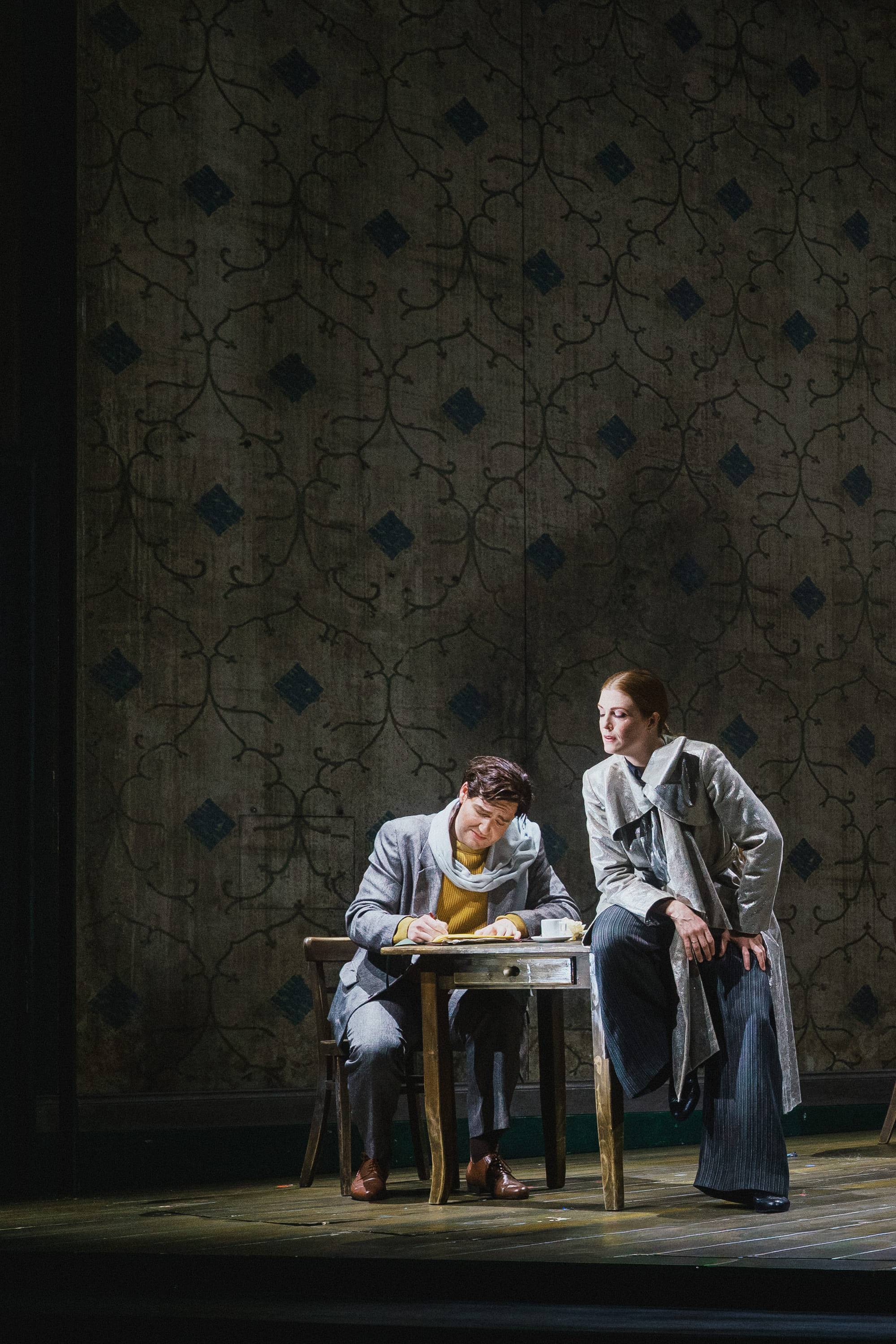
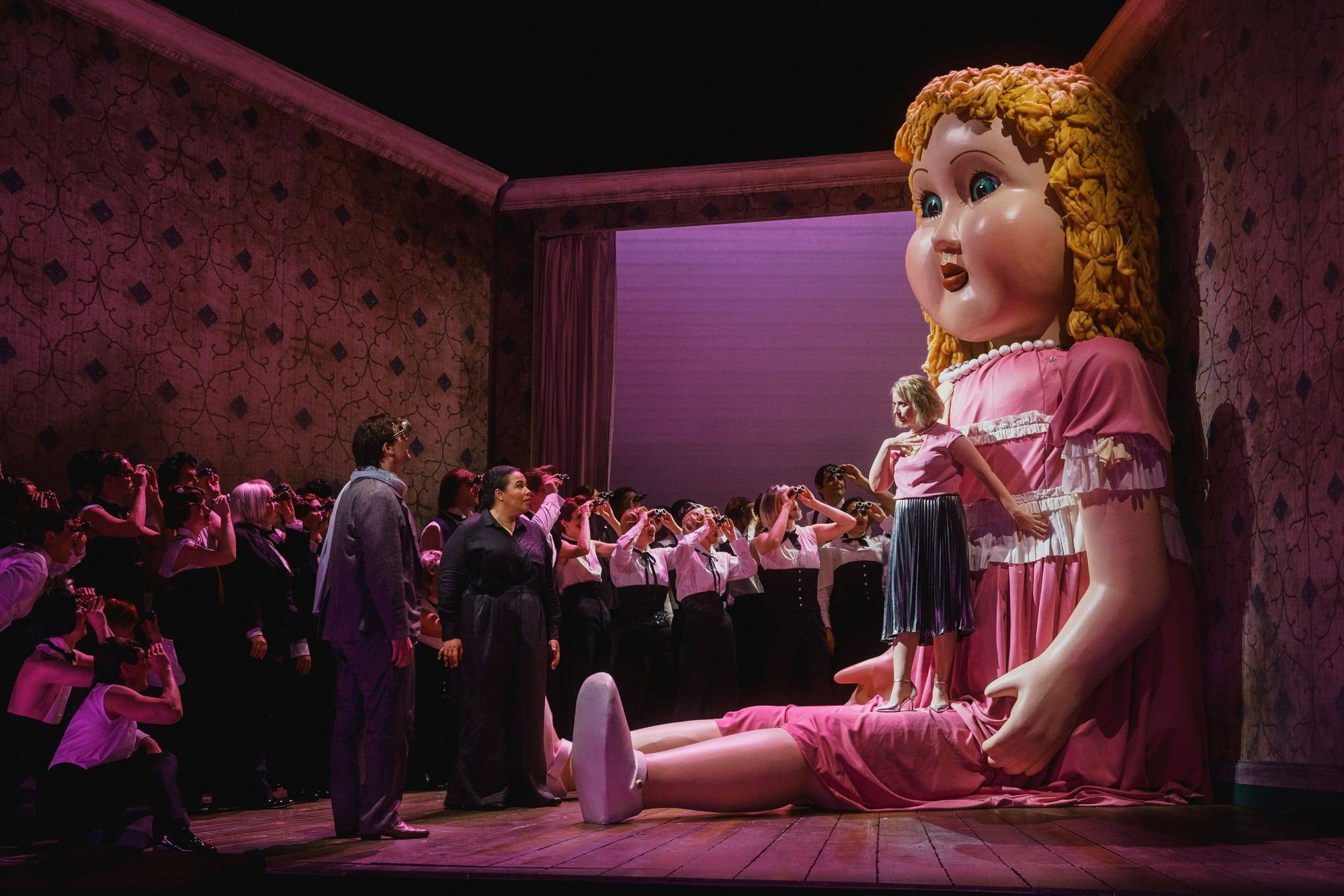
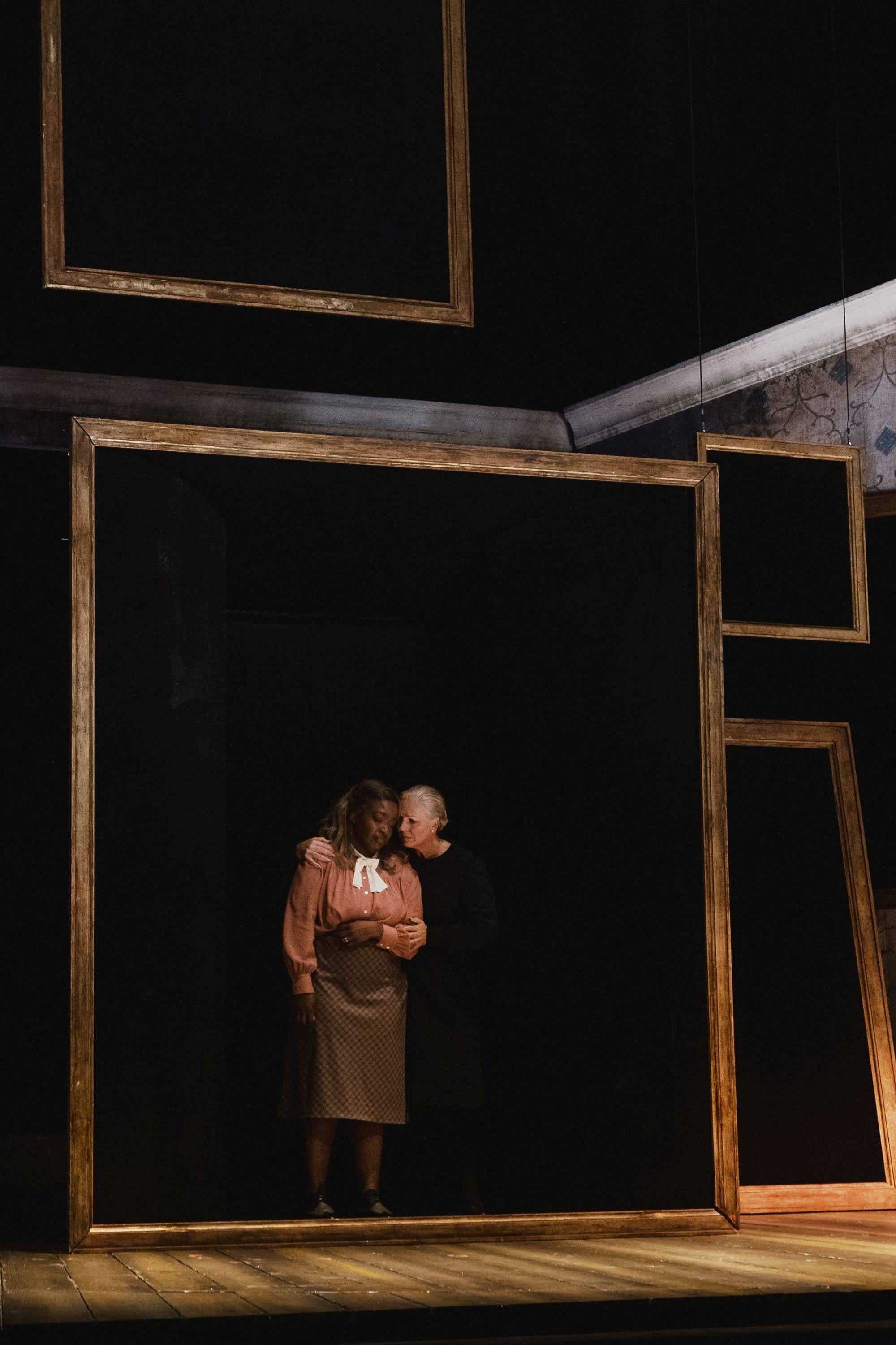
The entire opera takes place in a single, adaptable space. Two tall walls run from the sides of the stage toward the back, converging to form a narrowing interior. The walls are covered with faded, patterned wallpaper and evoke an old tavern or an abandoned room. At times, there is a bar on the right; on the left are tables and chairs. Between scenes, the space changes surprisingly quickly. Furniture appears in unusual proportions: chairs and tables can seem tiny or grow larger than life. This creates the impression of a dream world in which familiar objects lose their sense of scale. In the Olympia act, a giant child’s doll dominates the stage. With blonde hair, a pink dress, and a rigid doll’s face, she sits in the room like a monumental figure, making the people around her appear small and vulnerable. Alongside this, Olympia also appears as a life-size doll. In the Antonia act, the atmosphere darkens. More and more large, black-filled picture frames appear on the walls and increasingly encroach on the space until it is almost overgrown by them. In the Giulietta act, by contrast, the stage appears almost empty. The familiar room architecture remains, but the furnishings largely disappear. The back wall gives the impression of a reflective surface. Cold lighting and the vastness of the now nearly empty space create a dreamlike, surreal atmosphere. The final act returns to the tavern from the beginning. The costumes are predominantly in shades of brown, beige, gray, and pink. Hoffmann wears a simple suit with a loose artist’s scarf. Many characters also appear in suits or understated everyday clothing. Antonia wears a strictly tailored suit. Giulietta stands out clearly from the other characters with high heels, a short suit, and an eye-catching headpiece. In the Giulietta act, the chorus also wears Hoffmann’s clothing and hairstyle. This creates numerous doppelgängers of the protagonist, as if various reflections of himself were populating the stage.
.jpg "Anett Fritsch (Mimì), Giorgio Berrugi (Rodolfo)")
