Figaro, the Count’s servant, has become engaged to Susanna, the Countess’s maid. The Count is stalking Susanna. Figaro hatches a plan to put the count in his place. After a “mad day” of disguises, misunderstandings and other comical complications, Figaro gets his Susanna and the Count has no choice but to apologize to the Countess.
Lotte de Beer: “Le nozze di Figaro is primarily a comedy about sex and power. Since the rise of the MeToo movement, many people have looked back critically at the role these issues have played over the last decades. In our interpretation of Le nozze we examine the different perspectives on sex and power from the point of view of different characters in the opera.”
Leading Team
Stage direction Lotte de Beer
Set design Rae Smith
Costume design Jorine van Beek
Lighting design Alex Brok
Choir director Roger Díaz-Cajamarca
Choreinstudierung Jugendchor Andrés García
Dramaturgy Peter te Nuyl
Cast on 12. April 2026
Act I
Figaro, the valet of Count Almaviva, measures the bedroom that the count has given him for his upcoming married life. Figaro’s fiancée Susanna warns him that the count wants to seduce her and that the location of the room is ideal for this. Figaro vows to let his master fall into his own trap. Two other people try to prevent Figaro’s wedding: Marcellina, Doctor Bartolo’s housekeeper, demands that Figaro marry her because he has not paid off his debts to her; Bartolo himself wants to take revenge on Figaro because he once helped the Count kidnap Bartolo’s ward Rosina – and make her Countess Almaviva. Cherubino, a young page, tells Susanna about his first feelings of love – for women in general and the Countess in particular. When the Count comes to see Susanna, Cherubino manages to hide just in time. The Count also has to hide when the music teacher Basilio appears to question Susanna about Cherubino’s feelings for the Countess. The Count jumps out of his hiding place and accidentally reveals the hidden page. Figaro brings villagers to celebrate the Count – for abolishing the feudal right to sleep with the maid on her wedding night. To get rid of him, the Count sends Cherubino to the army. Figaro mockingly bids farewell to the newly made soldier.
Act II
The Countess reflects on her unhappy marriage. Susanna informs her that the Count intends to seduce Susanna. Figaro proposes a strategy: the Countess is to catch her husband with ‘Susanna’ – who is actually Cherubino dressed as a woman. Cherubino confesses his love to the Countess. When the Count suddenly knocks on the door, Cherubino hides in the wardrobe. The Count is convinced that his wife is hiding a lover. She claims that it is only Susanna trying on her wedding dress. The Count fetches tools to force open the wardrobe door. He takes the Countess with him and locks the door behind him. Susanna frees Cherubino, who flees out of the window; she takes his place. When the couple returns, the Countess confesses the truth to the Count – but to her great surprise, it is Susanna who steps out of the wardrobe. The gardener Antonio complains that someone trampled his flower beds when he jumped out of the window. Figaro takes the blame, but is confronted with the military commission that the page lost when he jumped out of the window. Just as Figaro manages to talk his way out of it, Marcellina appears with Bartolo and Basilio. She demands that Figaro marry her to pay off his debts.
Act III
At the Countess’s insistence, Susanna agrees to meet the Count in the garden that evening in exchange for a dowry with which Figaro can buy his freedom from Marcellina. As he leaves, the Count overhears Susanna telling Figaro that ‘the matter is settled’. The Count realises he has been deceived and orders Figaro to marry Marcellina. Figaro explains that he cannot marry without parental consent. However, he does not know who his parents are, as he was stolen as a baby. Marcellina and Bartolo recognise Figaro as their own son. Susanna discovers Figaro in Marcellina’s arms and is beside herself with rage – until she learns of the surprising turn of events. The Countess dictates a love letter to Susanna, in which Susanna invites the Count to a meeting – this time, the Countess herself wants to take Susanna’s place. They seal the letter with a pin. The Count discovers that Cherubino has not yet left. Barbarina publicly confronts the Count about his inappropriate behaviour. Susanna slips the letter to the Count, who pricks himself on the pin. Figaro secretly watches the exchange.
Act IV
Barbarina has lost the pin that the count asked her to return to Susanna as a sign of his consent to meet her. Barbarina tells Figaro where the meeting is taking place. Marcellina, who is now on Figaro’s side, does not believe that Susanna is cheating on him. Figaro swears to take revenge on behalf of all betrayed husbands. A ‘comedy of errors’ unfolds in the darkness of the garden. In the end, the Count believes he has caught his wife in flagrante delicto. But no matter who he discovers, the Countess proves to be innocent. The Count begs for forgiveness, which the Countess generously grants him. Everyone celebrates in the name of love and prepares for the wedding feast.
Photos and Videos
For all those who use a screen reader, a description of the visual aspects of the performance (set design, costumes...) follows here instead of the photo gallery.
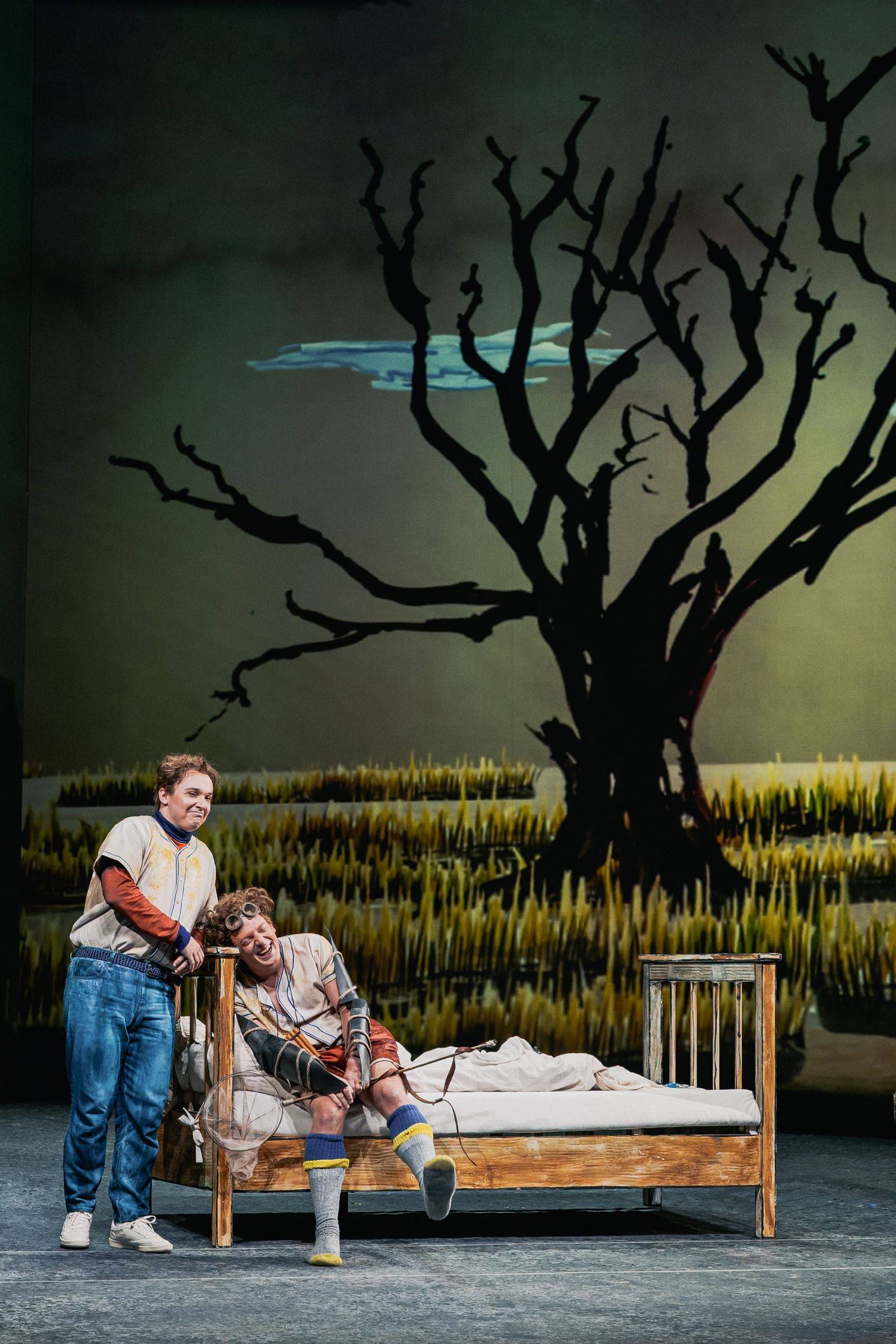
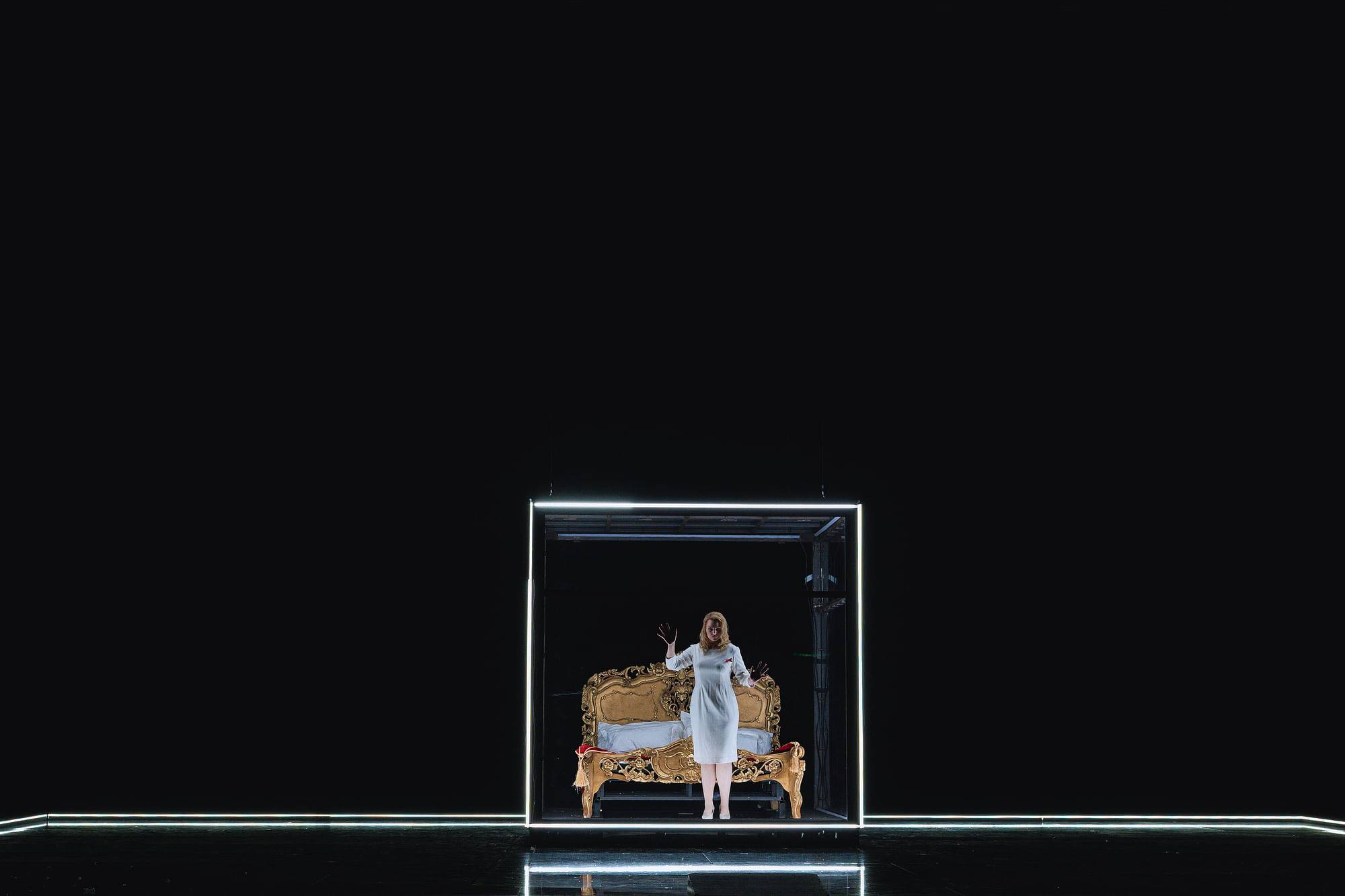
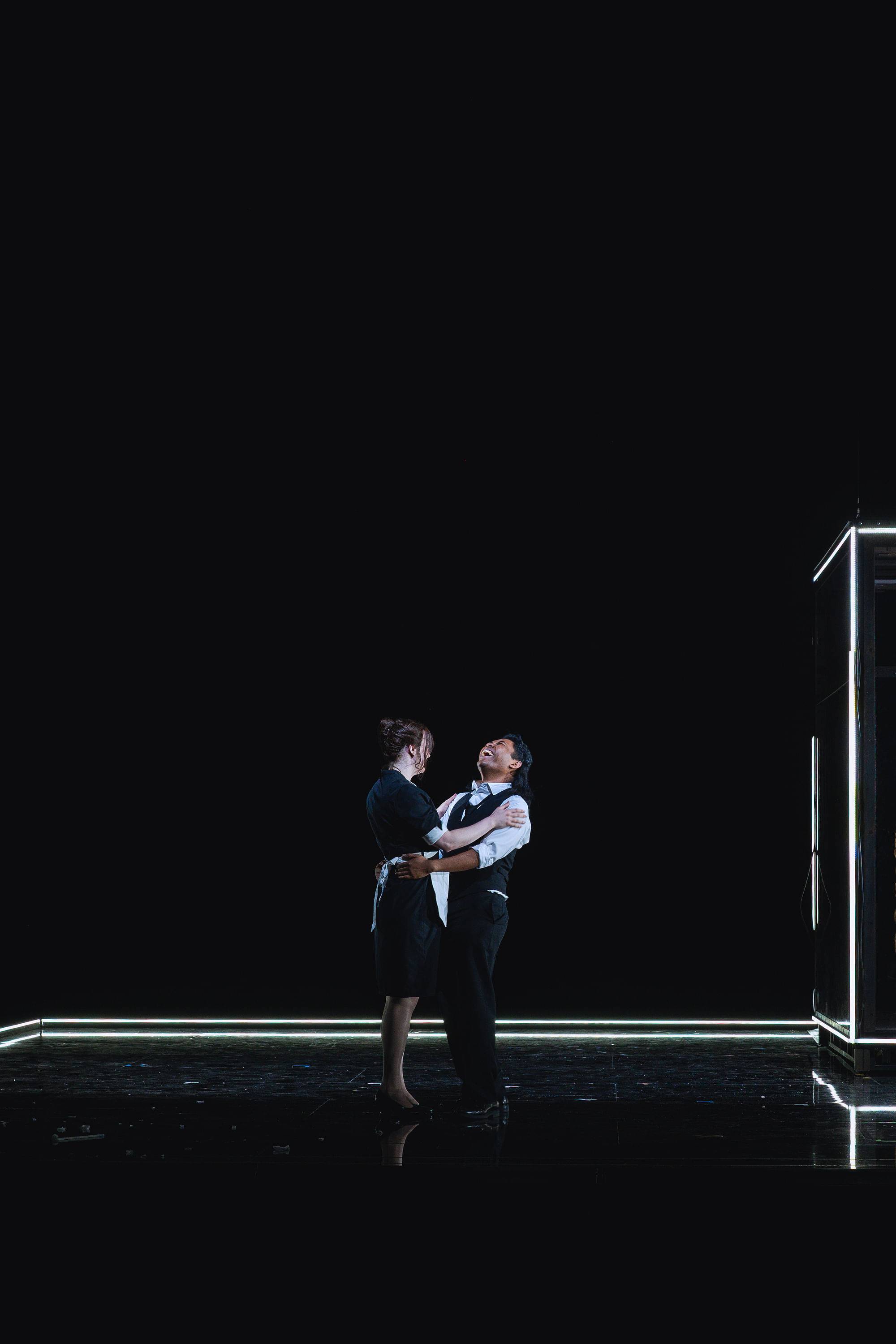
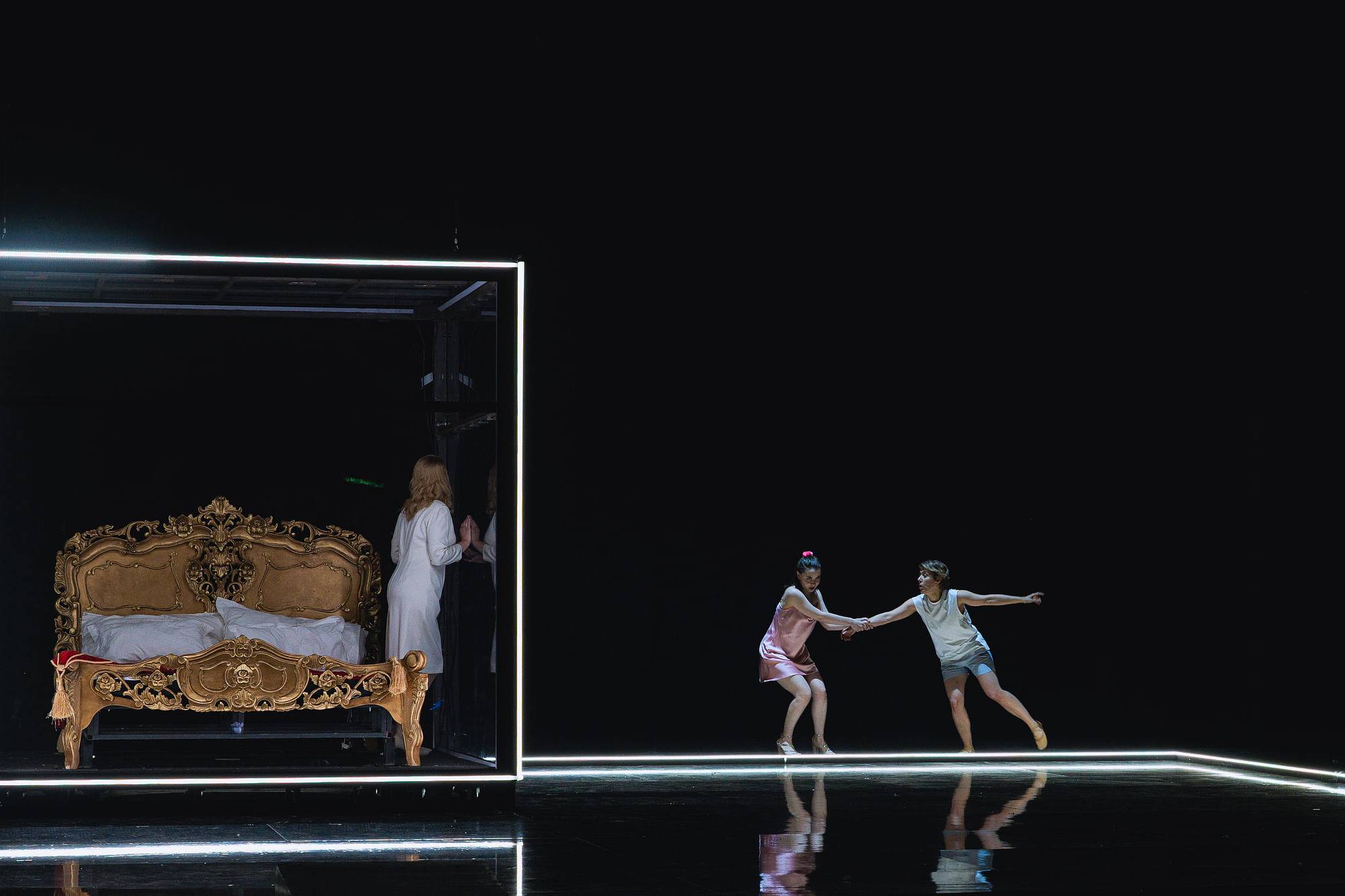
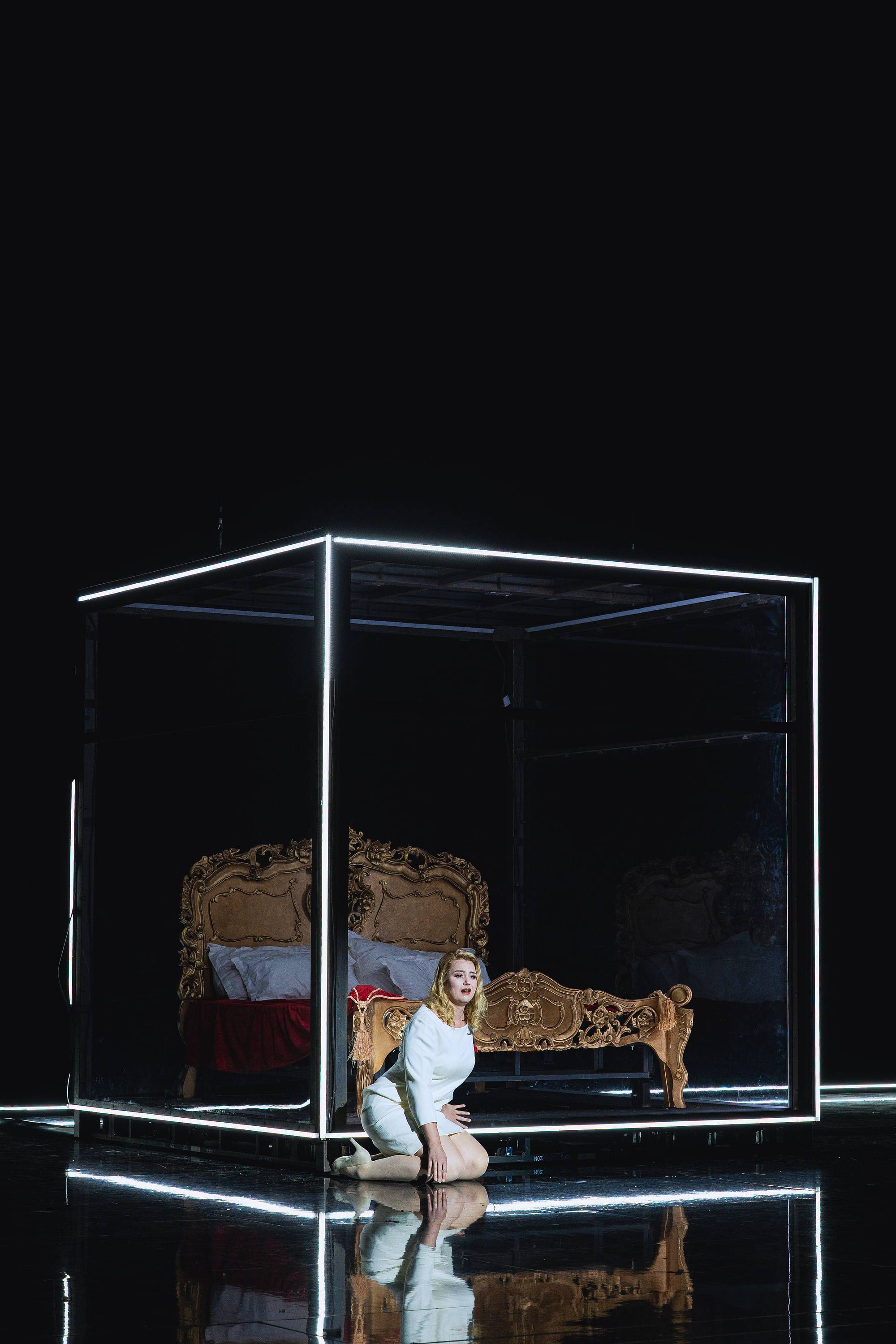
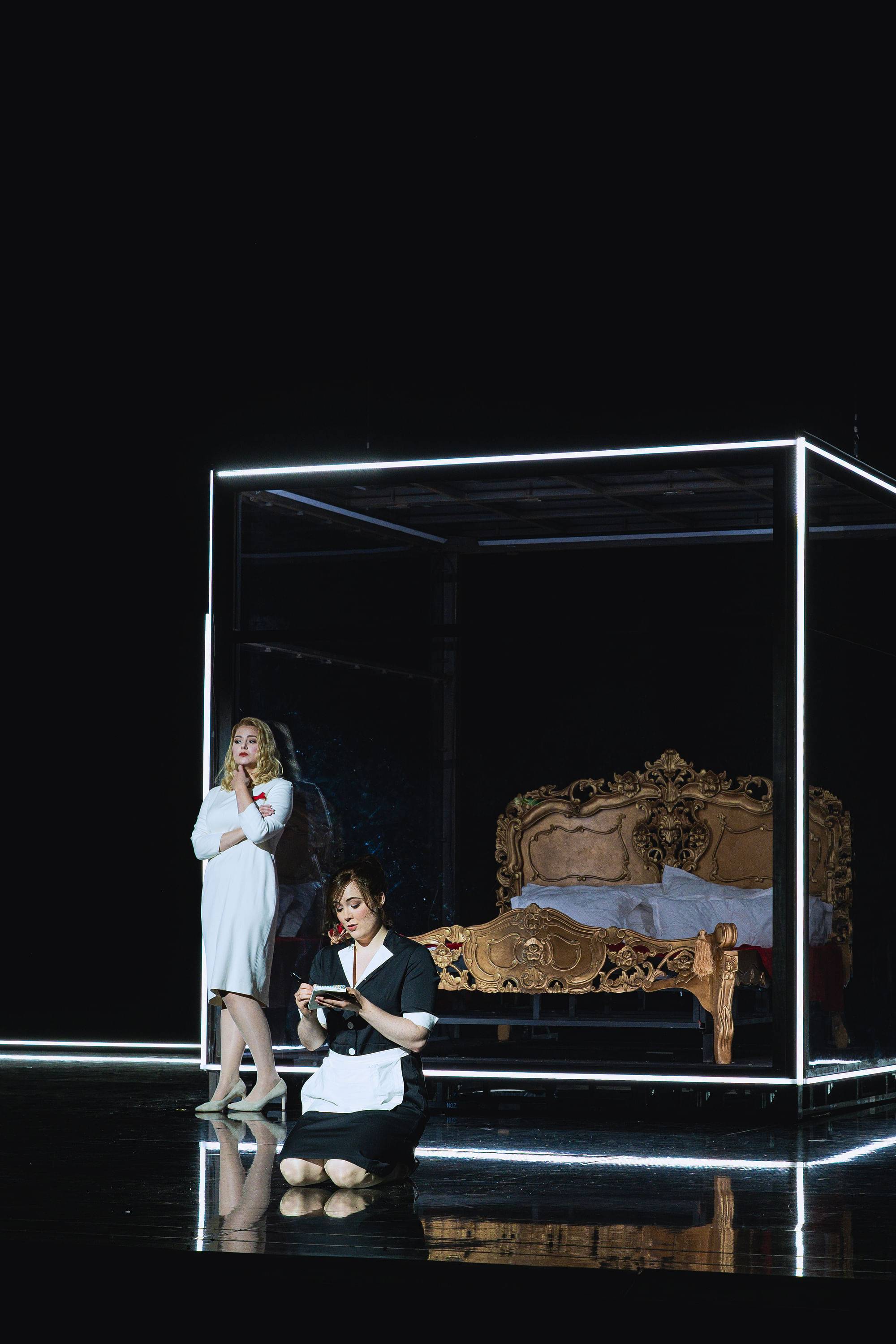
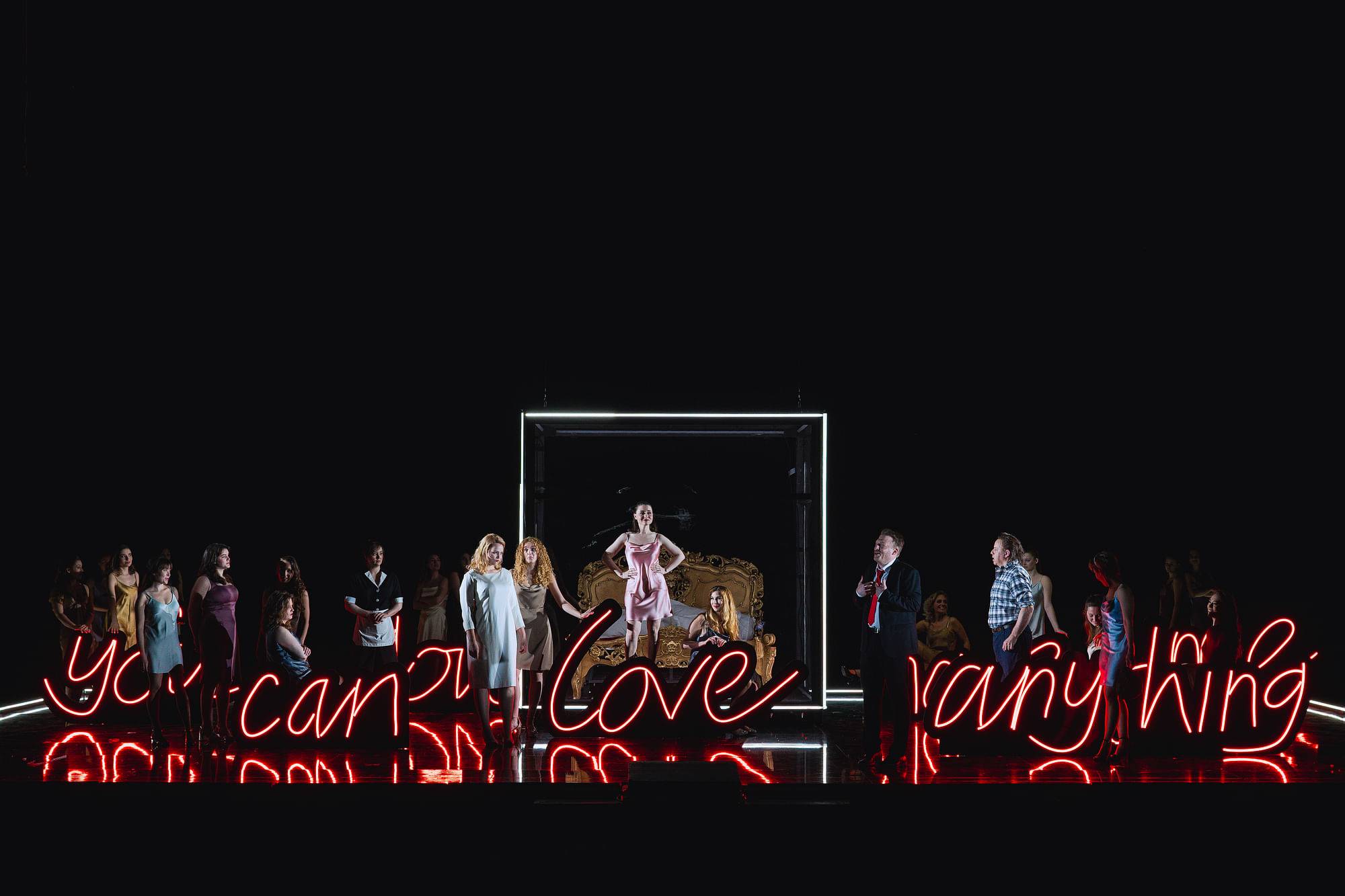
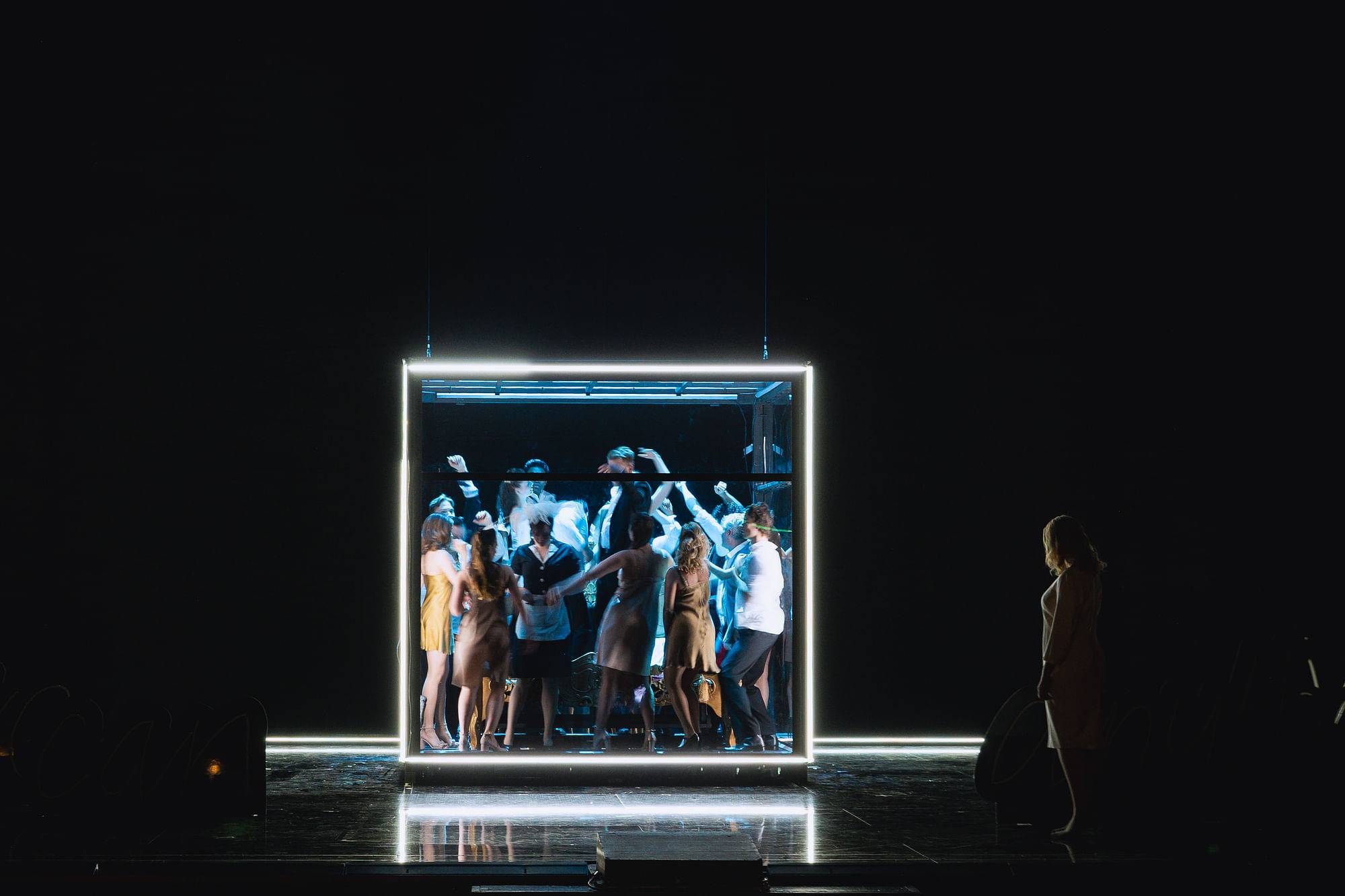
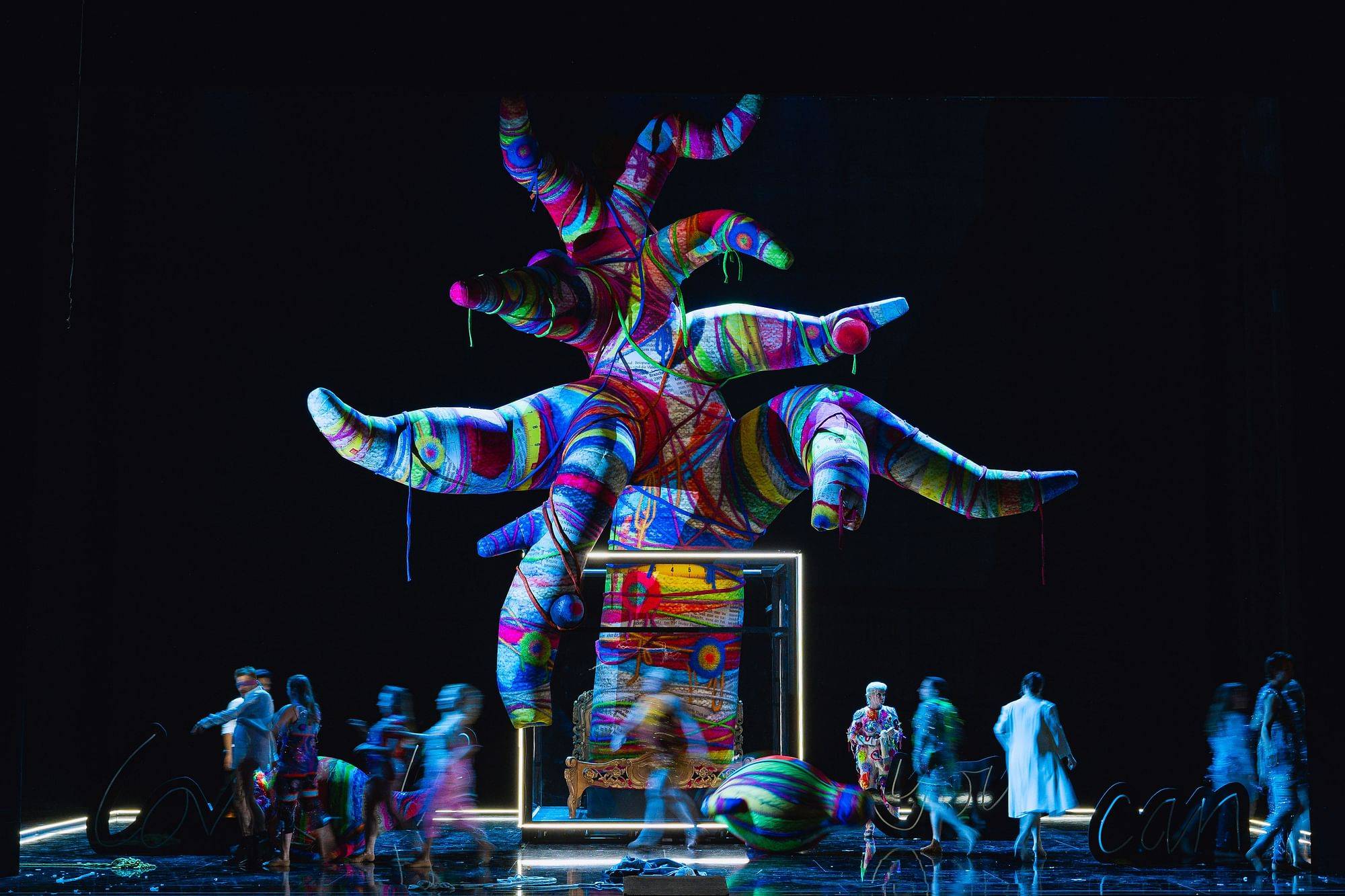
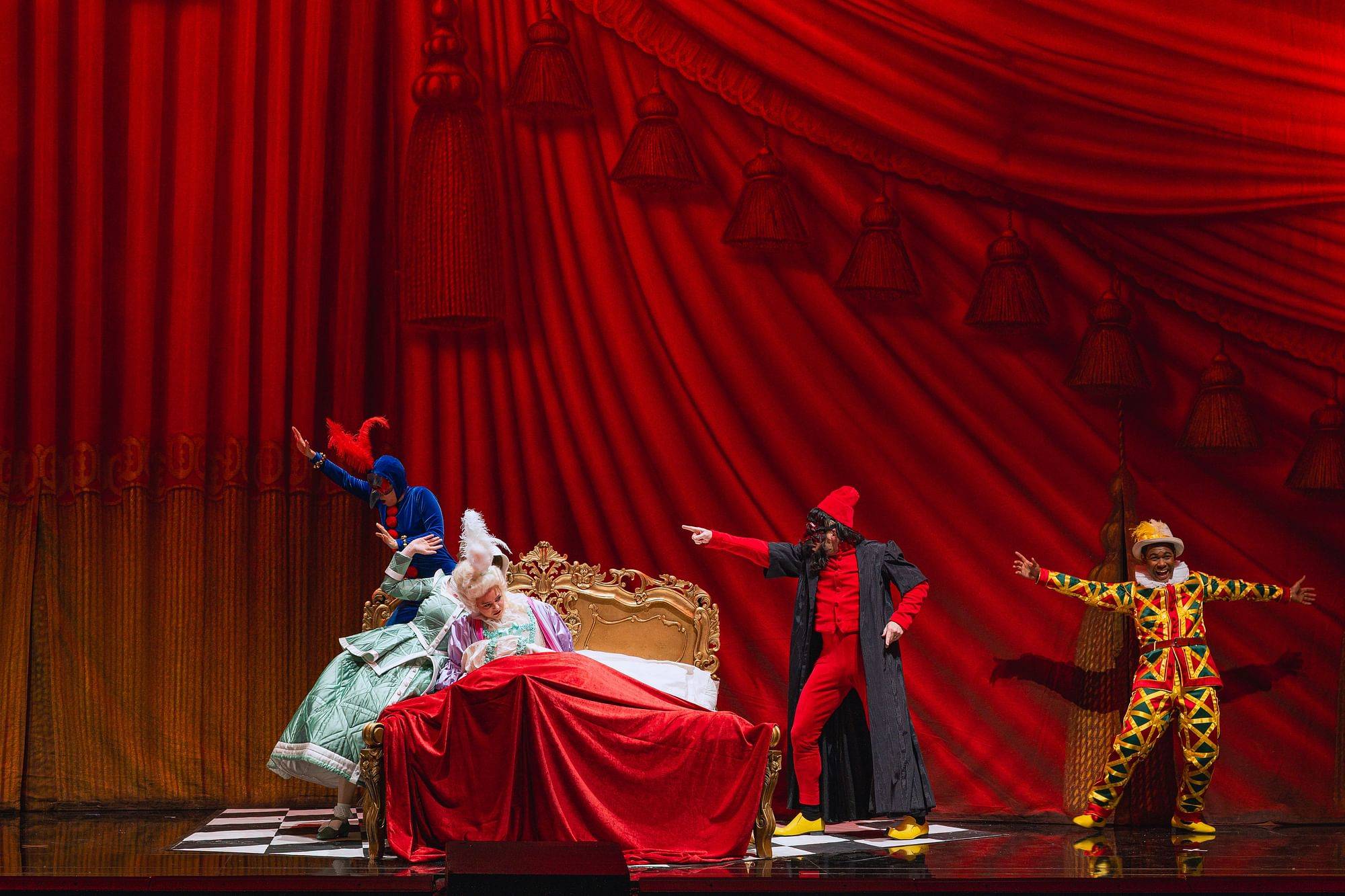
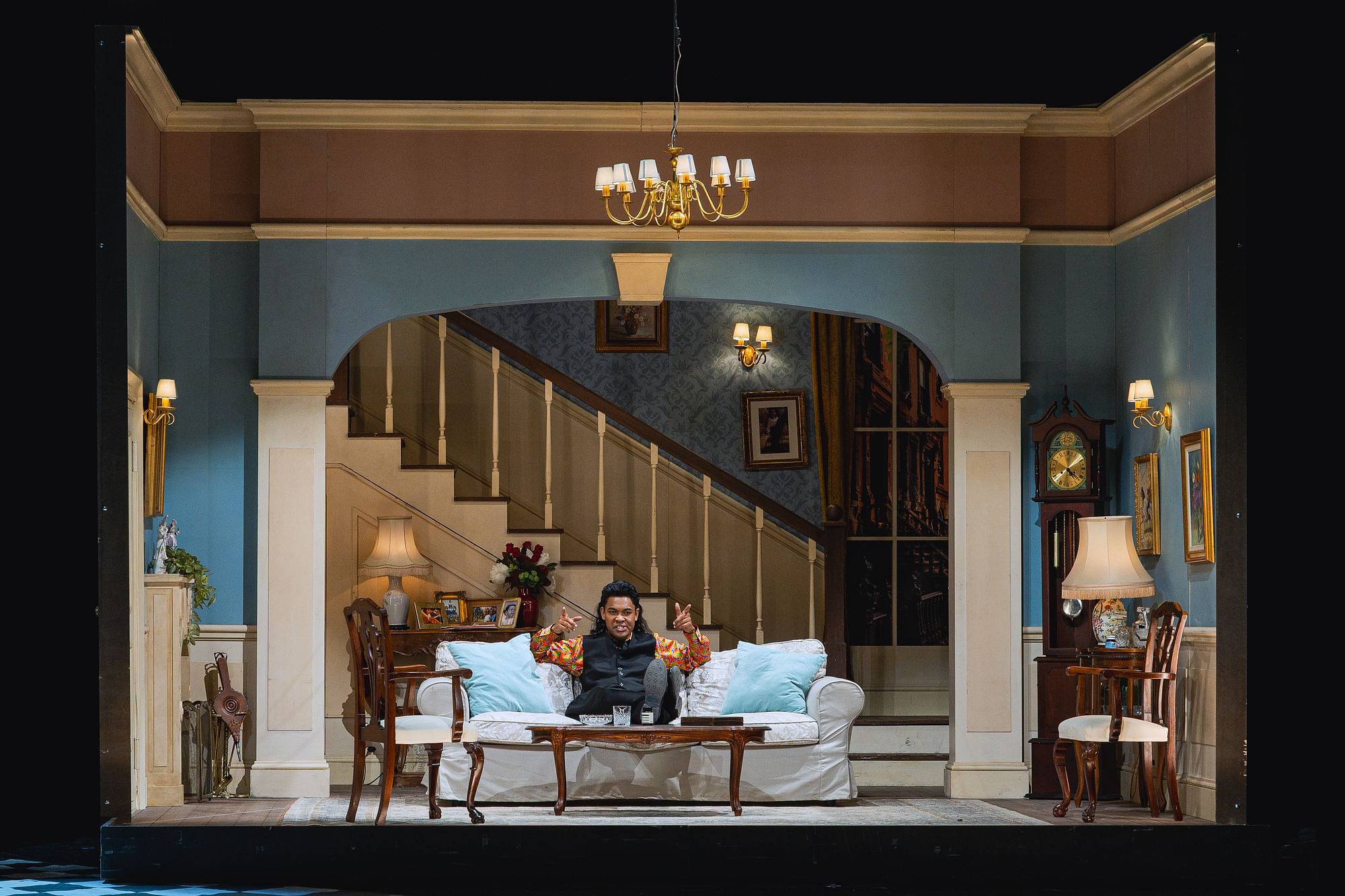
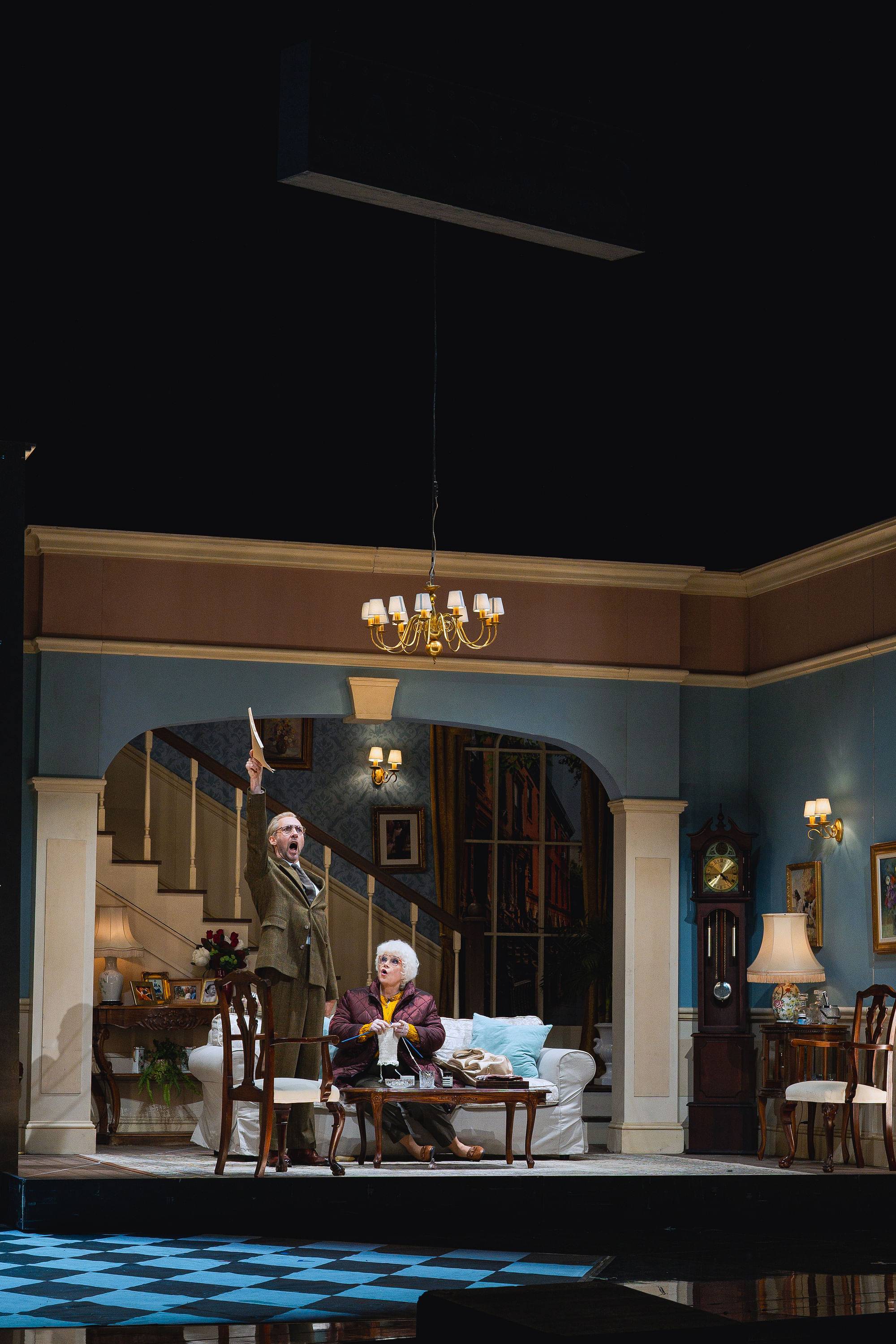
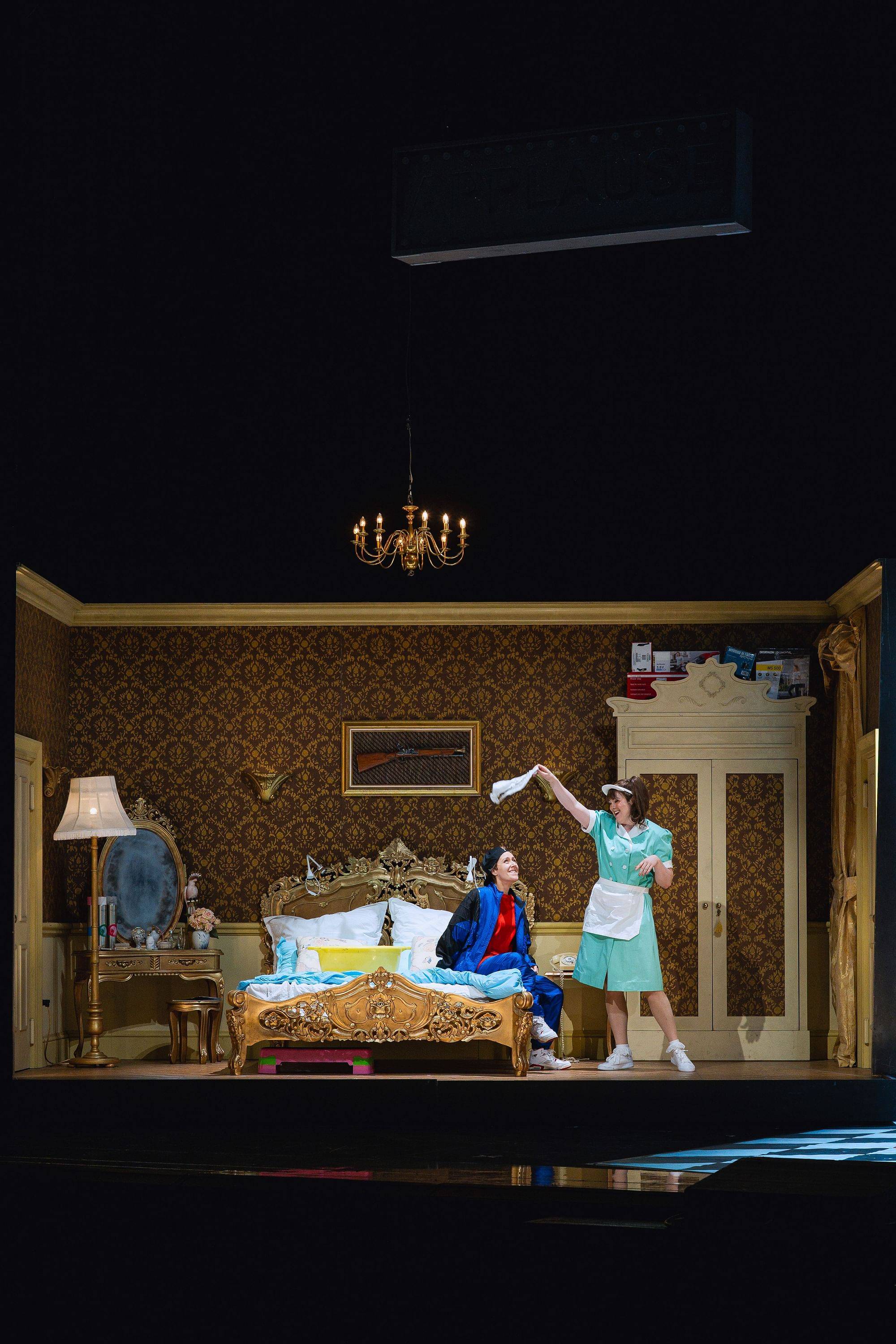
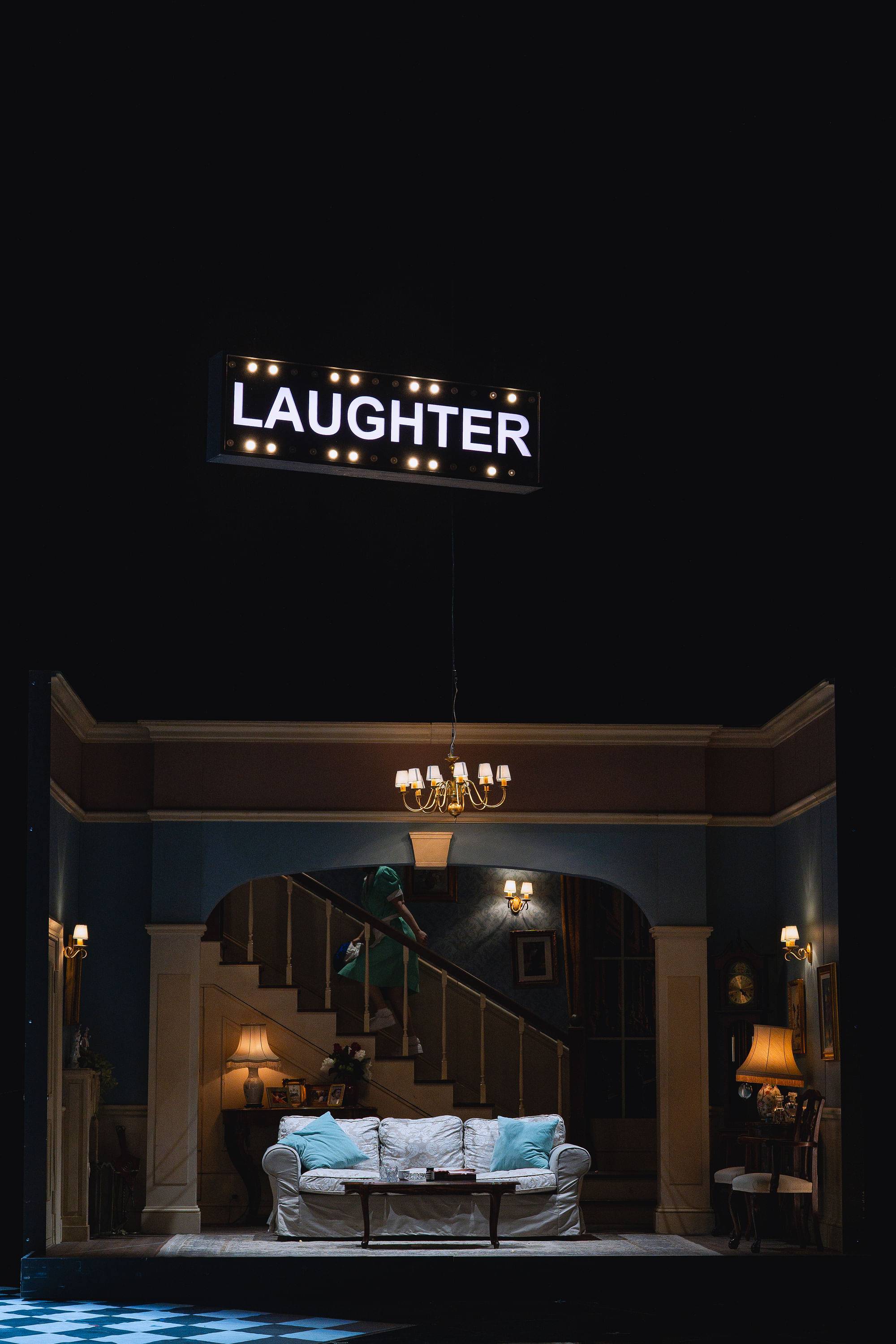
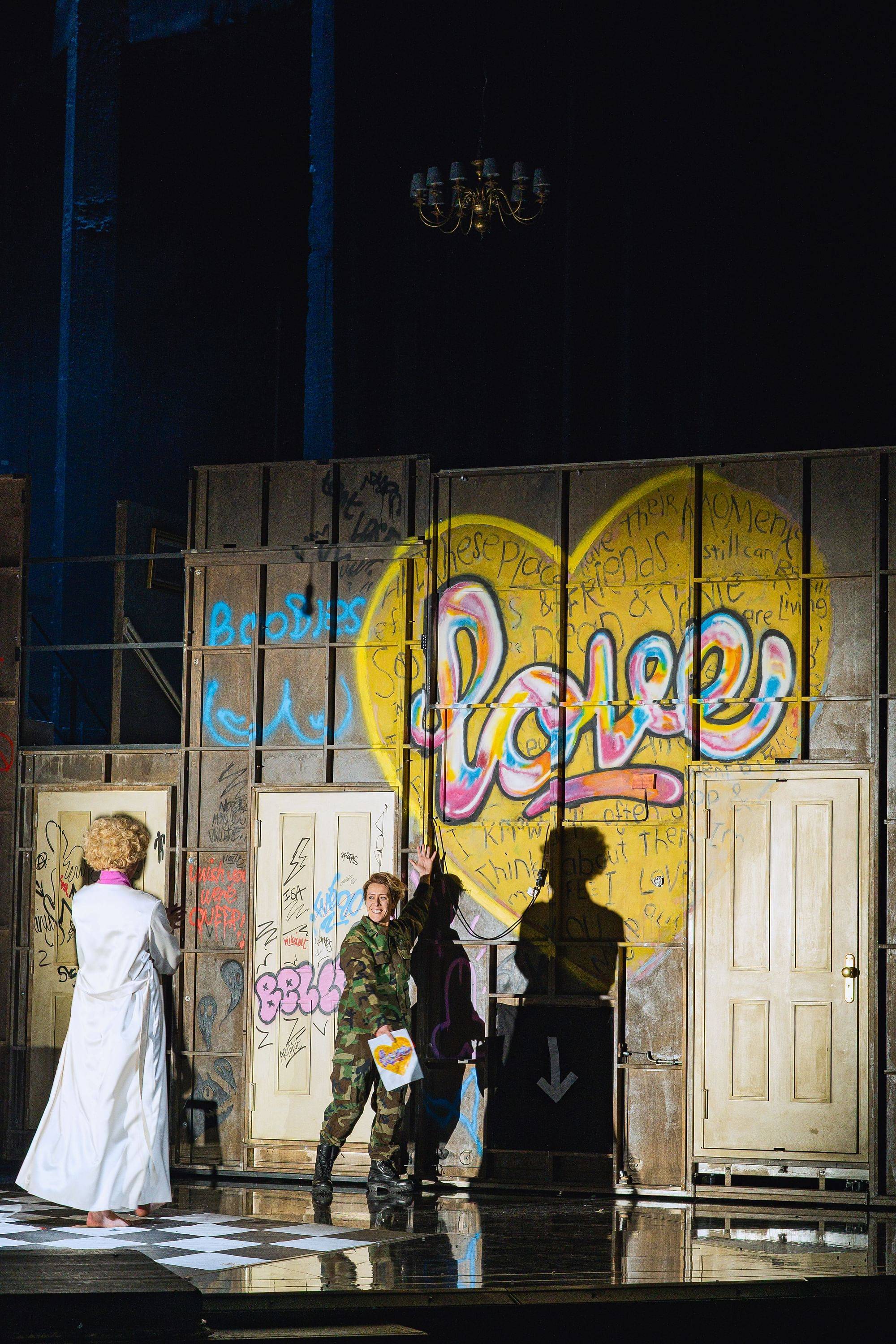
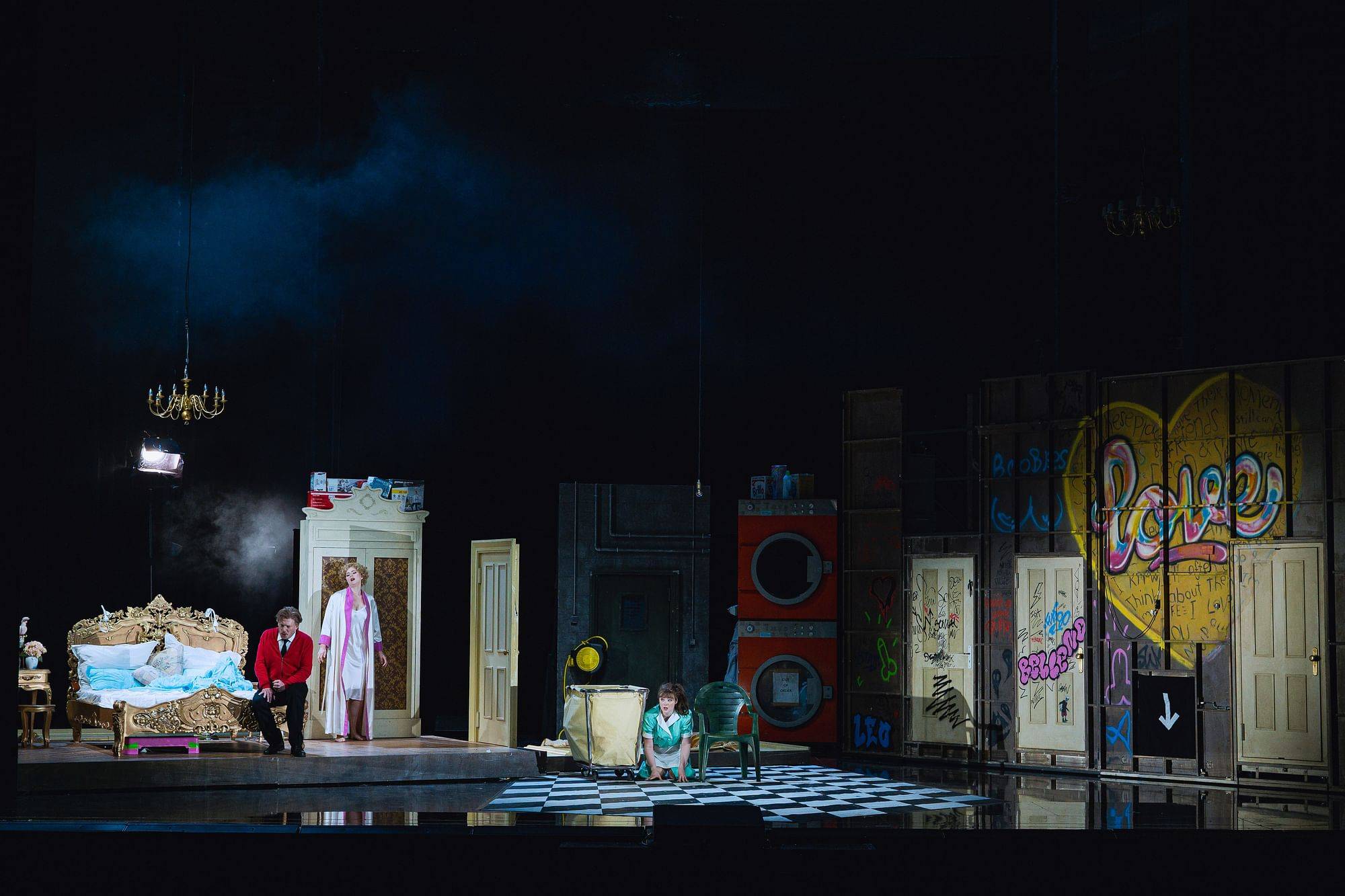
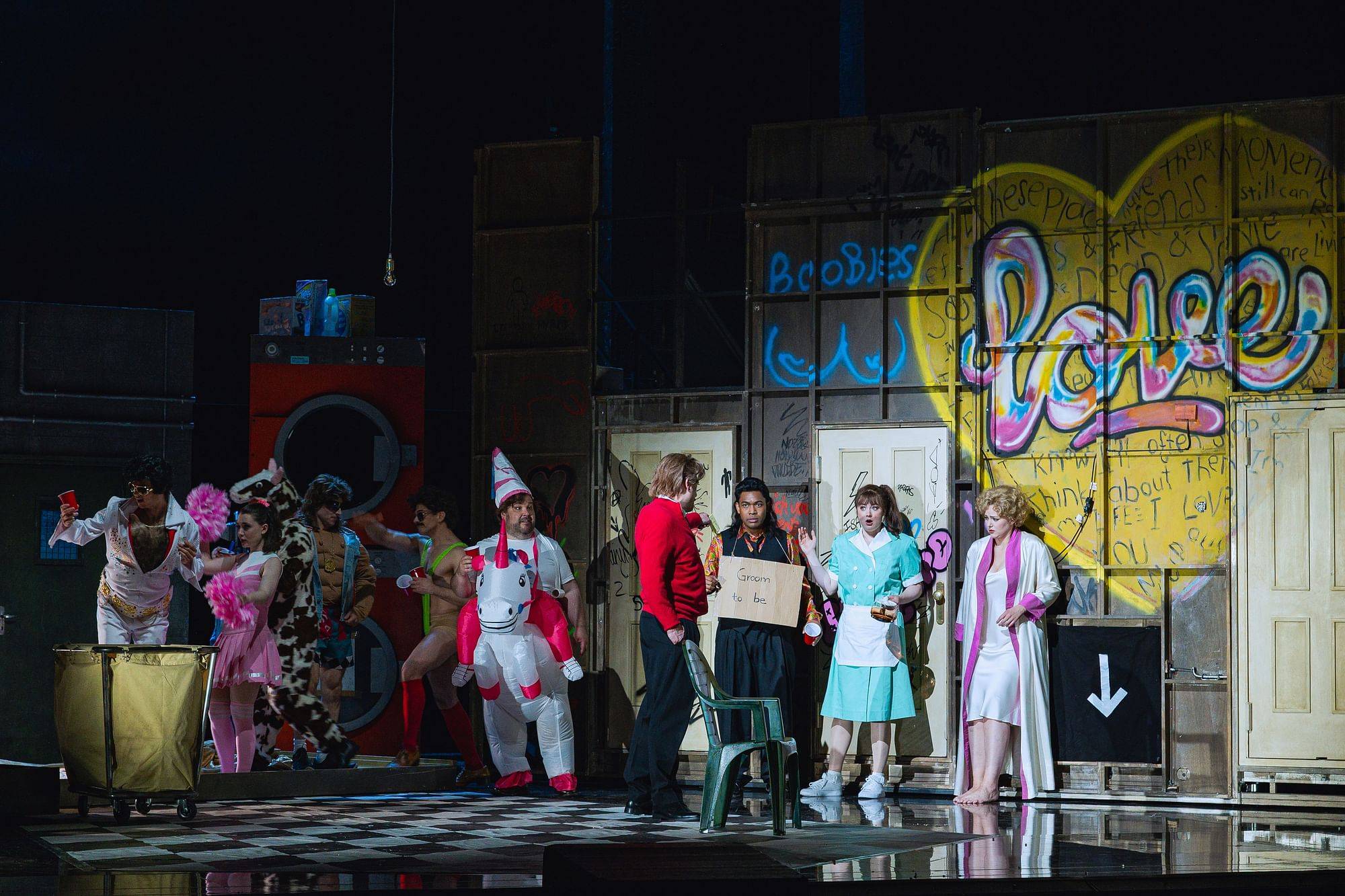
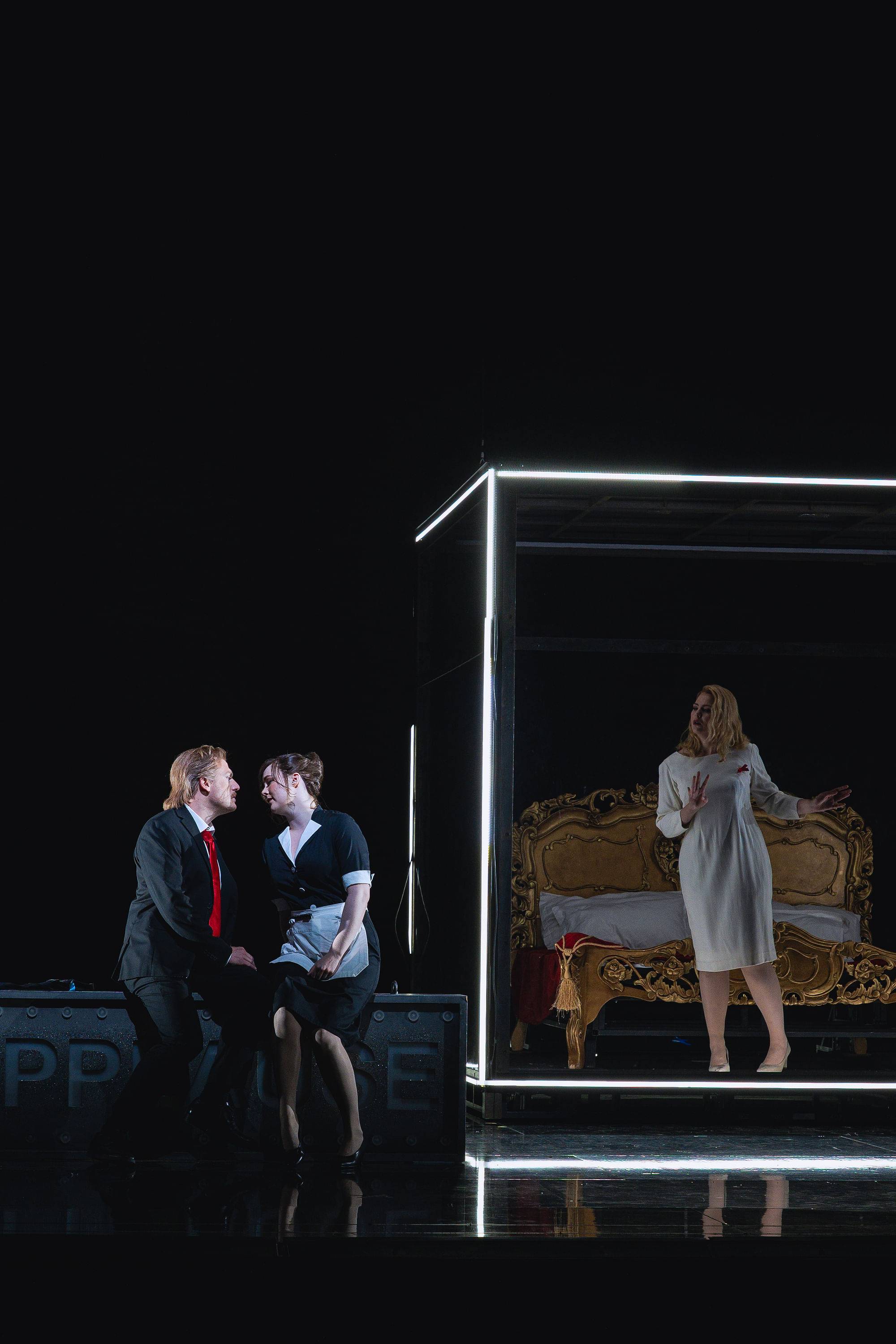
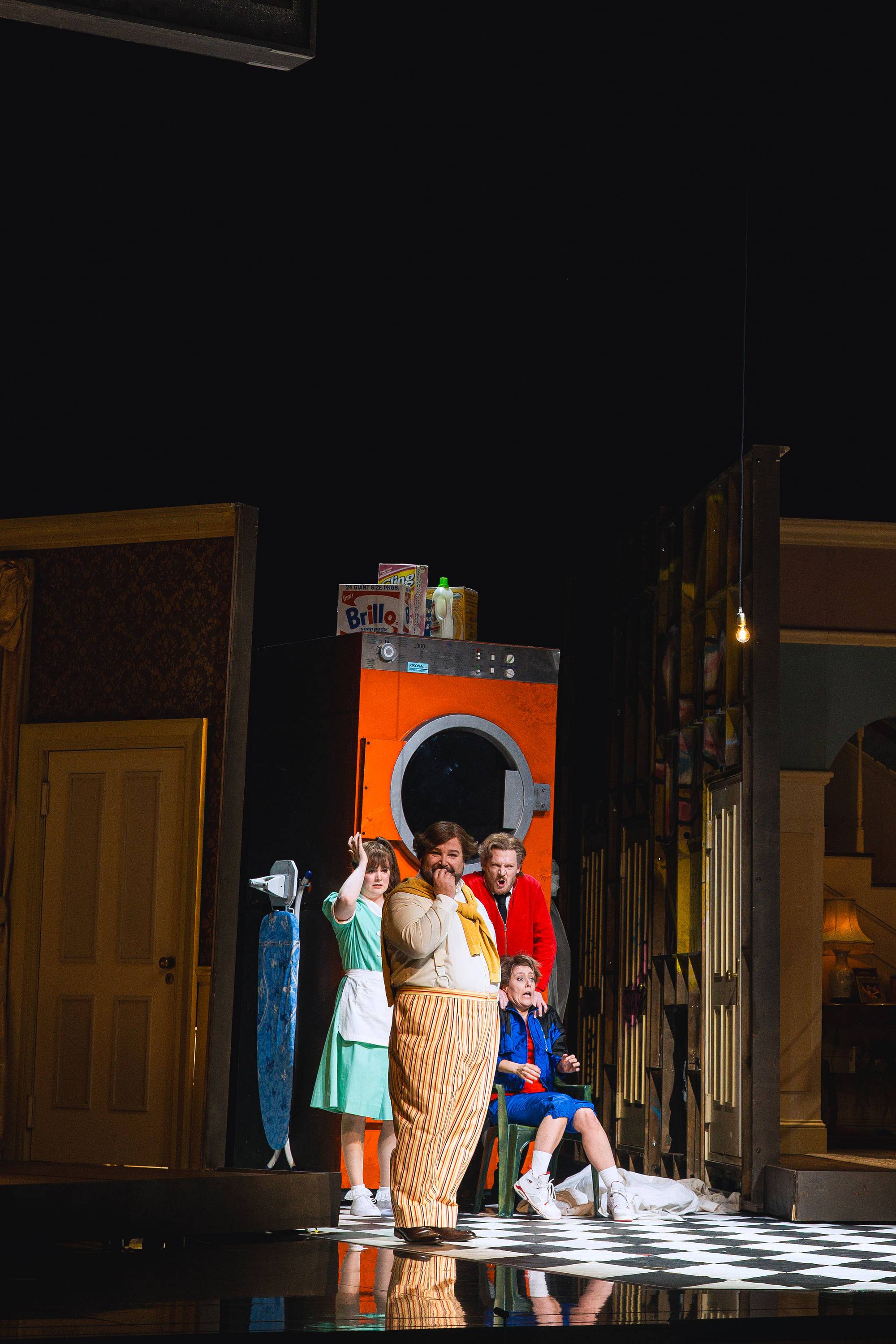
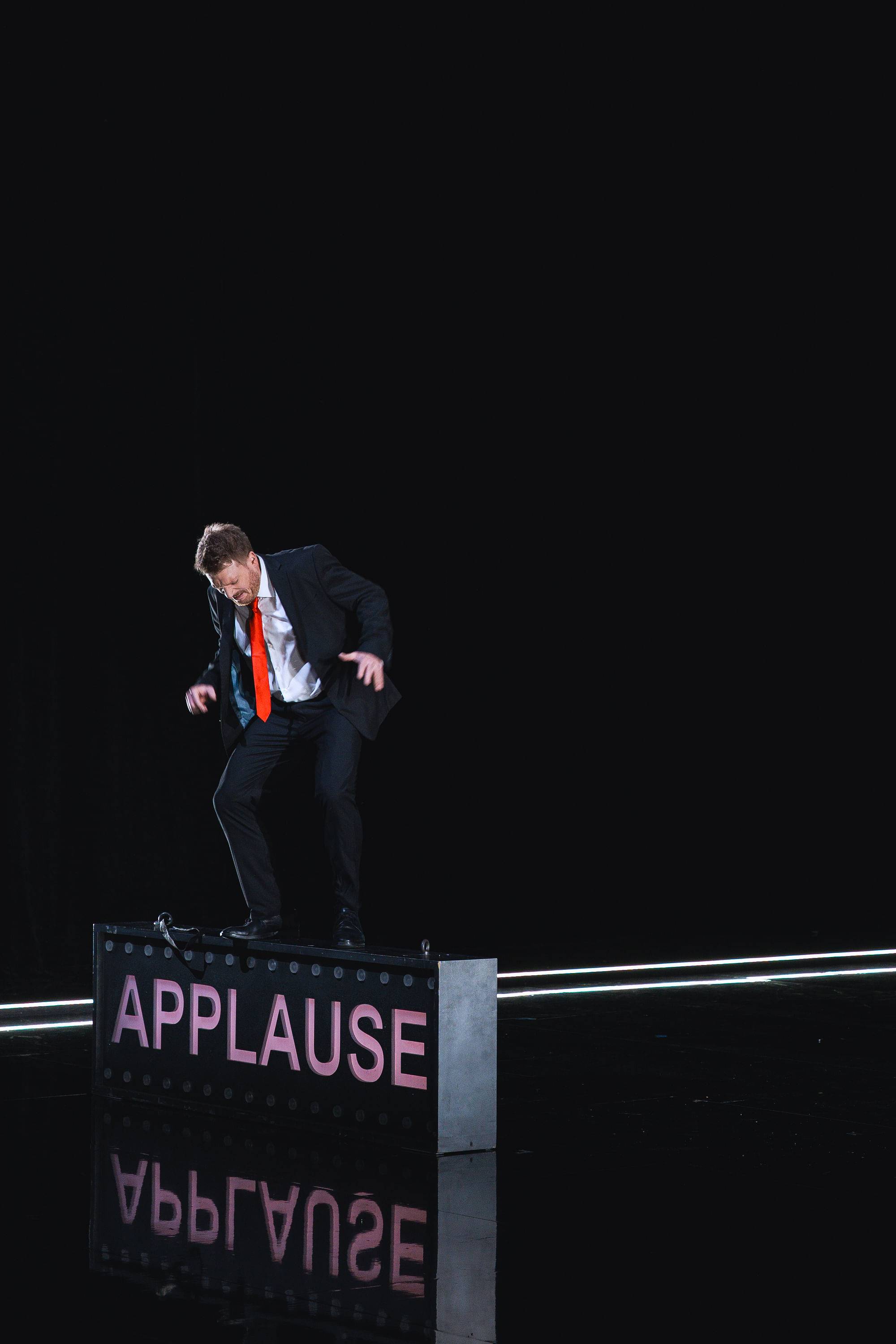
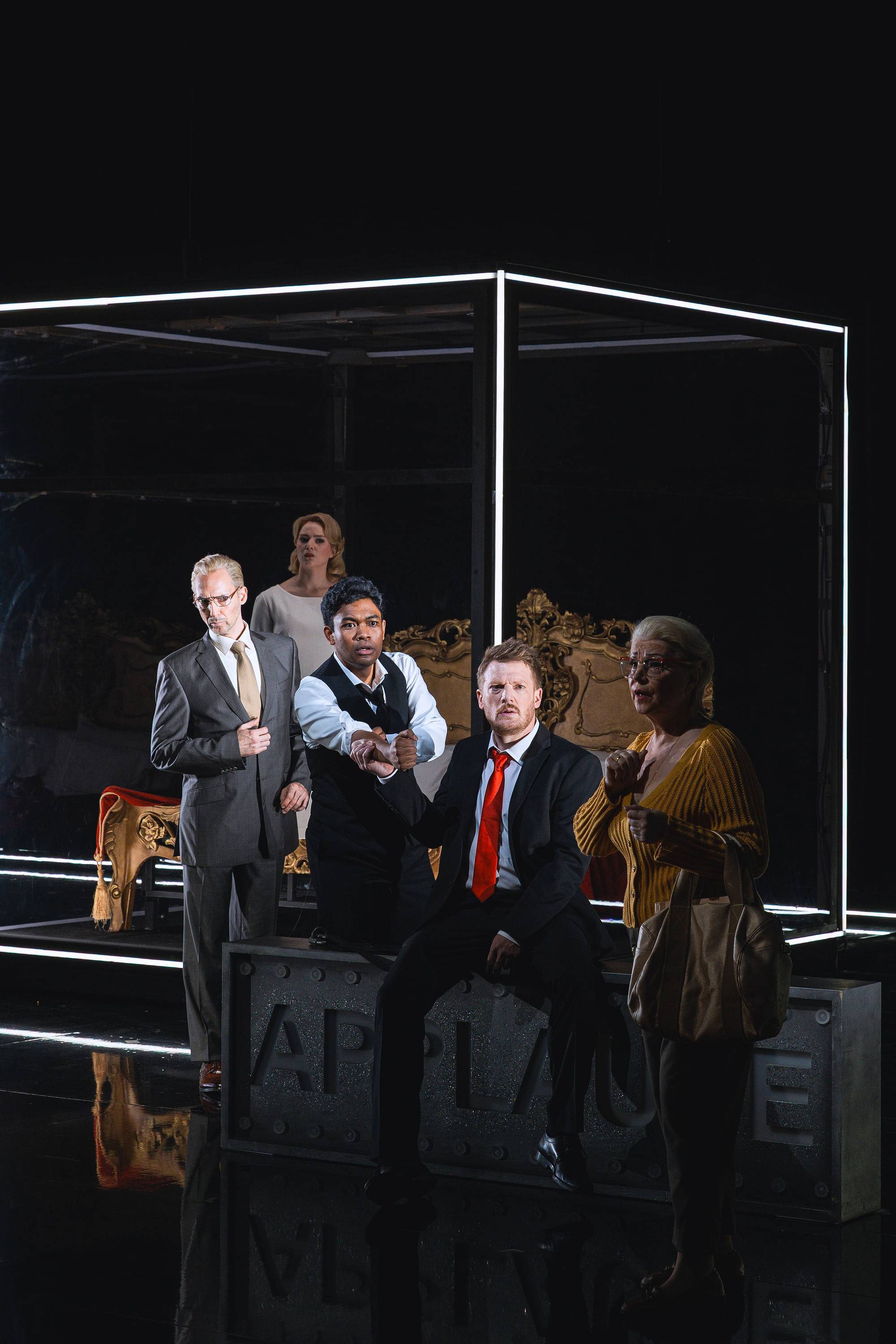
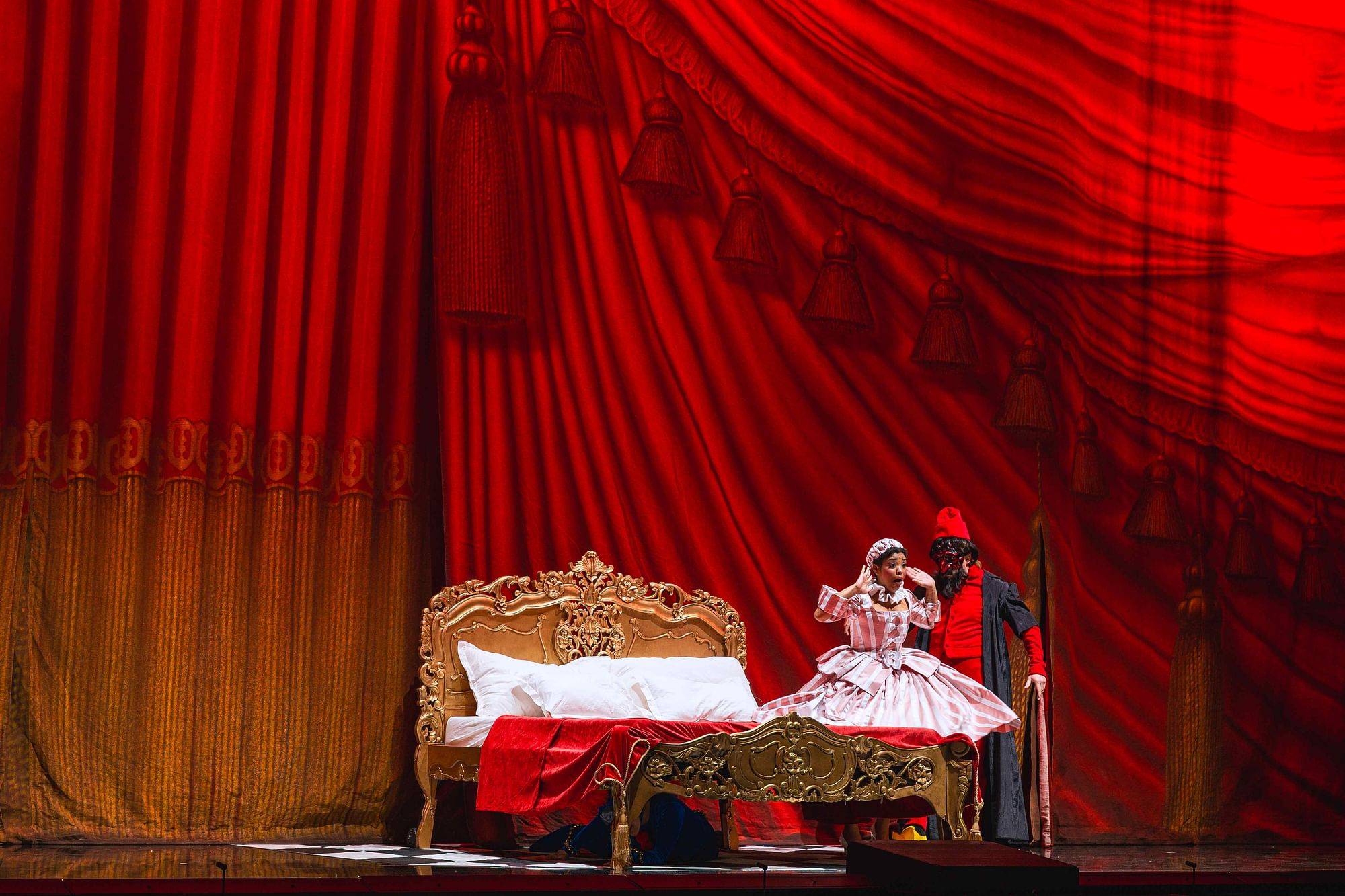
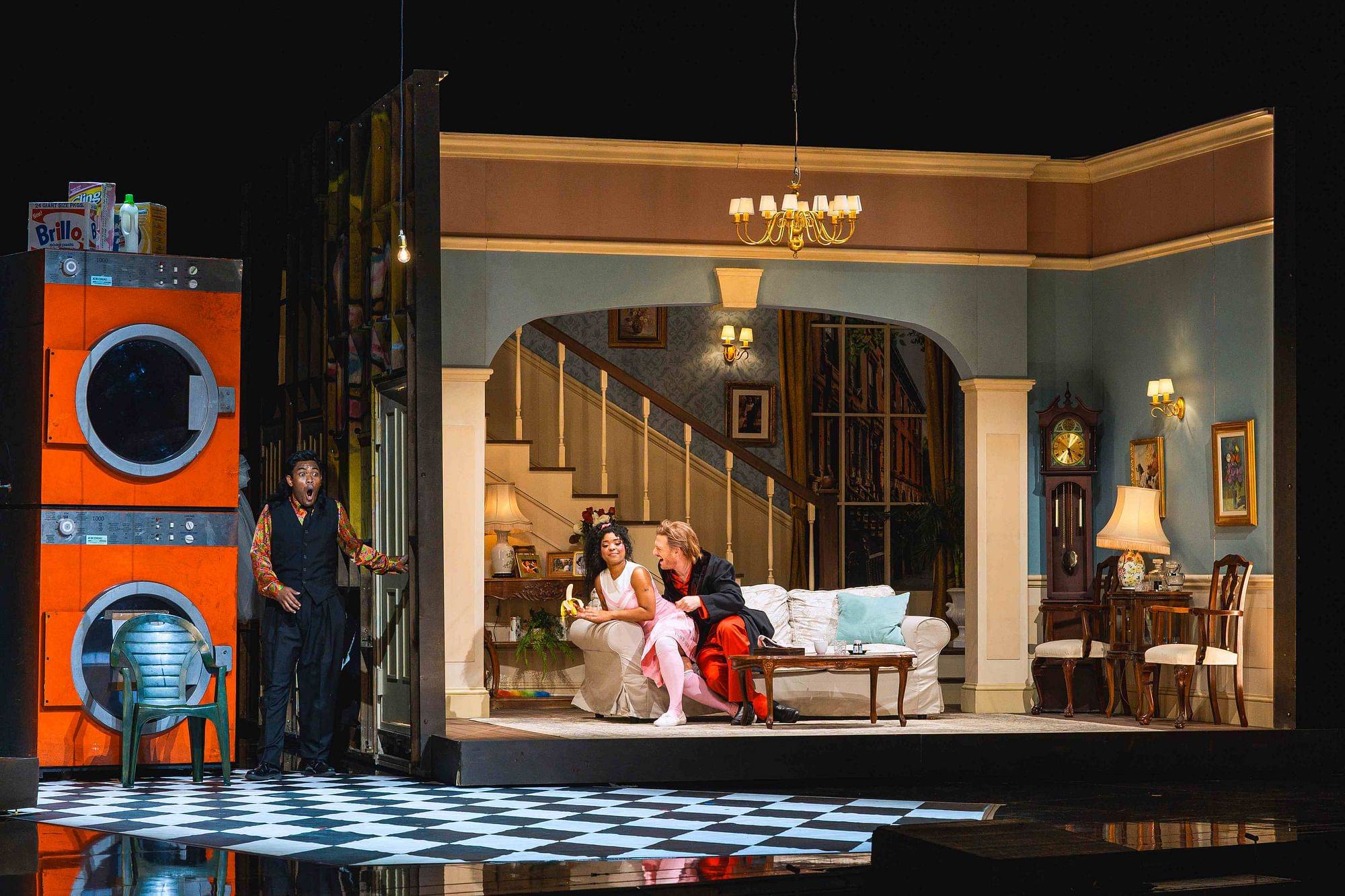
The production presents the opera from the perspective of four main characters, which is why each of the four acts looks different. The first act is shown from the count’s perspective. There are three rooms on stage: the bedroom on the left, the living room on the right, and the servants’ quarters in the middle—complete with a washing machine and appliances for daily chores. The two rooms on the left and right resemble rooms in sitcoms: the living room has a sofa in the center and a staircase leading to the upper floor, while the bedroom features a large bed. The rooms are opulently furnished and very colorful—as are the characters’ costumes, which also bring to mind characters from sitcoms or television series. The second act is shown from Susanna’s perspective. The rooms remain the same, but as the plot unfolds—and the confusion intensifies—they descend into chaos. Walls are broken through or collapse; the living room on the right rotates to reveal a wall that Cherubino has painted with graffiti. The costumes, too, become wilder, more colorful, and more outlandish. The third act then presents the Countess’s perspective; now the stage is black and nearly empty, with only her marital bed standing in the center inside a glass cube illuminated by neon tubes. Everything, including the costumes, is very cool, minimalist, and stylized. The fourth act is told from the perspective of Marcellina and Barbarina, who are knitting together; a gigantic tree grows out of the bed from the third act, looking as if it were knitted from fabric. Some of the characters also don knitted or crocheted costumes that are not clearly masculine or feminine—they are very colorful costumes that blur gender boundaries.
Articles from our Weborello
A comedy about sex and power
Director Lotte de Beer in conversation about Mozart’s opera, class struggle, sex, power – and four very different perspectives on a musical masterpiece. Le nozze di Figaro premieres on 24 May 2025.