Respect, Clarity, and Mutual Consent
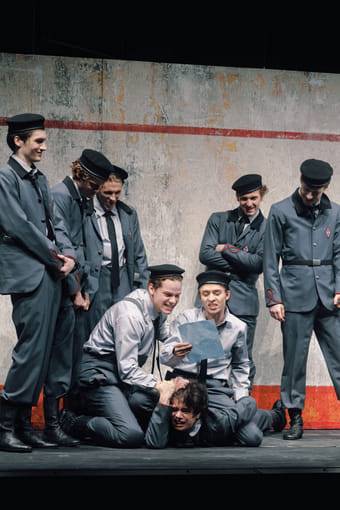
Especially in an ensemble like that of Spring Awakening, which brings together many young performers—some of whom are facing such scenic challenges for the first time—a special role has been established within the artistic team: the Intimacy Coordinator. In Spring Awakening, this role is taken on by Bernadette Maria Leitner.
An Intimacy Coordinator contributes specific, well-founded training to the rehearsal process in order to stage intimate, sensitive, or particularly physical scenes in a manner guided by respect, clarity, and mutual consent. In collaboration with the director and the ensemble, scenes requiring special attention are identified.
Particularly during the development of these scenes, care is taken to ensure that no one in the ensemble has to rely on intuition or “just improvise.” Instead, the expectations, boundaries, and movements of everyone involved are clearly defined and communicated in an understandable way. A central element in this process is consent. Each participant can articulate what is acceptable to them and where their personal boundaries lie. These boundaries form the basis for clear and safe planning of the staging.
Scenes Like Choreography
As rehearsals continue, intimate passages are treated like choreography: every movement is intentionally set, every touch precisely planned. Who touches whom? For how long? In what position? This approach not only creates safety, but also enables the performers to shape their roles with intensity and artistic presence.
Beyond that, an Intimacy Coordinator creates a space in which questions and reactions can be addressed openly—something that is essential, especially in works dealing with themes such as power, violence, or emotional intimacy. This professional guidance not only helps protect everyone involved, but also strengthens the impact and artistic quality of the performance.