Die Zauberflöte
Opera by Wolfgang Amadeus Mozart
Libretto von Emanuel Schikaneder
In German language with German and English surtitles
suchen:
The story of The Magic Flute begins like an adventure: a prince rescues a princess from a dark ruler, accompanied by a birdcatcher and magical devices. But the boundaries between good and evil, light and dark become blurred and the characters are far more complex.
The story of The Magic Flute has been interpreted and reinterpreted in many ways. But one of the reasons it continues to captivate audiences to this day is that it features complex characters, who are portrayed as diverse and dazzling as real people. A mother, for example, who wants to save her daughter – or perhaps uses her as an instrument of revenge. A young woman who discovers a strength within herself she didn’t know she had. A coward who might actually be braver than he believes. A villain who, on second glance, no longer appears (only) evil.
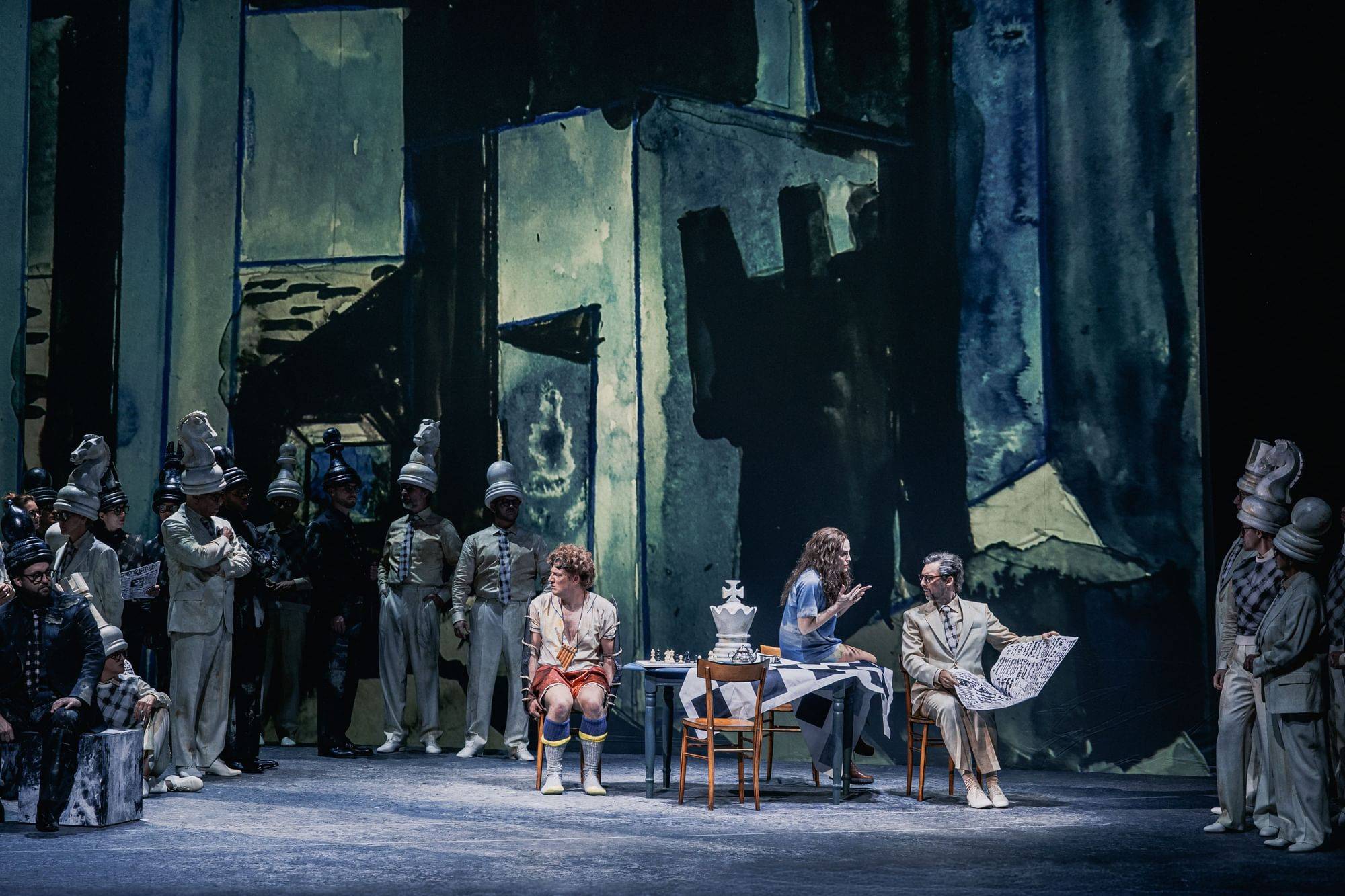
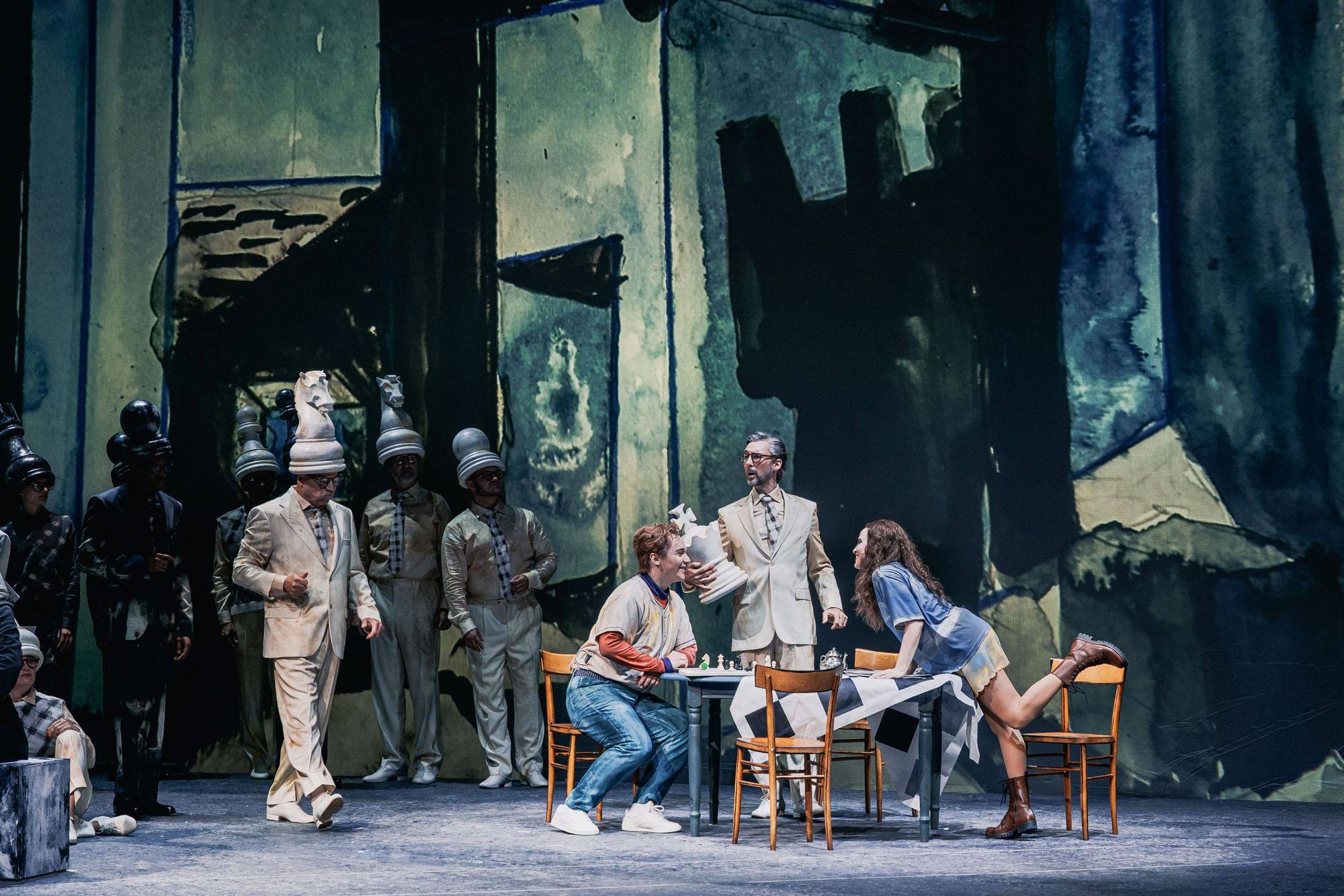
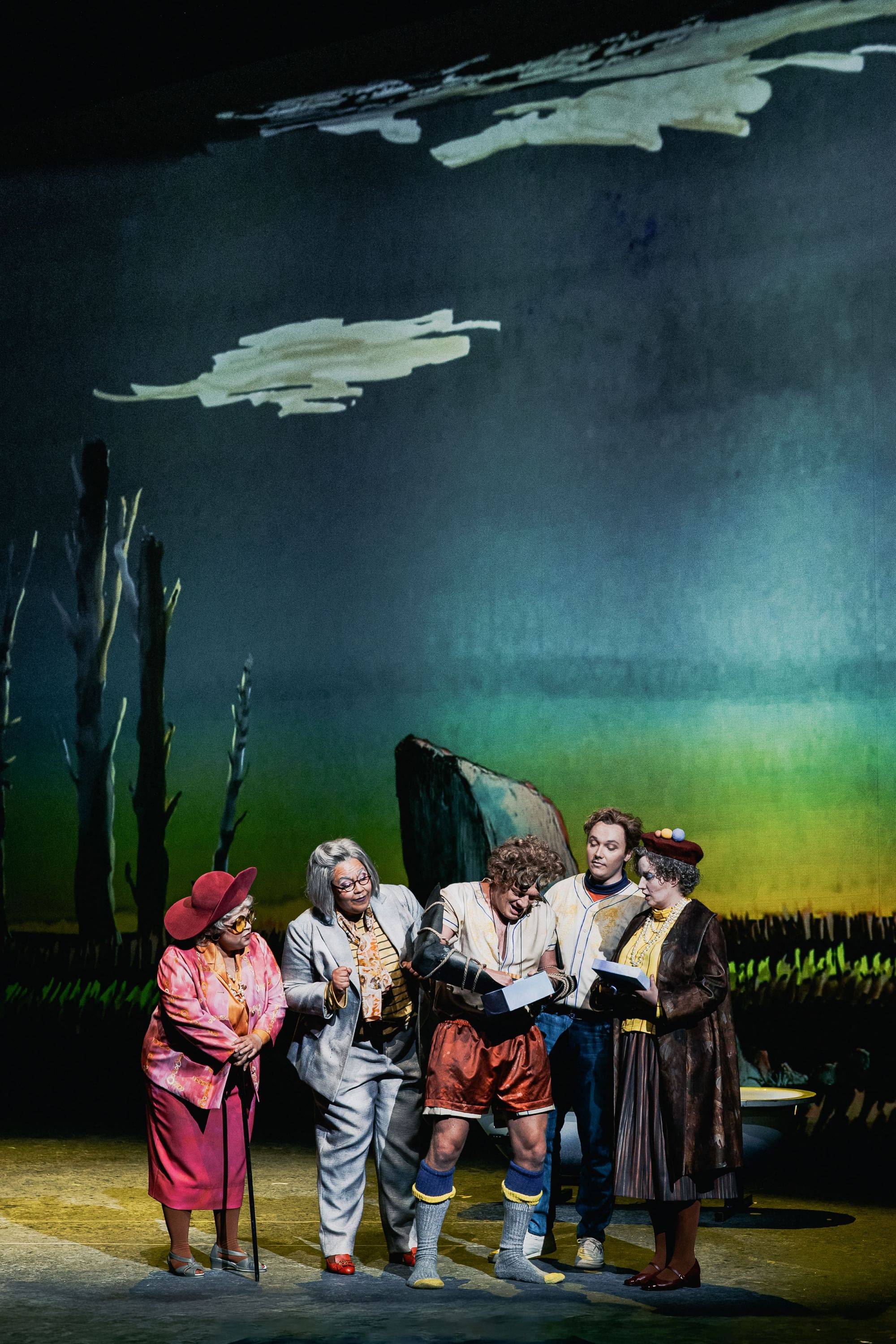
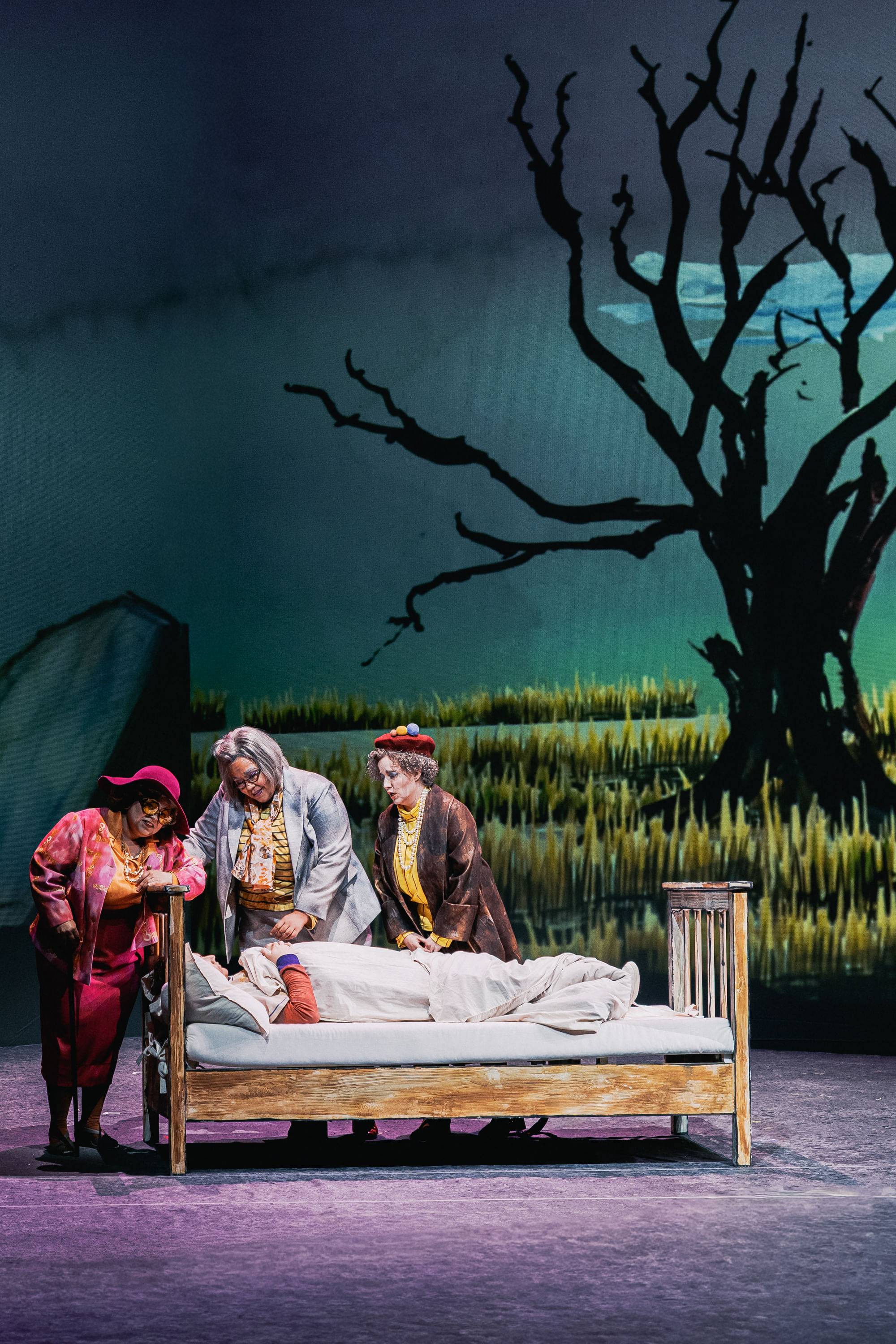
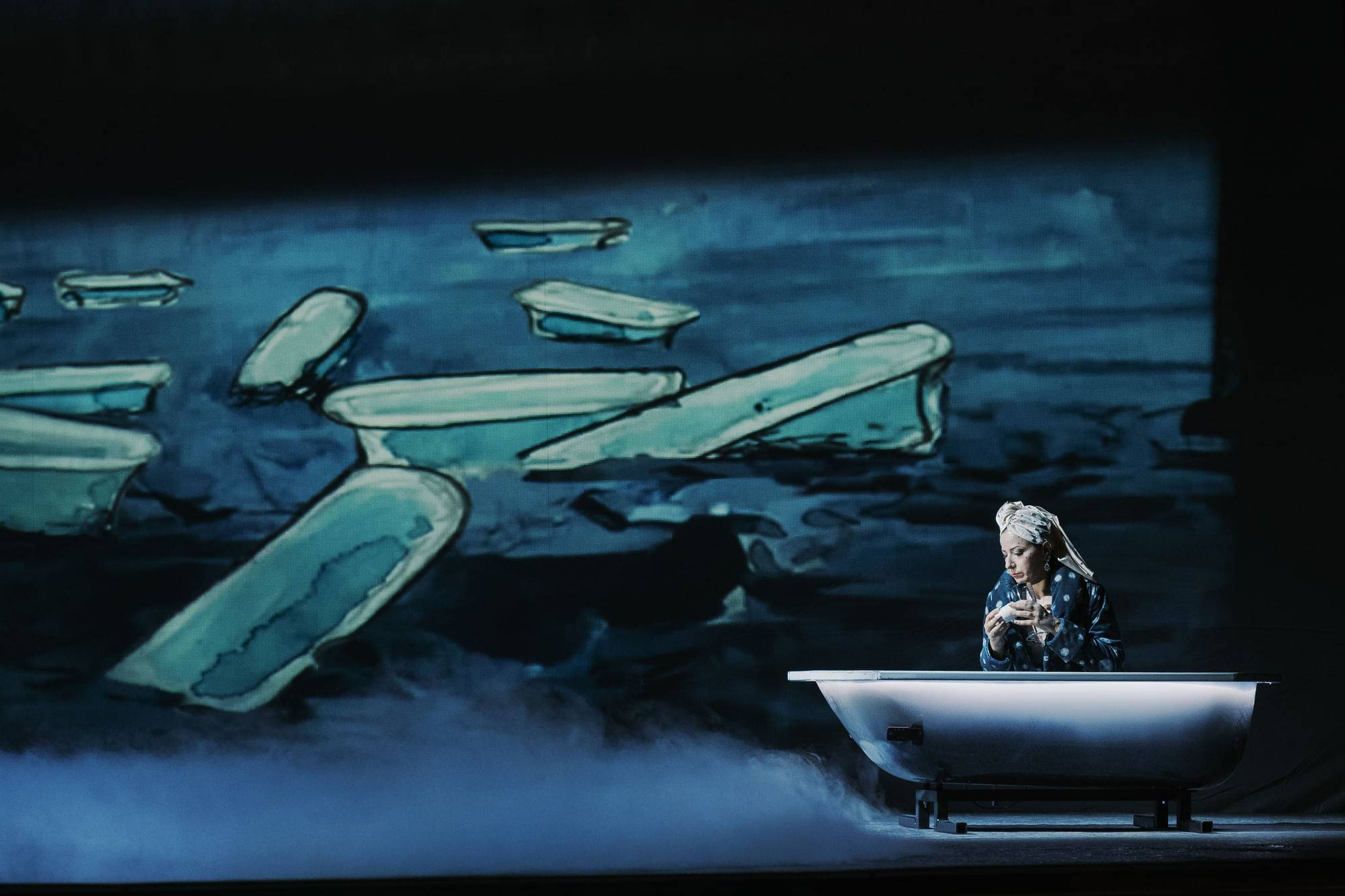
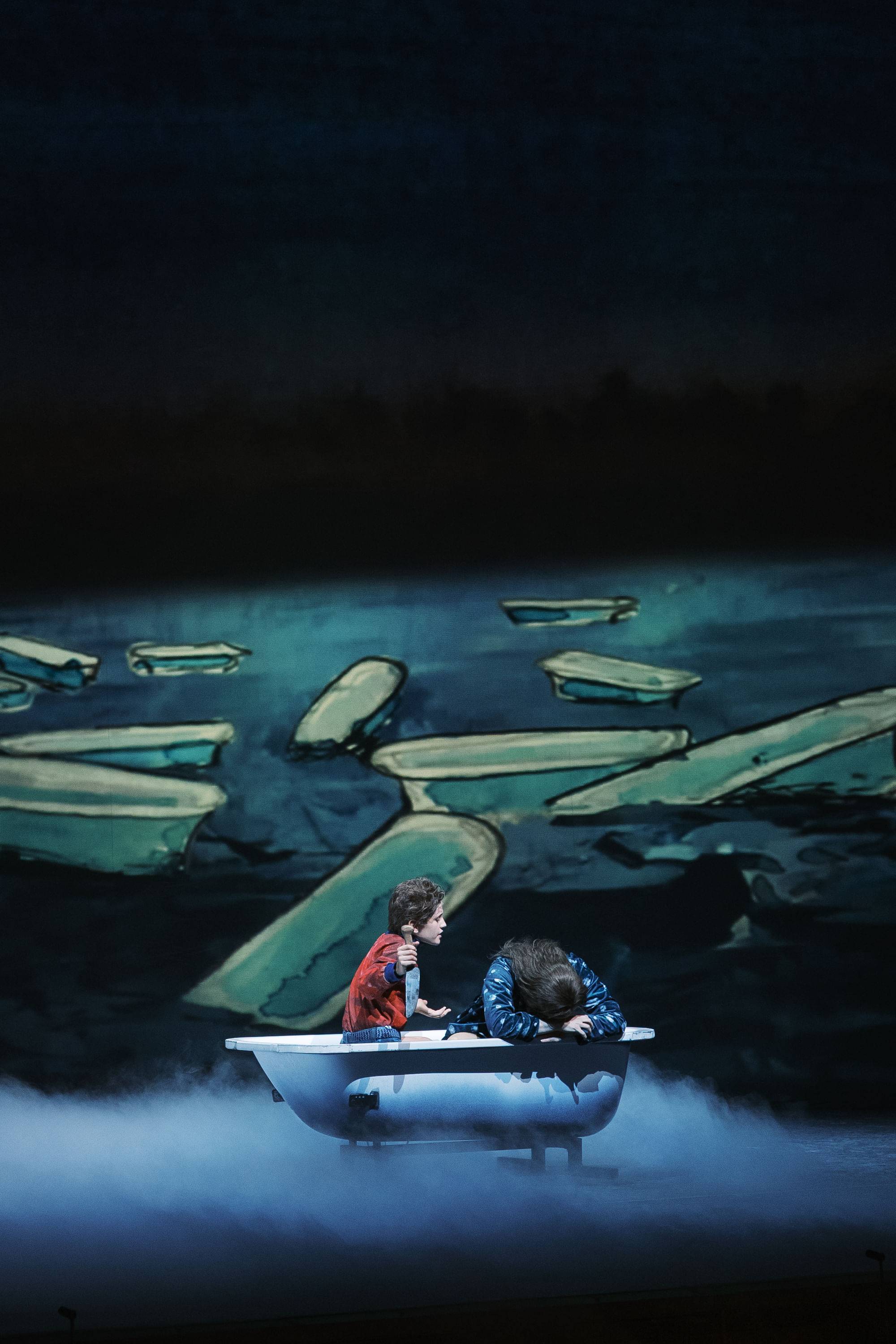
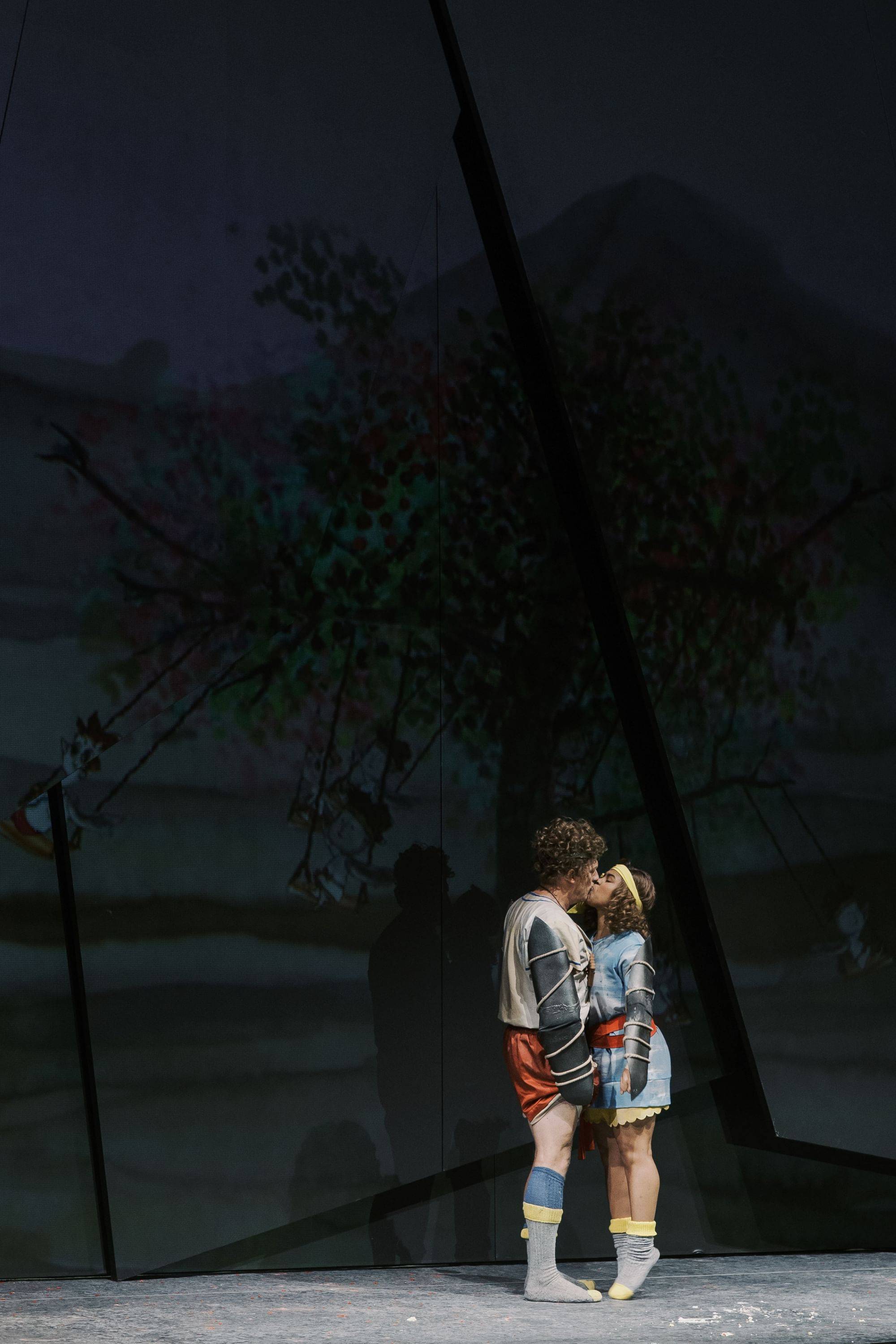
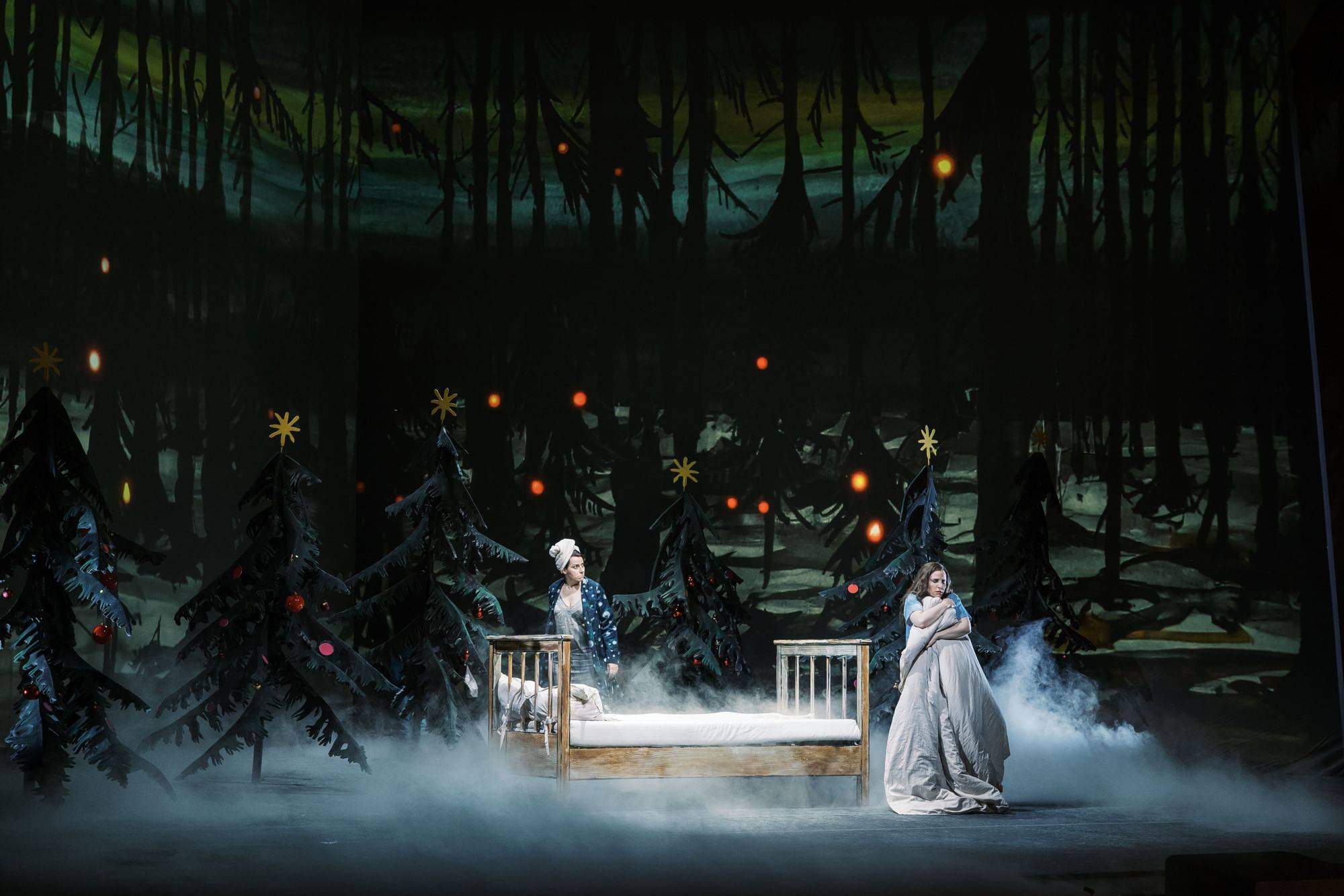
In Lotte de Beer’s production, the opera remains a beautiful, magical fairytale. At the same time, however, she seeks an emotional anchor for the story – someone who draws the audience into the narrative. "For me, The Magic Flute has a lot to do with growing up," she says, "which is why a young person invites us into their world of imagination. Imaginatively animated videos open a path into this world." This gives rise to fantastical, striking, unsettling, and captivating places and spaces, where Mozart and Schikaneder’s fable is told in all its complexity.
Recommended from 9 years
Stage direction Lotte de Beer
Bühnenbild und Illustrationen Christof Hetzer
Animation Lead Roman Hansi
Costume design Jorine van Beek
Lighting design Alex Brok
Choir director Roger Díaz-Cajamarca
Dramaturgy Peter te Nuyl
FIRST ACT
SECOND ACT
For all those who use a screen reader, a description of the visual aspects of the performance (set design, costumes...) follows here instead of the photo gallery.
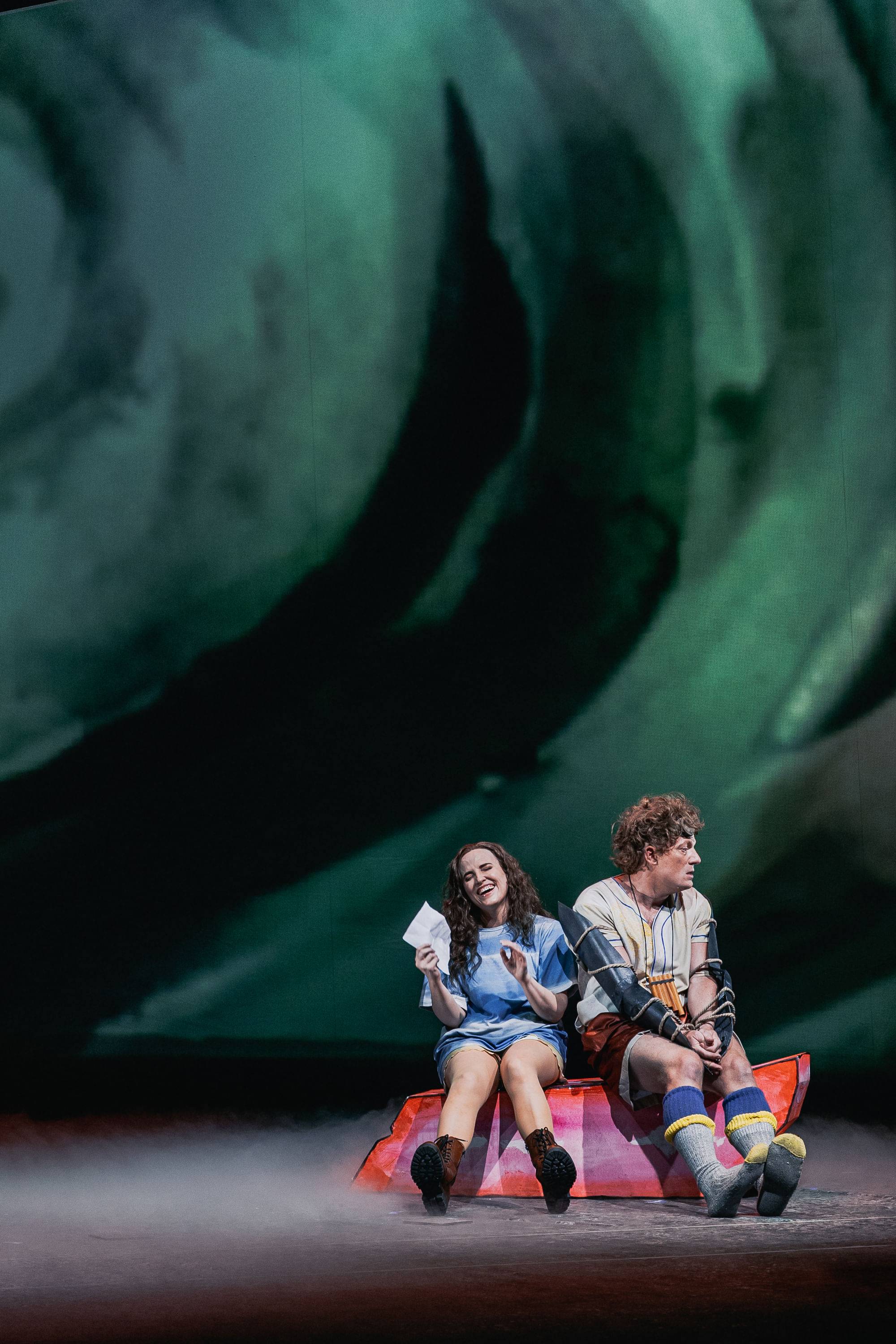
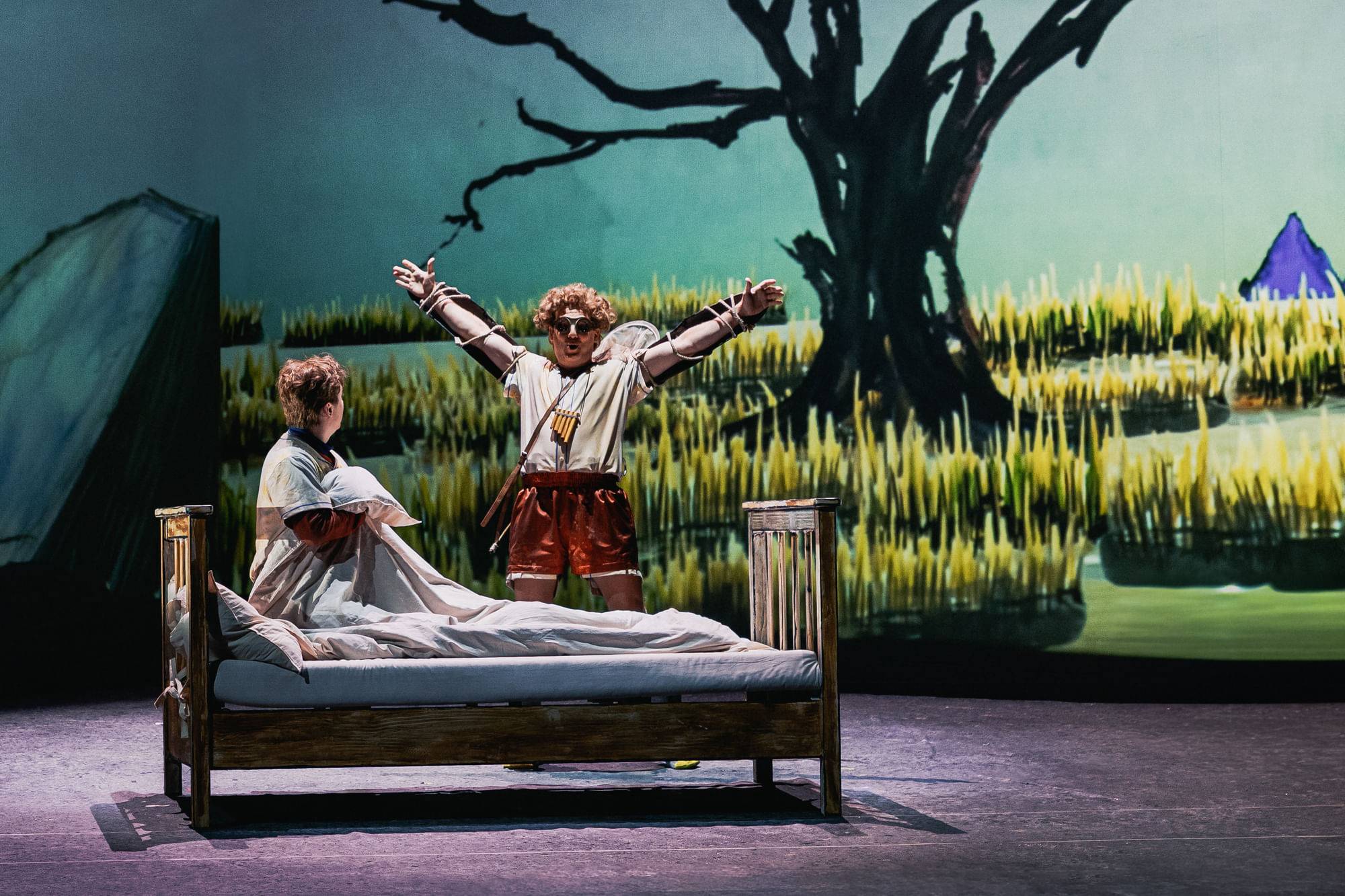
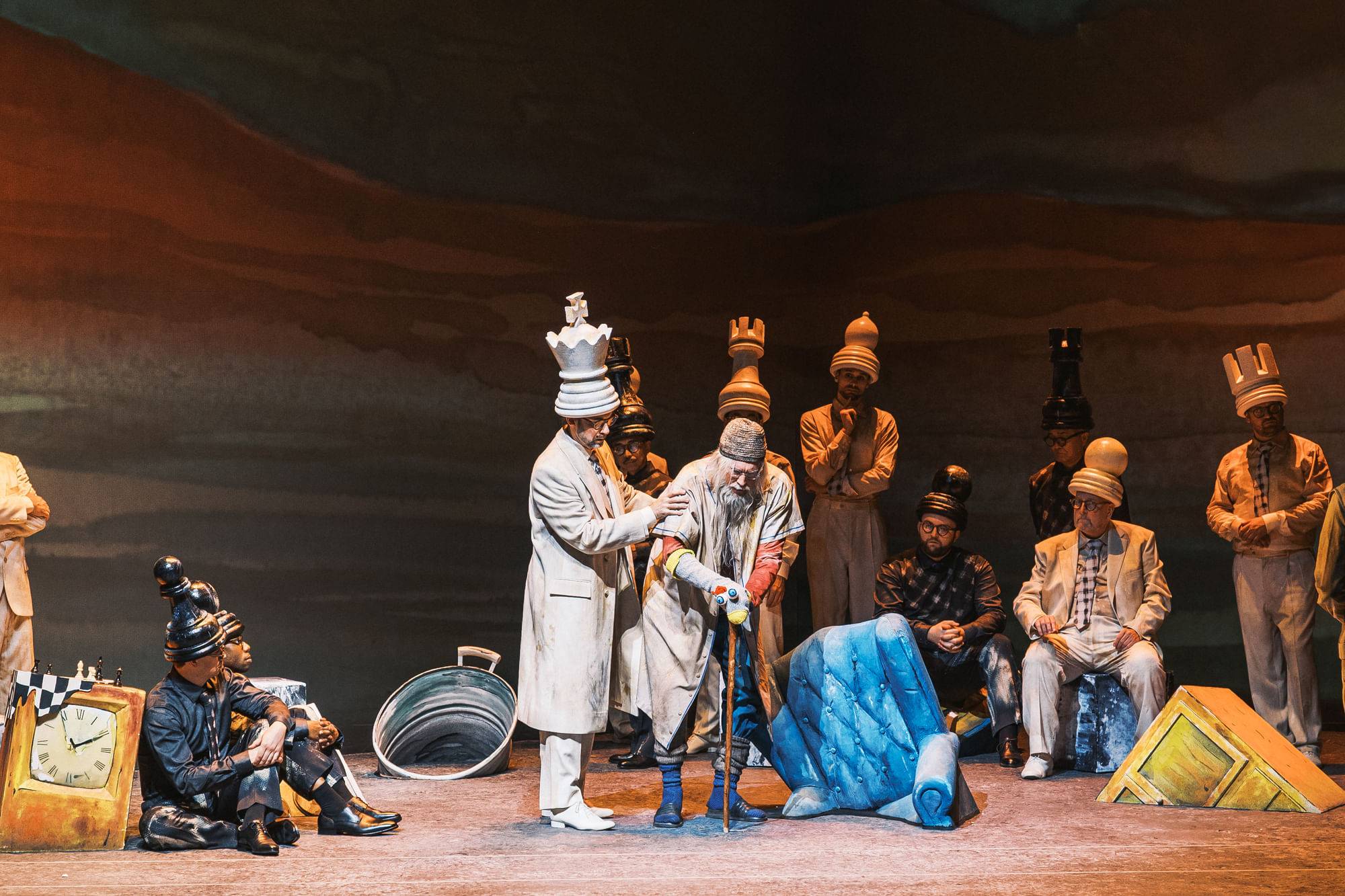
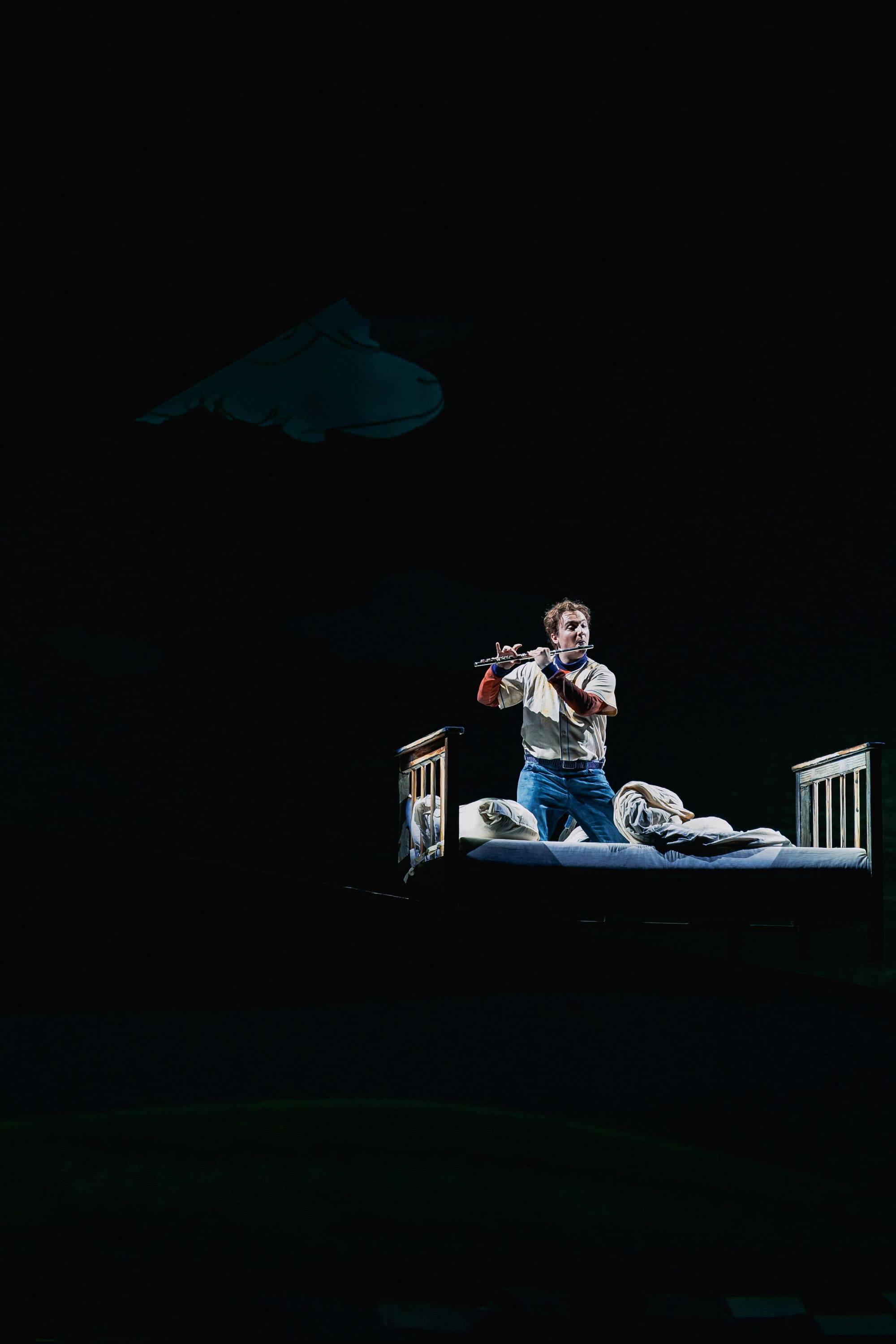
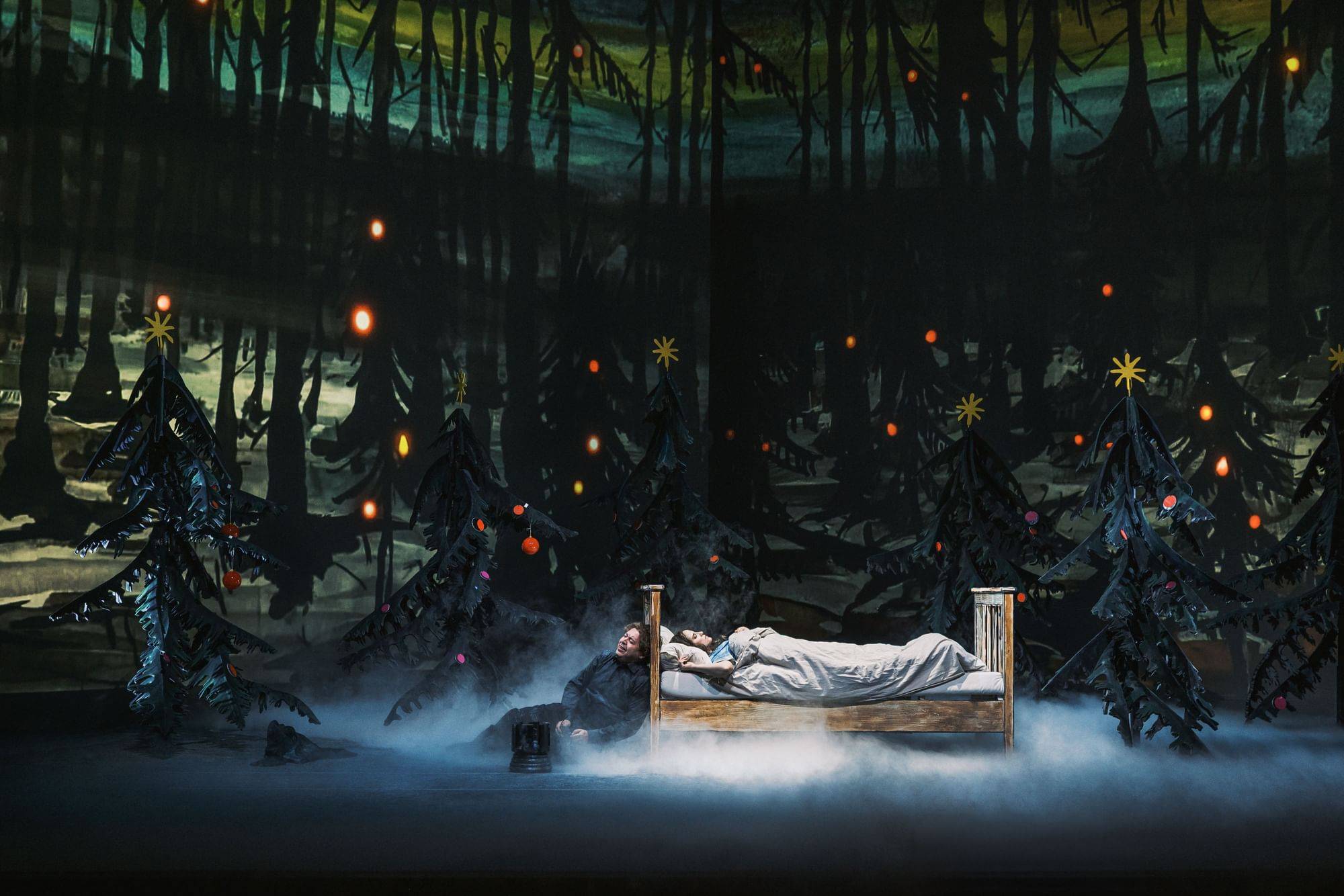
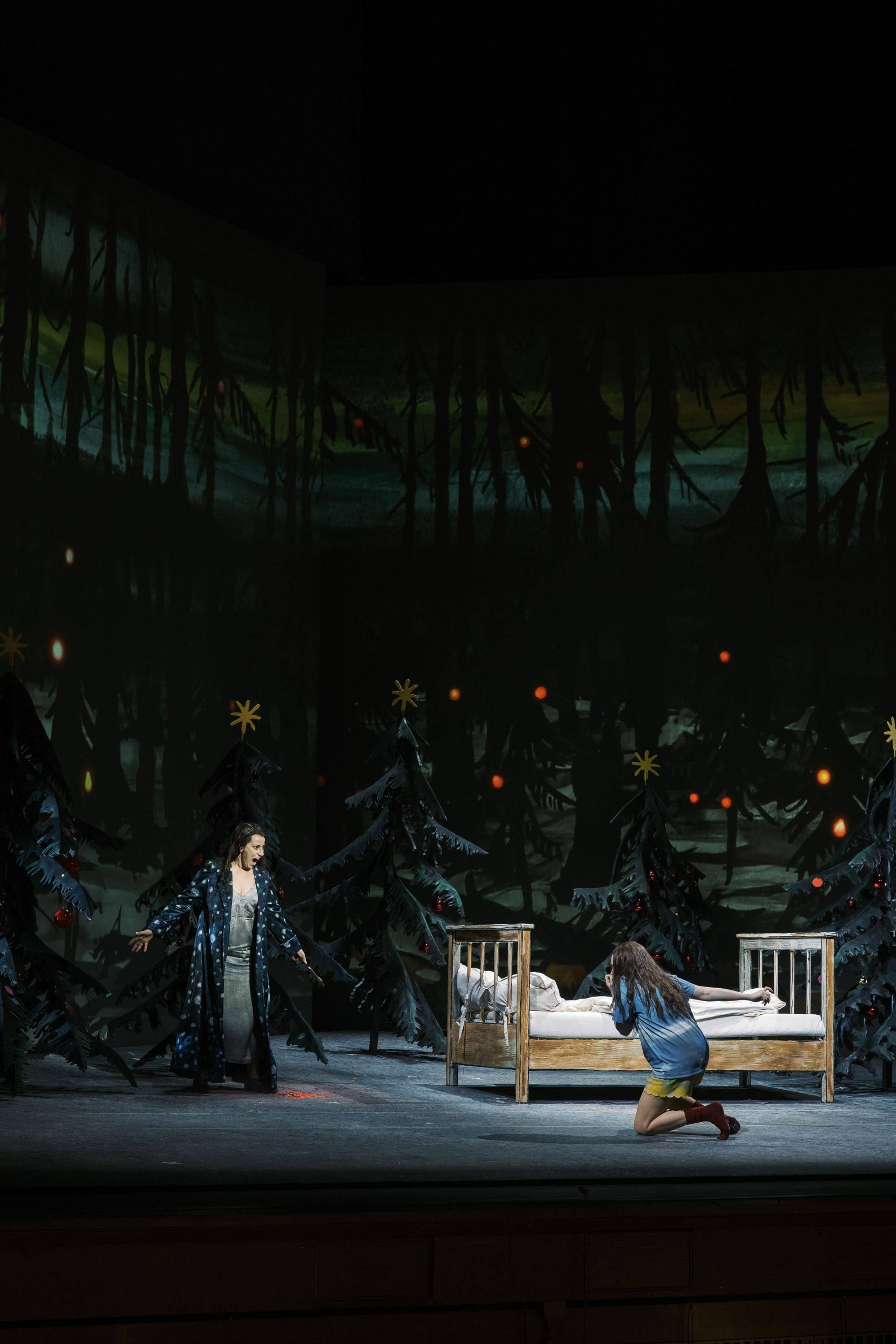
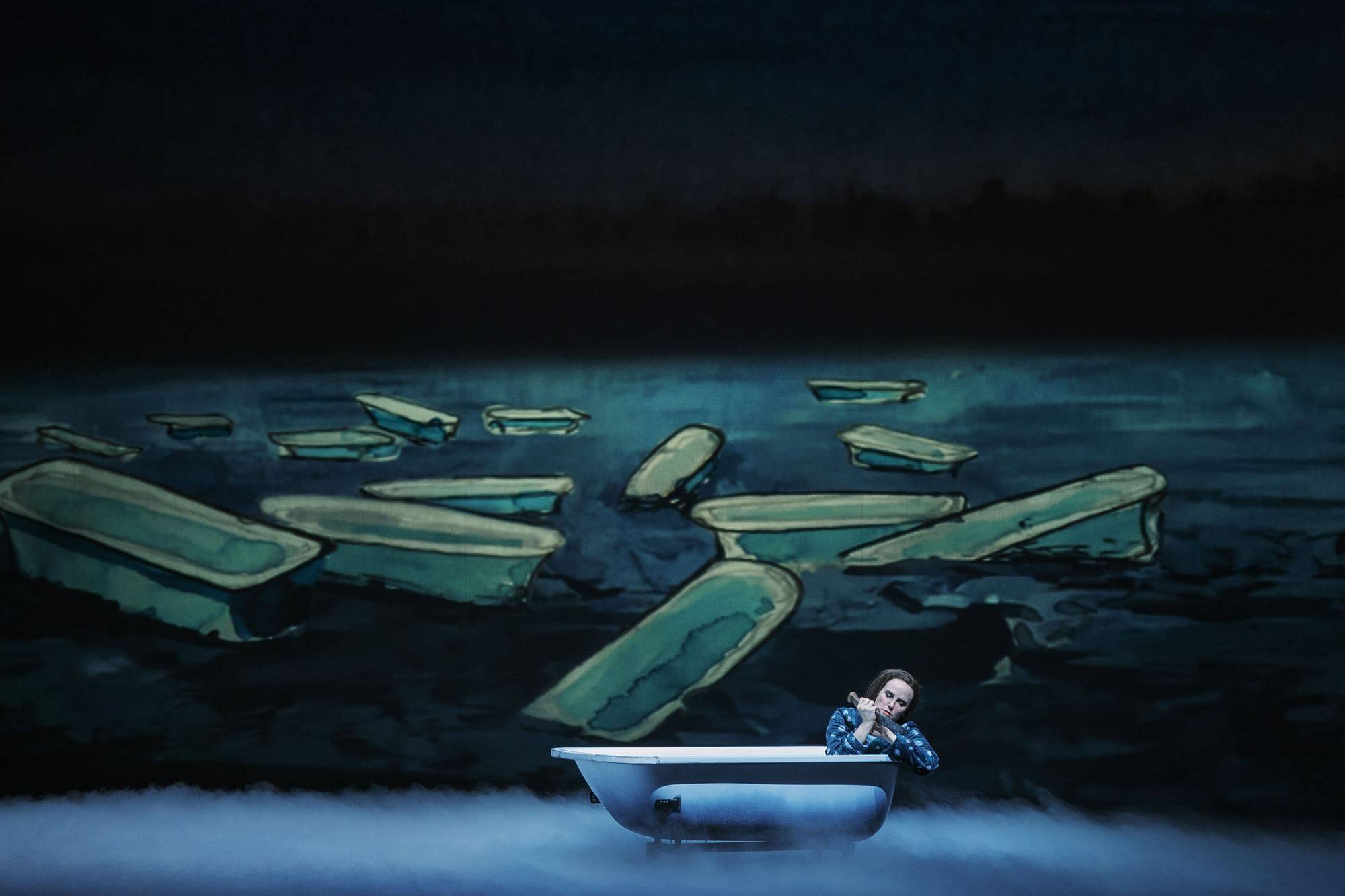
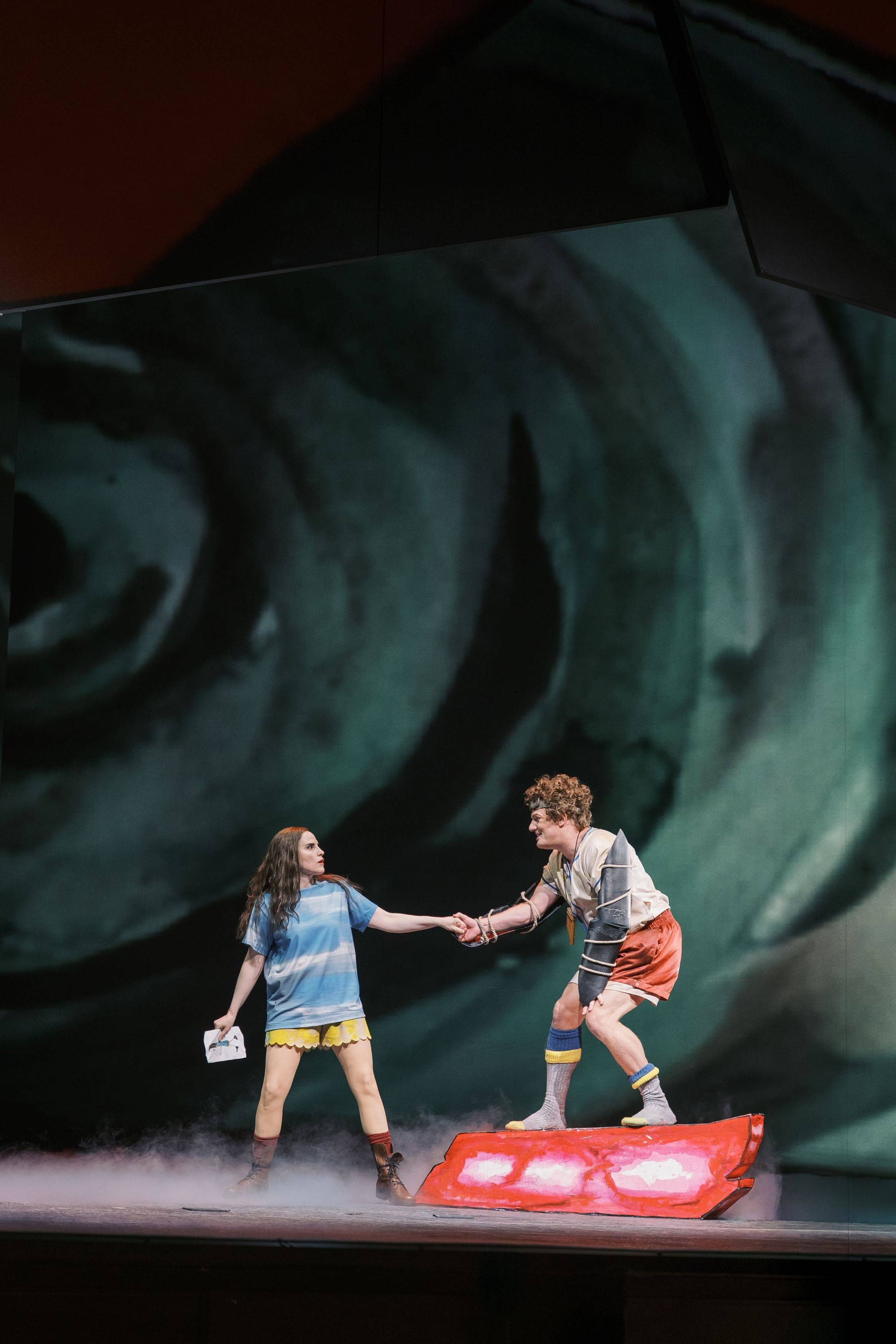
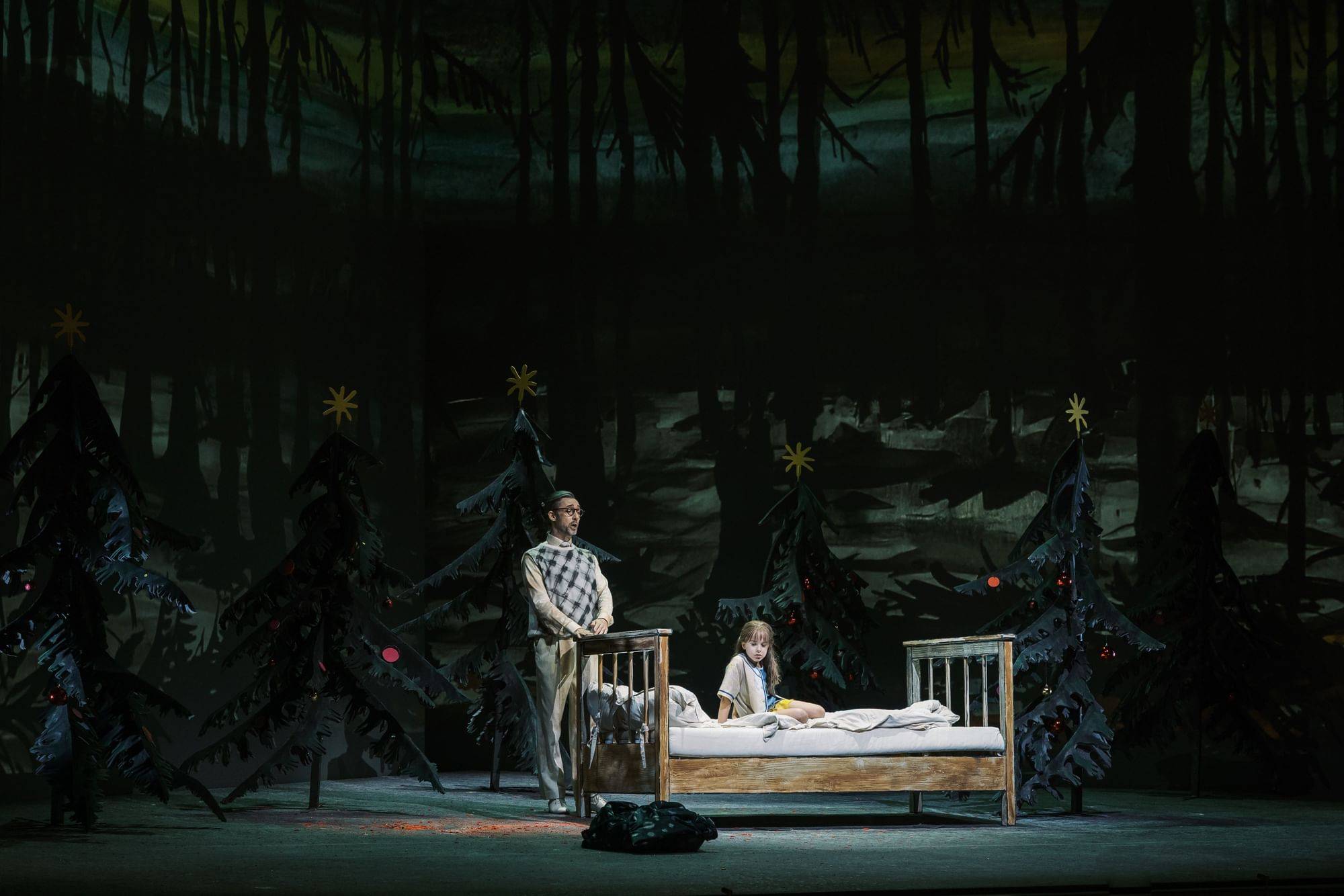
In this production, a 14-year-old boy illustrates the story of *The Magic Flute*. On stage, we see projections of these drawings, which resemble watercolor comic illustrations. The boy draws Tamino, Pamina, Papageno, the Queen of the Night, Sarastro, and all the other characters using simple line drawings, but he also draws landscapes reminiscent of forests or deserts. The characters often resemble him or his parents; he weaves his own story into that of *The Magic Flute*. His drawings are projected onto two white walls and panels that rise and fall; they come to life through video animations—that is, the drawn characters begin to move, becoming animated cartoon figures. The projections define the stage; otherwise, there are only a few built set elements and props, such as a large bed into which Tamino retreats and with which he also flies through the—drawn—landscape. The costumes of the singers on stage are reminiscent of the drawings projected onto the walls. In other words, it looks as if the singers are the boy’s drawings brought to life. The world depicted is imaginative, colorful, and full of fantastical elements.

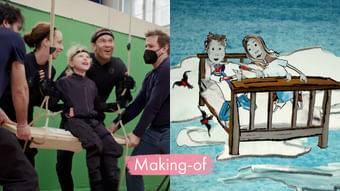
For Lotte de Beer, The Magic Flute has a lot to do with growing up. In her production, animated videos open the path into the fantasy world of a young person. On the occasion of the premiere on September 14, read an interview with stage designer Christof Hetzer and video designer Roman Hansi!