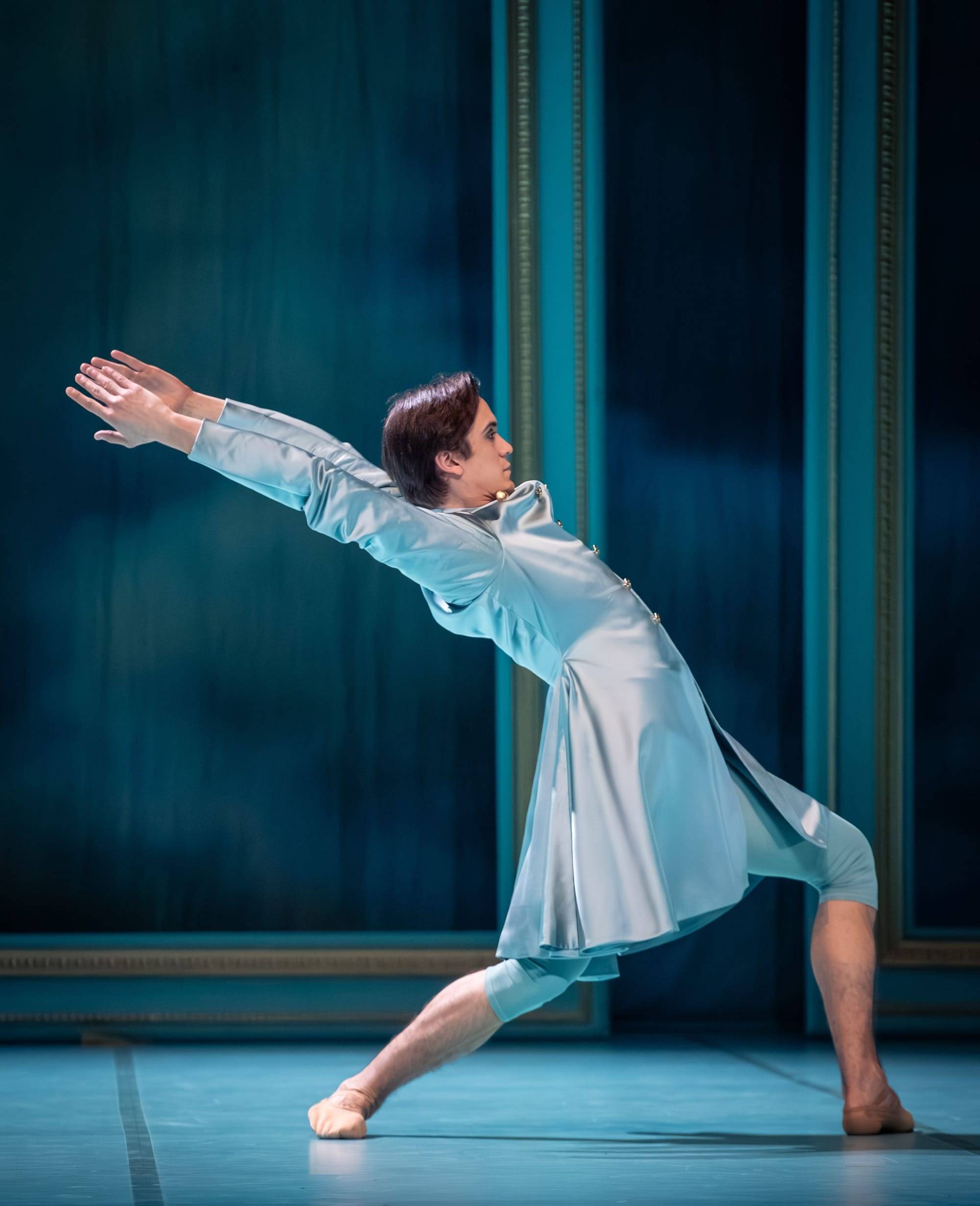
“She is a statue of beauty when standing or sitting: grace itself when she moves,” the 18th century English writer and artist Horace Walpole wrote about the legendary Queen of France Marie Antoinette. This colourful character from French history inspired the ballet by the French choreographer Thierry Malandain that premiered with his own ensemble, Malandain Ballet Biarritz, in 2019 in the very theatre that Marie Antoinette inaugurated on 16 May 1770 to mark her wedding to Louis XVI: the Opéra Royal Château de Versailles.
Marie Antoinette’s life in Versailles is central to Malandain’s ballet, which the choreographer has created to music by two of her contemporaries – Joseph Haydn and Christoph Willibald Gluck. The piece depicts her arrival at court, her wedding day, the opening of the opera house with Jean-Baptiste Lully’s Persée – as a ballet within the ballet – the attempted escape that would ultimately be her undoing and the infamous parties and balls associated with the Queen.
In his movement language, Malandain’s individual neoclassicism meets also dance elements from another time: he reveals Baroque gestures while faithfully adhering to a vigorous modern style. In his choreography Malandain portrays a queen who not only delighted in luxury, excess and vanity, but who also spent a lifetime as the plaything of others – her mother, court society and the French media – ultimately sinking into loneliness and melancholy.
Her inclination to amusement and entertainment become means of expression for the ballet, which portrays Marie Antoinette in her greatest role as the Queen of France: “…but she was marked by a calamitous fate,” Malandain notes, “because she was a theatre-lover, but the curtain fell forever on her enjoyable comedy with the sound of a steel blade.”
Leading Team
Choreografie Thierry Malandain
Musik Joseph Haydn
Musik Christoph Willibald Gluck
Stage and costume design Jorge Gallardo
Lighting design François Menou
Umsetzung Bühnenbild Chloé Breneur
Umsetzung Kostüme Karine Prins
Umsetzung Licht Christian Grossard
Einstudierung Frederik Deberdt
Cast on 31. March 2026
Further dates and cast
The Royal Feast
The fifteen-year-old Dauphin Louis Auguste and the fourteen-year-old Archduchess Maria Antonia of Austria are married at Versailles. The planned fireworks fall victim to a thunderstorm. Instead, the day ends with a magnificent banquet in the newly opened Royal Opera.
The Wedding Night
After dinner, the young couple is led to the bridal chamber. However, the marriage remains unconsummated for seven years.
Perseus
To introduce the new Dauphine to French musical theatre, performances are held the following day, including Persée by Philippe Quinault and Jean-Baptiste Lully. What went through Marie Antoinette’s mind as Perseus cut off Medusa’s head can only be guessed.
The Formal Ball
After a day of rest, the court returns to the opera for a splendid ball, the “bal paré”.
Louis XV and the Countess of Barry
Influenced by her husband’s aunts Adélaïde, Victoire and Sophie, Marie Antoinette snubs the king’s mistress, Madame du Barry. Only after pressure from Empress Maria Theresa and the Count Mercy-Argenteau does she address her with a polite sentence: “There are a great many people at Versailles today.”
“The King is Dead, Long Live the King!”
Louis XV dies, and the crown passes to his grandson: King Louis XVI and Marie Antoinette now embody the people’s hopes. The young Queen wins hearts, but political inexperience, manipulation and foreign influence prevent her from using power wisely.
The Queen of Rococo or My Silk Thing
Marie Antoinette wished to shine as a woman rather than as a ruler. To her, being Queen meant being the most admired, prettiest and best-adorned woman. She had to play the leading role, like a star on stage.
Hairstyle of Independence
Freed from the supervision of the “mesdames tantes”, Marie Antoinette loosens the strict etiquette of court and chooses her closest circle according to whim, fashion, and intrigue – much to the ridicule of the court and the pamphleteers. Her fashionable escapades provoke scorn and repeated admonitions from her mother: “A sovereign demeans herself when she adorns herself, and even more so when she spends enormous sums on it.”
Chit-Chat
Lonely because of her husband’s reserved nature – he cares only for geography, mechanics and science – the Queen surrounds herself with witty acquaintances. Mercy-Argenteau and Maria Theresa try in vain to moderate her.
“A Poor Man”
Marie Antoinette laments Louis XVI’s distance and calls him “a poor man”. In this loneliness, she meets the Swedish Count Axel von Fersen at the masked ball at the opera. Her mother remains alarmed: “People no longer speak of you with such flattery.” Joseph II, Maria Theresa’s eldest son, travels to Versailles to investigate the delicate, still unconsummated marriage.
Maternity
One year after Joseph’s visit, the first of four children is born: Marie Charlotte, “Madame Royale”.
The Hamlet
After her child is born, Marie Antoinette promises to be more dutiful. But soon she expands the gardens of Trianon and creates her famous “hameau” – an idealised Country village that is her refuge and will later prove her downfall.
Handsome Fersen
Blinded by their first encounter at the opera, Fersen meets the Queen several more times. He attends the intimate festivities at Trianon but remains discreet, cautious, and almost shy. She treats him “extraordinarily well”. Nothing more is known. Yet until the attempted escape to Varennes, in which he is involved, he visits her daily at the Tuileries. Is it possible she remained indifferent to “the most charming of all men”?
“Death to the Austrian Woman!”
Hungry Parisians – some of them men dressed in women’s clothing – march to Versailles. The next morning, the furious crowds storm the palace, shouting: “Death to the Austrian woman!” Marie Antoinette turns pale, and the Queen’s fate takes its course.
Photos and Videos
For all those who use a screen reader, a description of the visual aspects of the performance (set design, costumes...) follows here instead of the photo gallery.
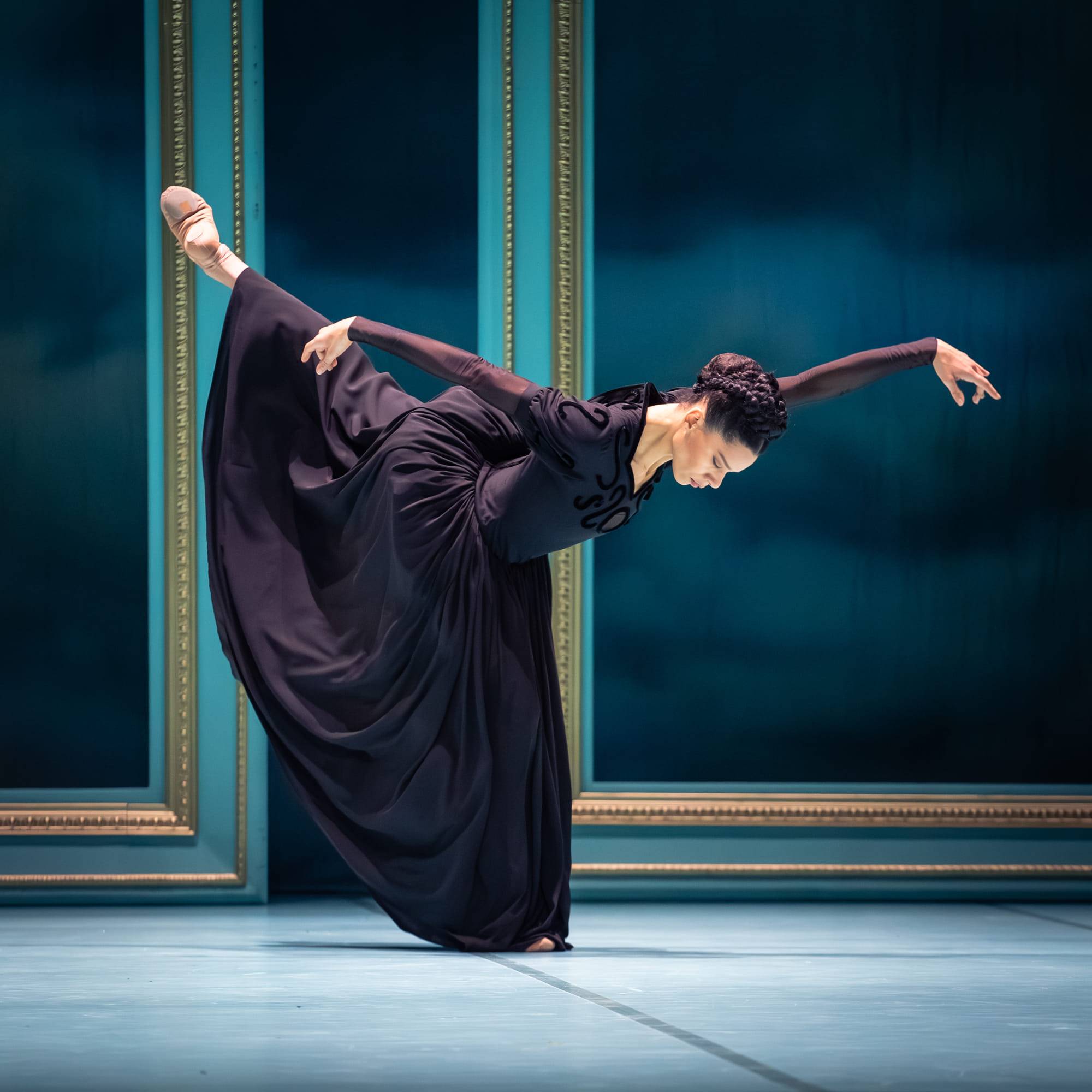
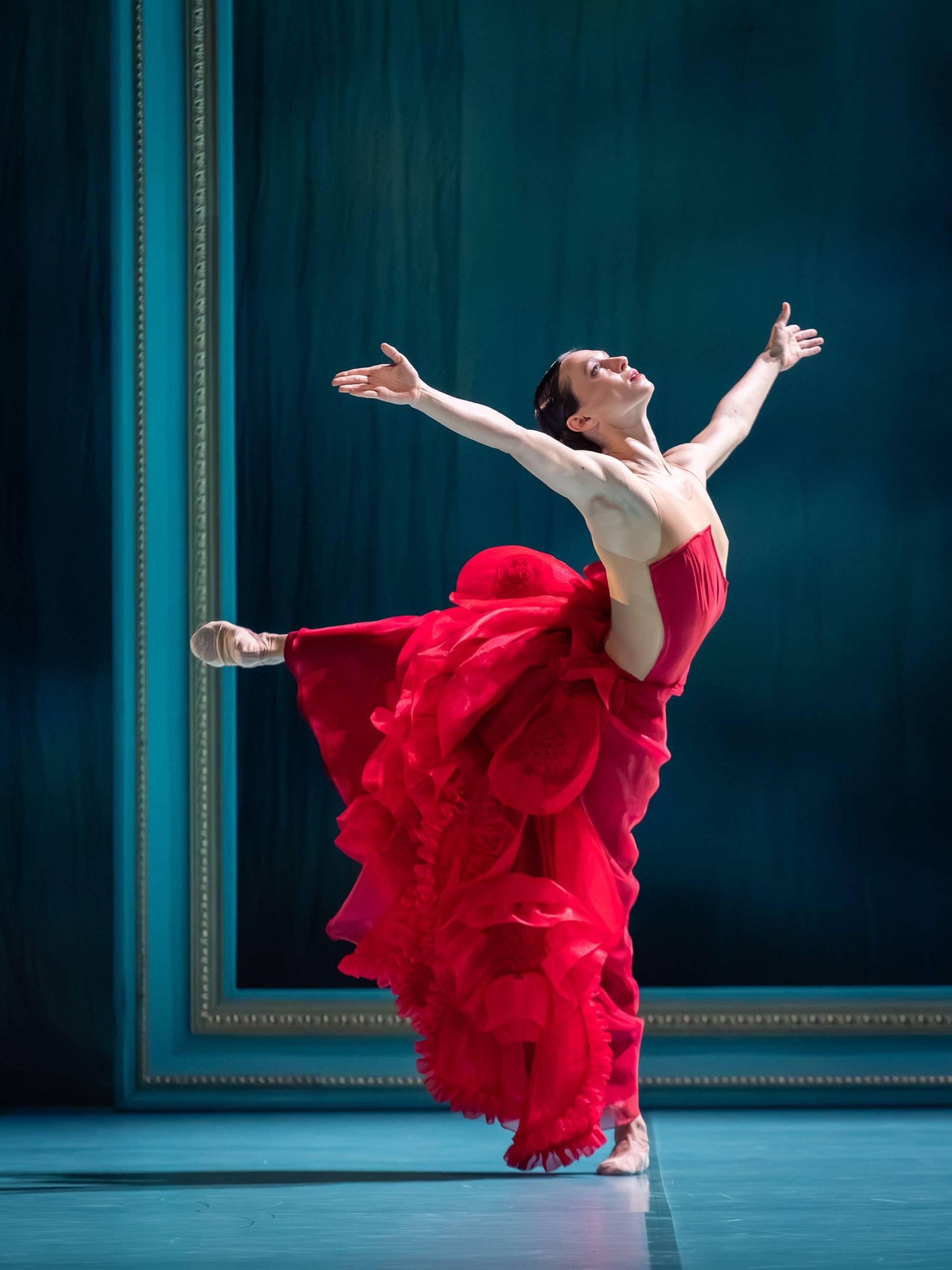
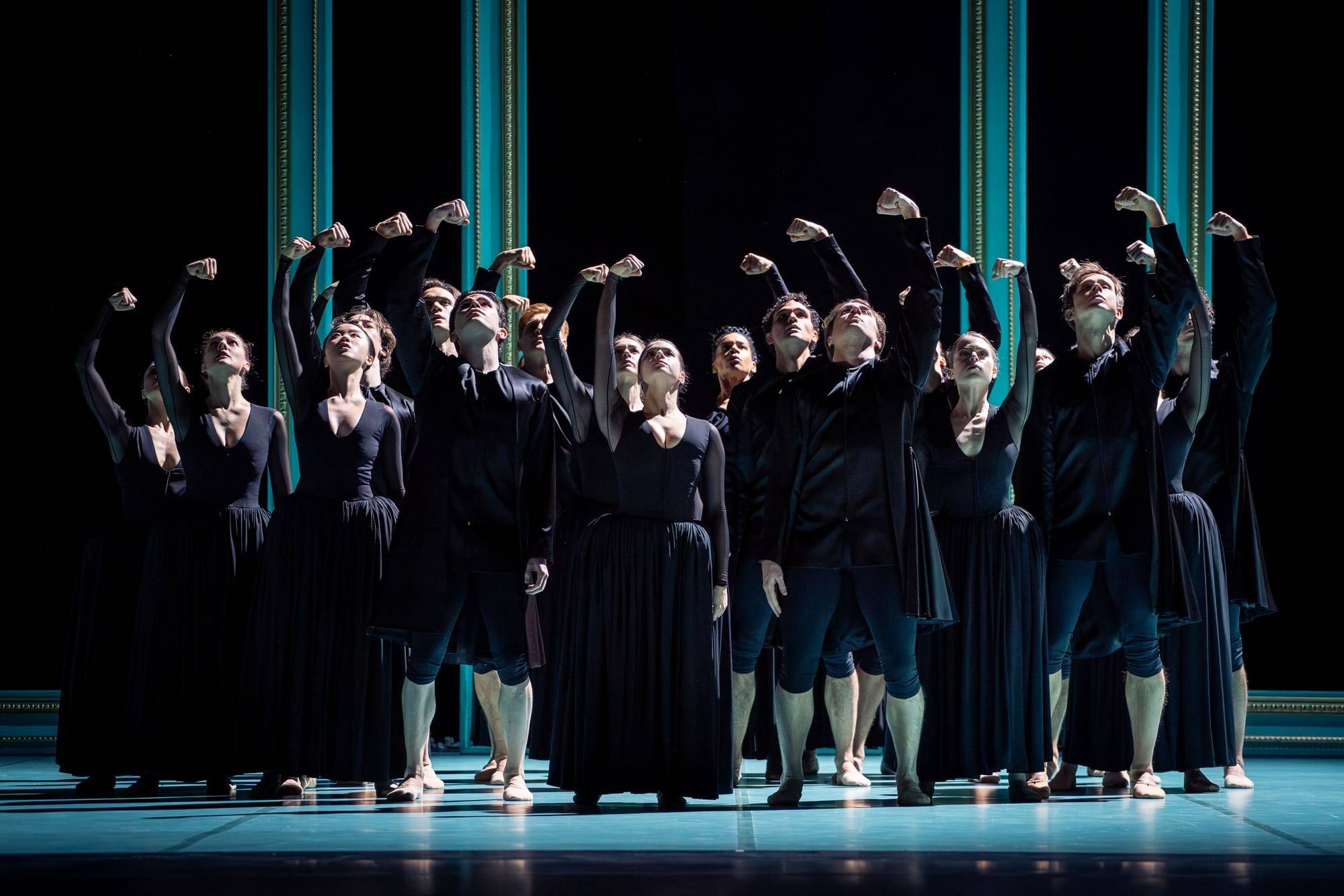
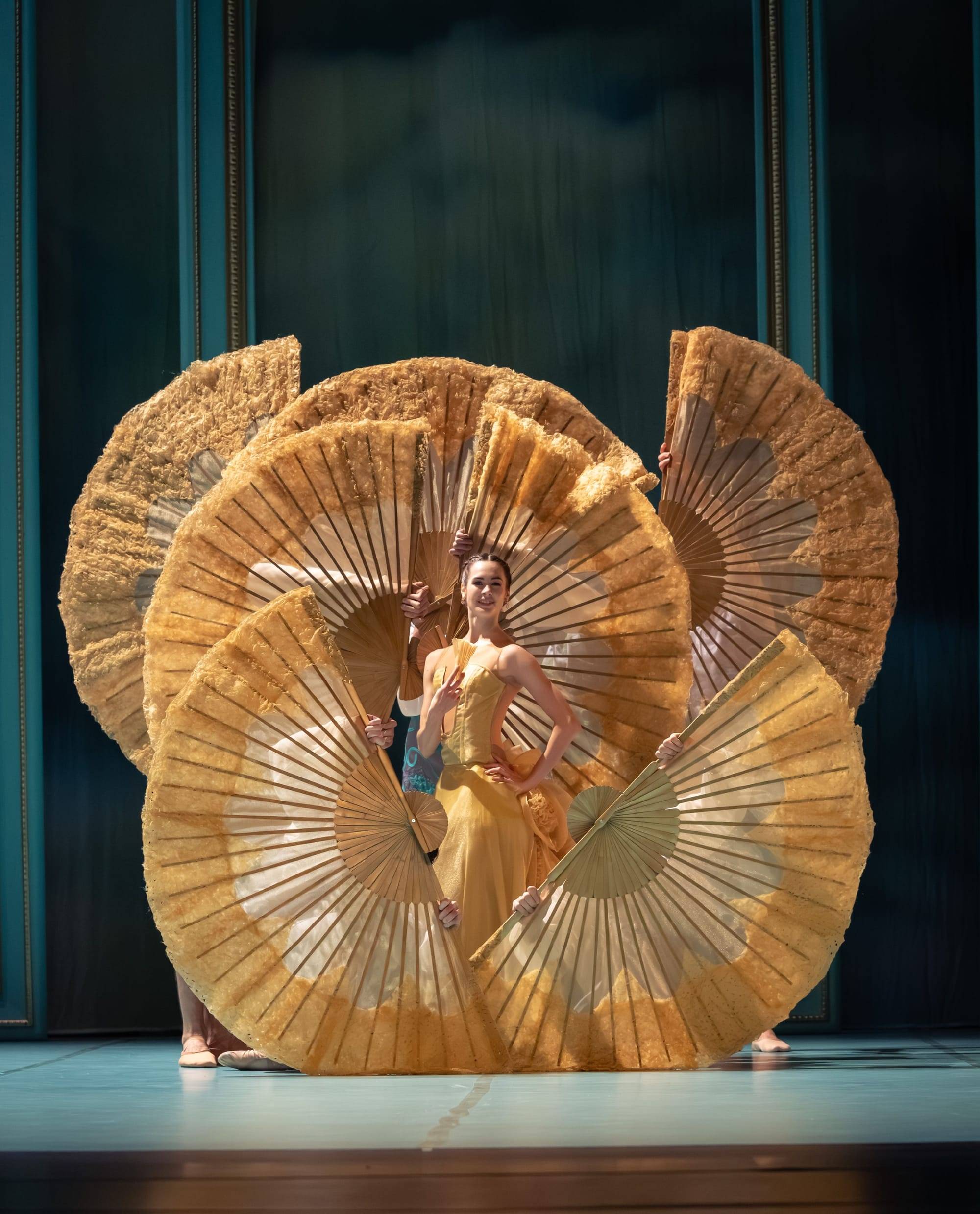
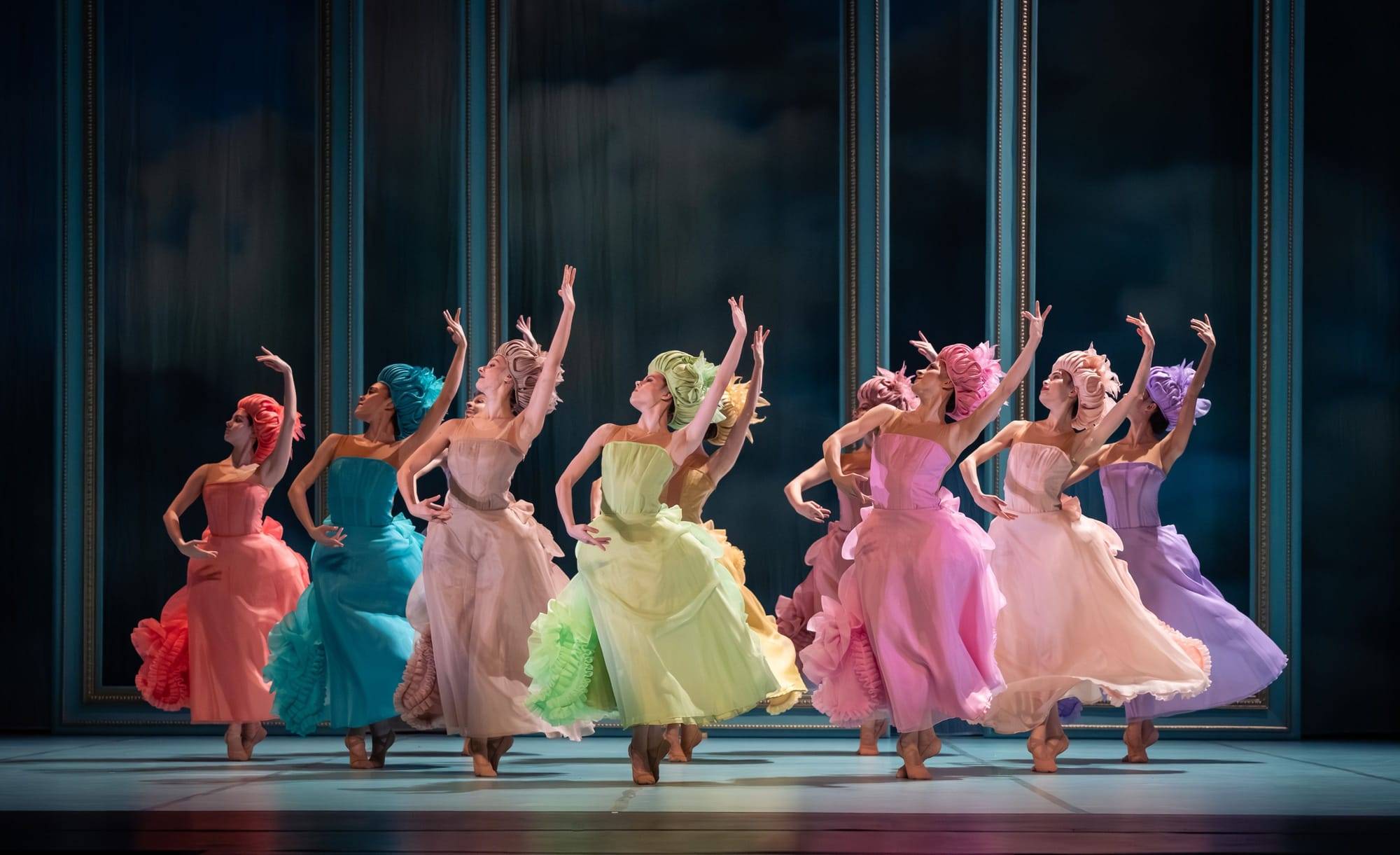
The stage is bordered on all three sides by enormous golden picture frames; several of them stand on the left, right, and back along the three sides of the stage and extend all the way up to the stage ceiling. But the interior of these picture frames is empty; behind them, curtains delineate the space, depicting scenes of the sky and clouds in the style of classical, old-world painting. At the end, when the revolution breaks out, these curtains are drawn aside, and all that can be seen through the picture frames is a black room. The costumes are inspired by classical Baroque attire; the male dancers wear costumes resembling tailcoats, while the female dancers wear gowns in various colors. The character of Maria Theresa, for example, is usually dressed in black, while Madame du Barry wears red. At the beginning, there is also a scene from a Medusa ballet: here, the dancers—in costumes reminiscent of Greek robes—emerge from an oversized picture frame.