Book and lyrics by Steven Sater
Music by Duncan Sheik
Based on the play Frühlings Erwachen by Frank Wedekind
German translation by Nina Schneider
Spring Awakening is a powerful rock musical about growing up, generational conflict, and the turmoil of awakening sexuality. Winner of eight Tony Awards, including Best Musical, and a Grammy, it redefined Broadway’s themes. Based on Frank Wedekind’s 1891 play Frühlings Erwachen, it criticizes social morality while exploring sexuality and repression. Wendla, Melchior, and Moritz face strict parents and teachers as well as unanswered questions about love and desire, with devastating results.
Based on Frank Wedekind’s 1891 play Spring Awakening, the rock musical explores societal morals while shedding light on sexuality and repression. Steven Sater and Duncan Sheik spent seven years developing their adaptation. Working closely with young people, they created a piece that approaches its themes with a fresh and diverse perspective. Because even though we like to think of ourselves as more enlightened today, adolescents still struggle with the many fears, worries, and challenges of growing up. The evocative songs delve into their doubts, fears and their longing for connection.
We would like to inform audiences - especially families and school groups - that Spring Awakening includes depictions of suicide, violence and sexual violence.
We recommend attending the performance only from the age of 13 and above.
There are a number of support services and contact points for people in acute crisis situations: the Austria-wide crisis hotline Telefonseelsorge can be reached free of charge at 142. Help for teenagers and young adults is also available from Rat auf Draht at 147.
Leading Team
Musical direction Christian Frank
Stage direction Frédéric Buhr
Choreography Klevis Elmazaj
Set design Agnes Hasun
Costume design Constanza Meza-Lopehandia
Lighting design Alex Brok
Sounddesign Martin Lukesch
Stunt coordinator Ran Arthur Braun
Intimacy Coordinator Bernadette Maria Leitner
Dramaturgy Lisa Kerlin
Cast on 26. February 2026
In the late 19th century, strict rules are imposed upon children and young adults at school, at church, and in the family home. If necessary, these rules are imposed by force. The rule book does not allow for curiosity and certainly not for self-realisation.
Nevertheless, the 14-year-old Wendla tentatively asks her mother questions about coming of age, but she is purposefully kept clueless and uninformed.
Her childhood friend Moritz is under huge pressure at school and suffers from fear of failure – and also from his first sexual fantasies, which he can make no sense of.
His best friend Melchior, on the other hand, is from a loving home, is top of the class, and claims to be worldly-wise. He compiles all his knowledge into a written essay which he secretly hands over to Moritz.
Tension bubbles between the three of them, driven by curiosity, pressure and insecurity. Whilst their schoolmate Hänschen can get everything he wants as a matter of course, their friend Ilse flees from her violent family home where she must leave her sister Martha behind.
Moritz becomes further isolated within the disciplinary system. When he fails his exams and his situation at home escalates, he sees no way out and takes his own life.
An intense attachment forms between Wendla and Melchior. It leads to first sexual encounters and Wendla becomes pregnant. Her mother forces her into getting an abortion, which is performed so amateurishly that Wendla dies during the procedure.
Initially, Melchior knows nothing of Wendla’s tragic end. His essay, intended for Moritz, is discovered and he is consequently blamed for Moritz’s death. Not only that, but his parents discover that he slept with Wendla and thus send him away to a reform school.
He manages to escape. But when he finds out about Wendla’s death, he wrestles with guilt and grief and wonders whether he can carry on living …
Photos and Videos
For all those who use a screen reader, a description of the visual aspects of the performance (set design, costumes...) follows here instead of the photo gallery.
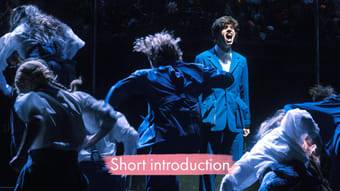
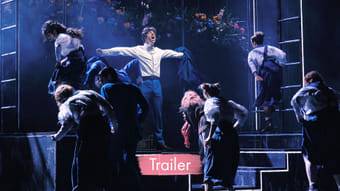
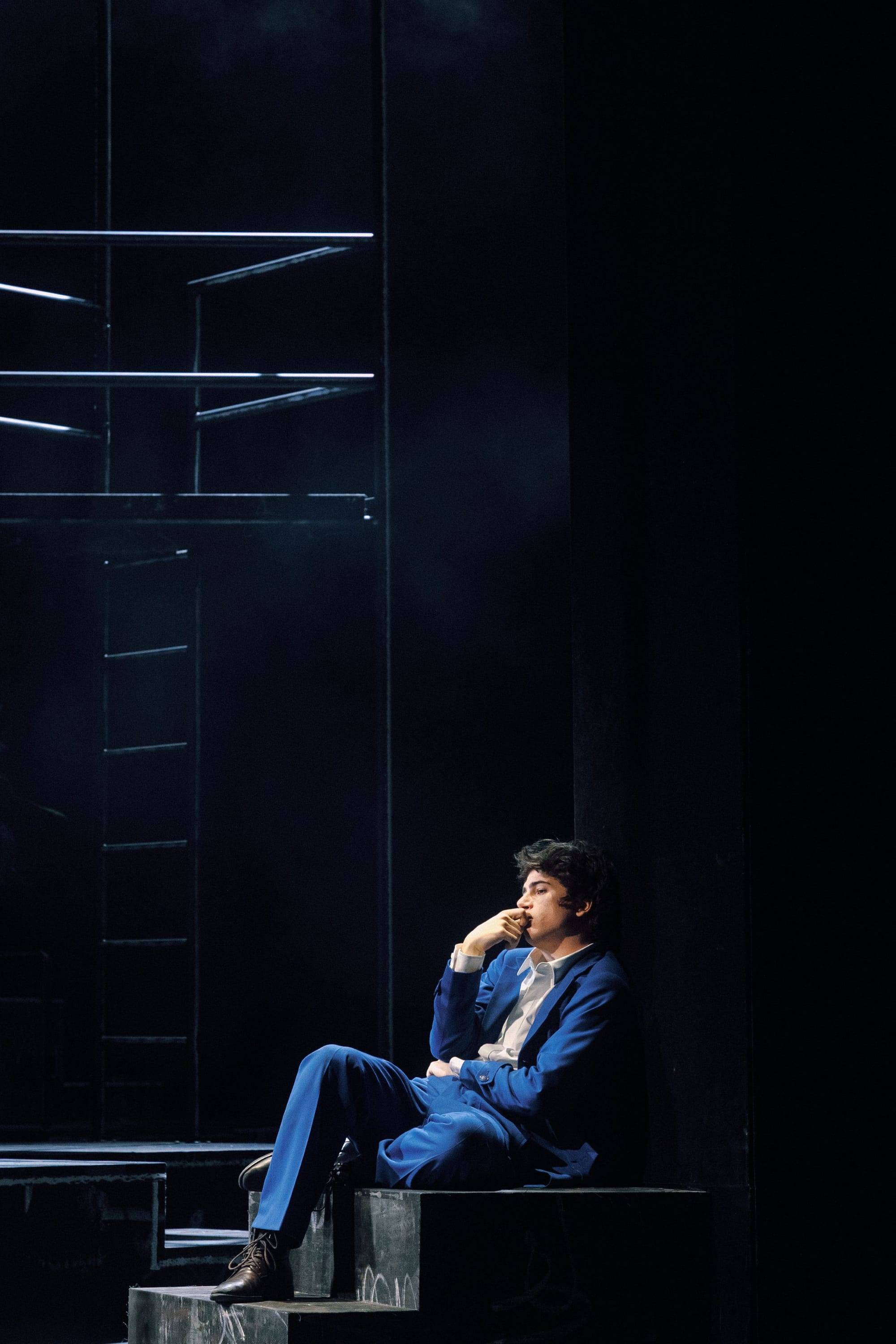
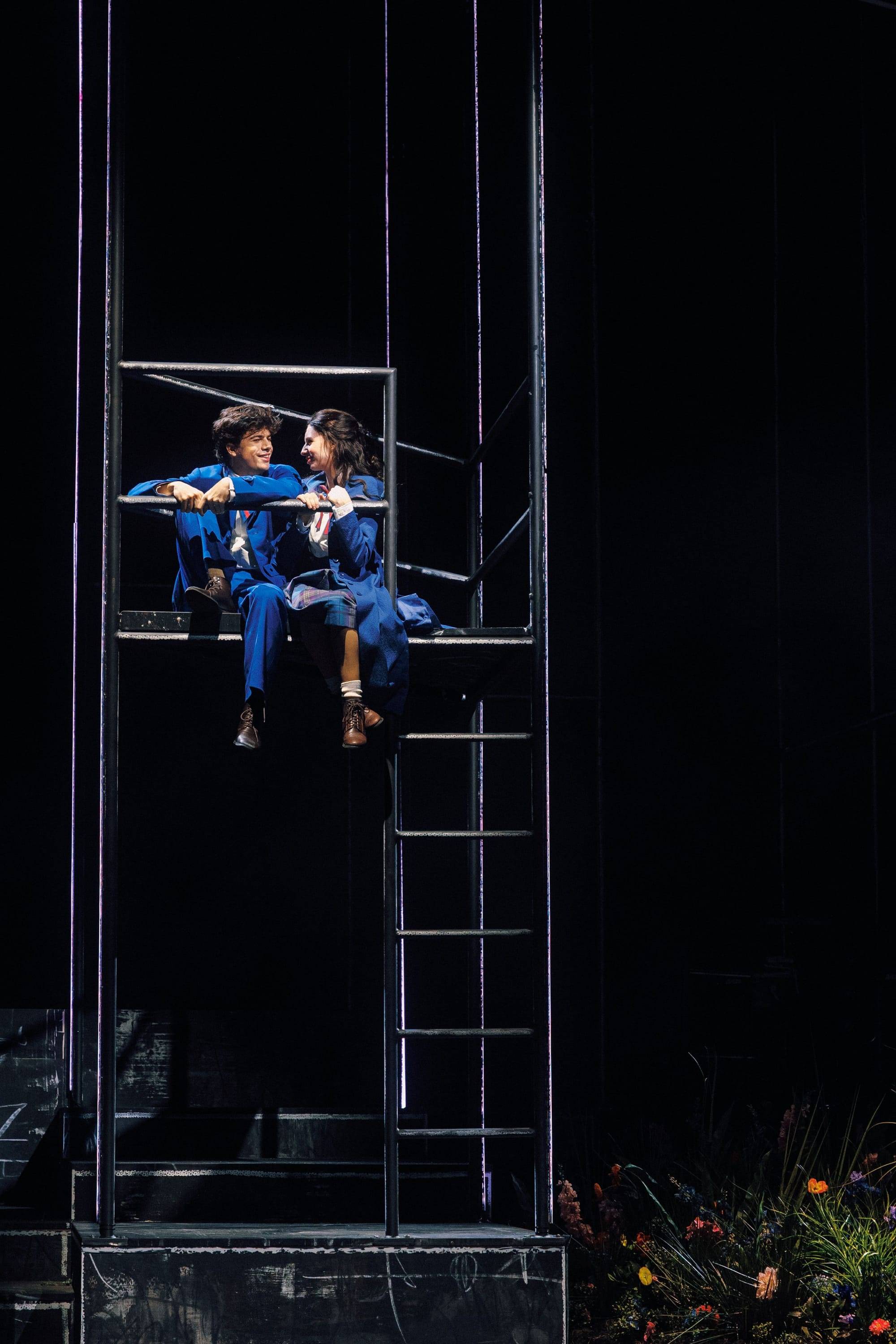
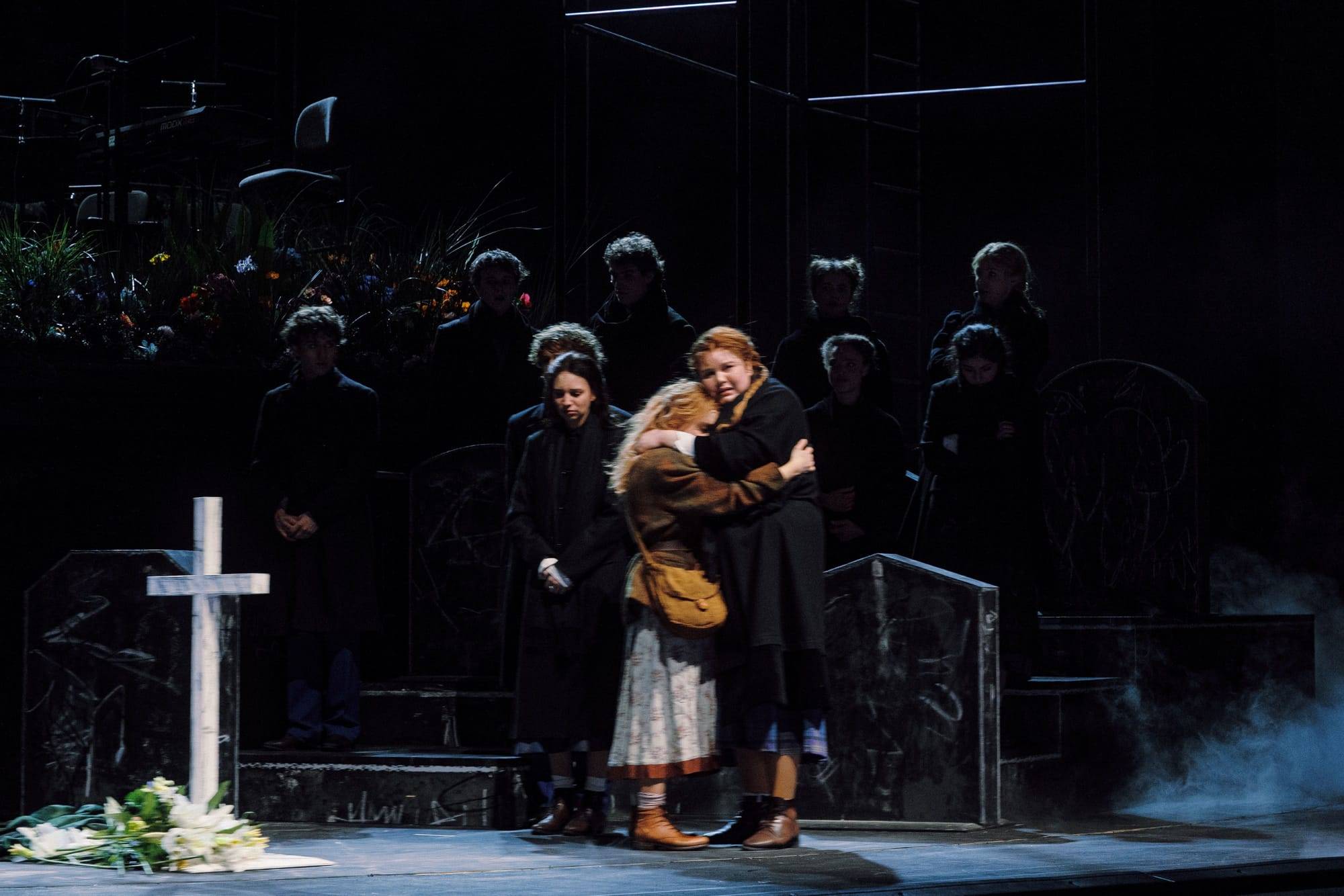
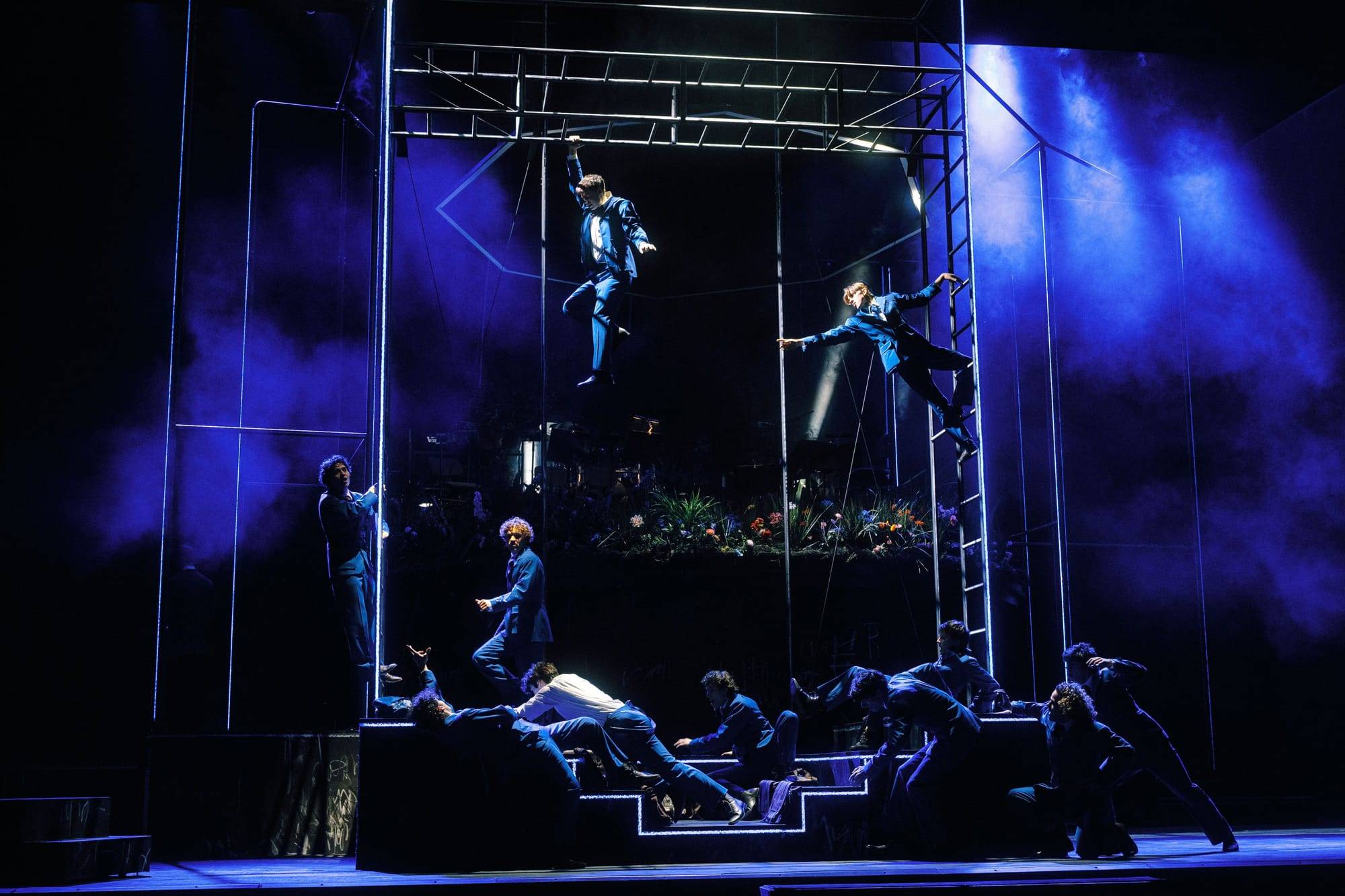
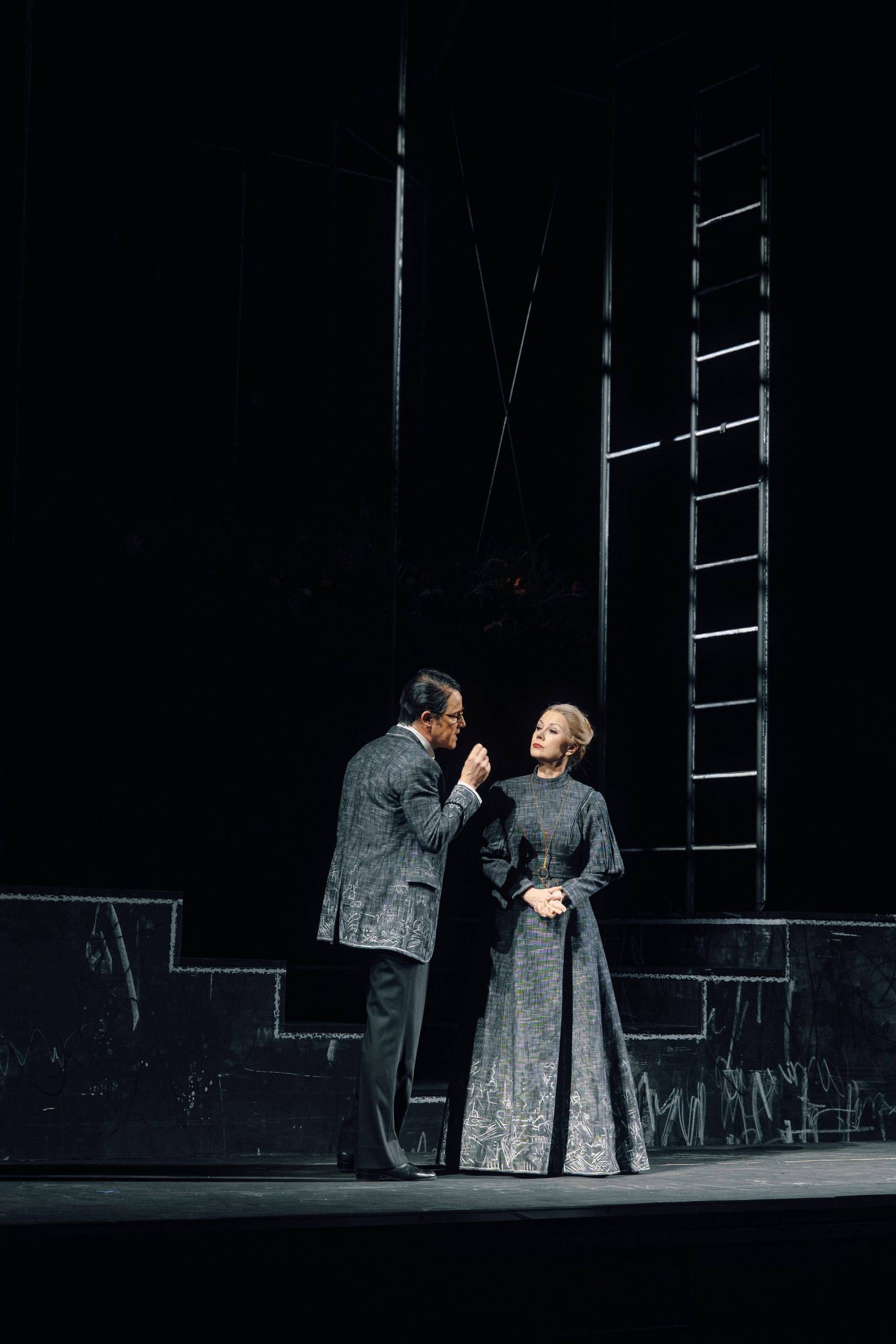
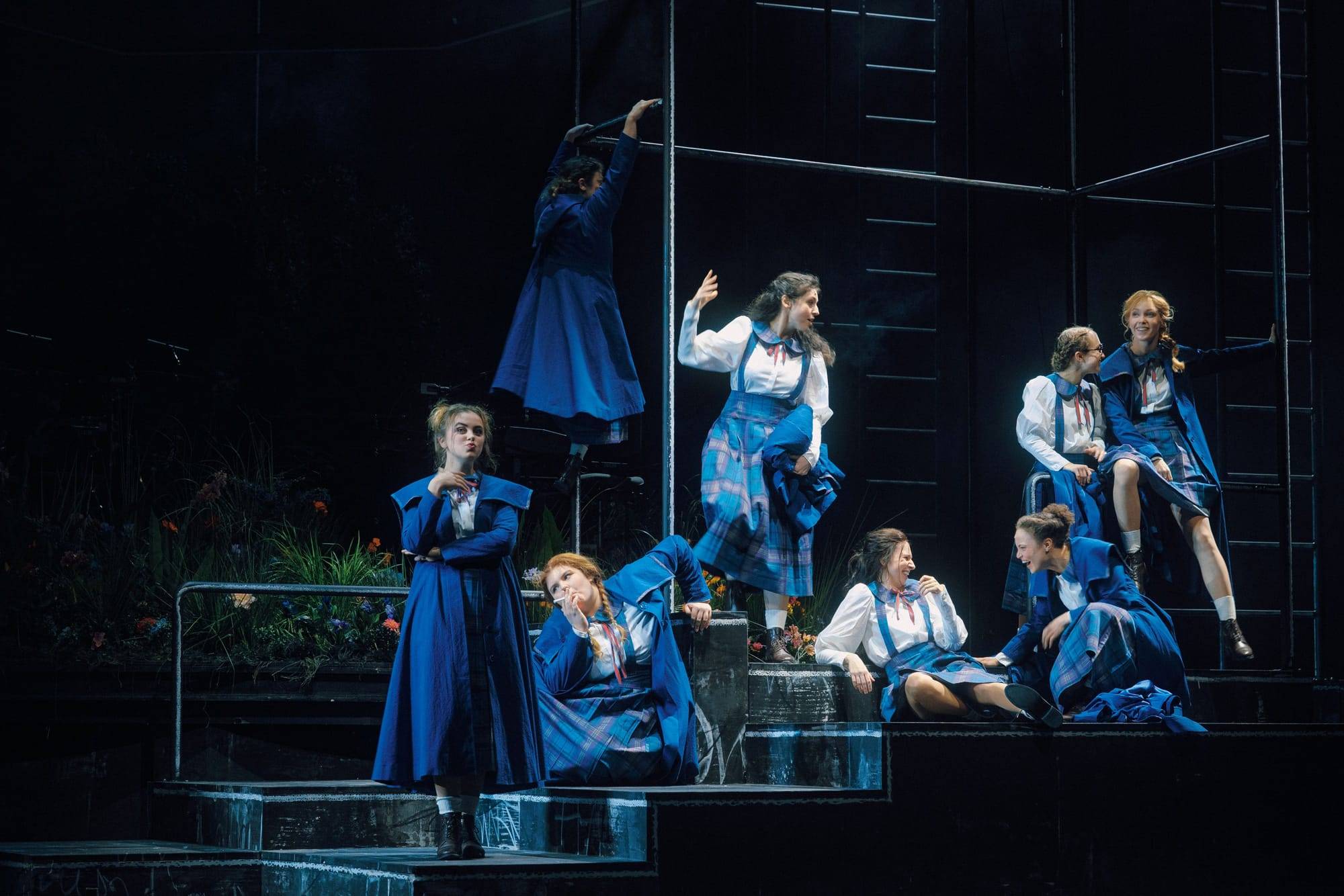
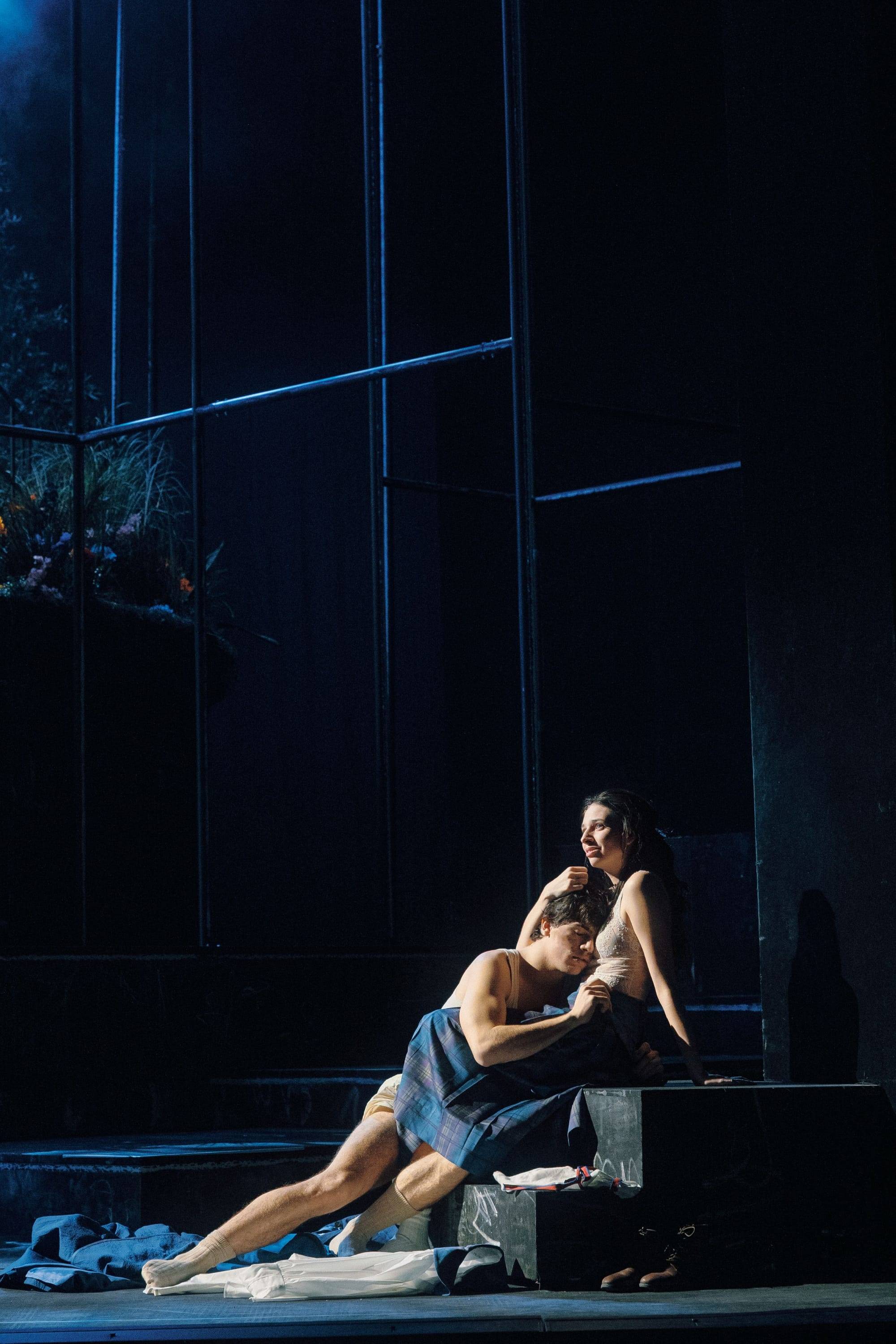
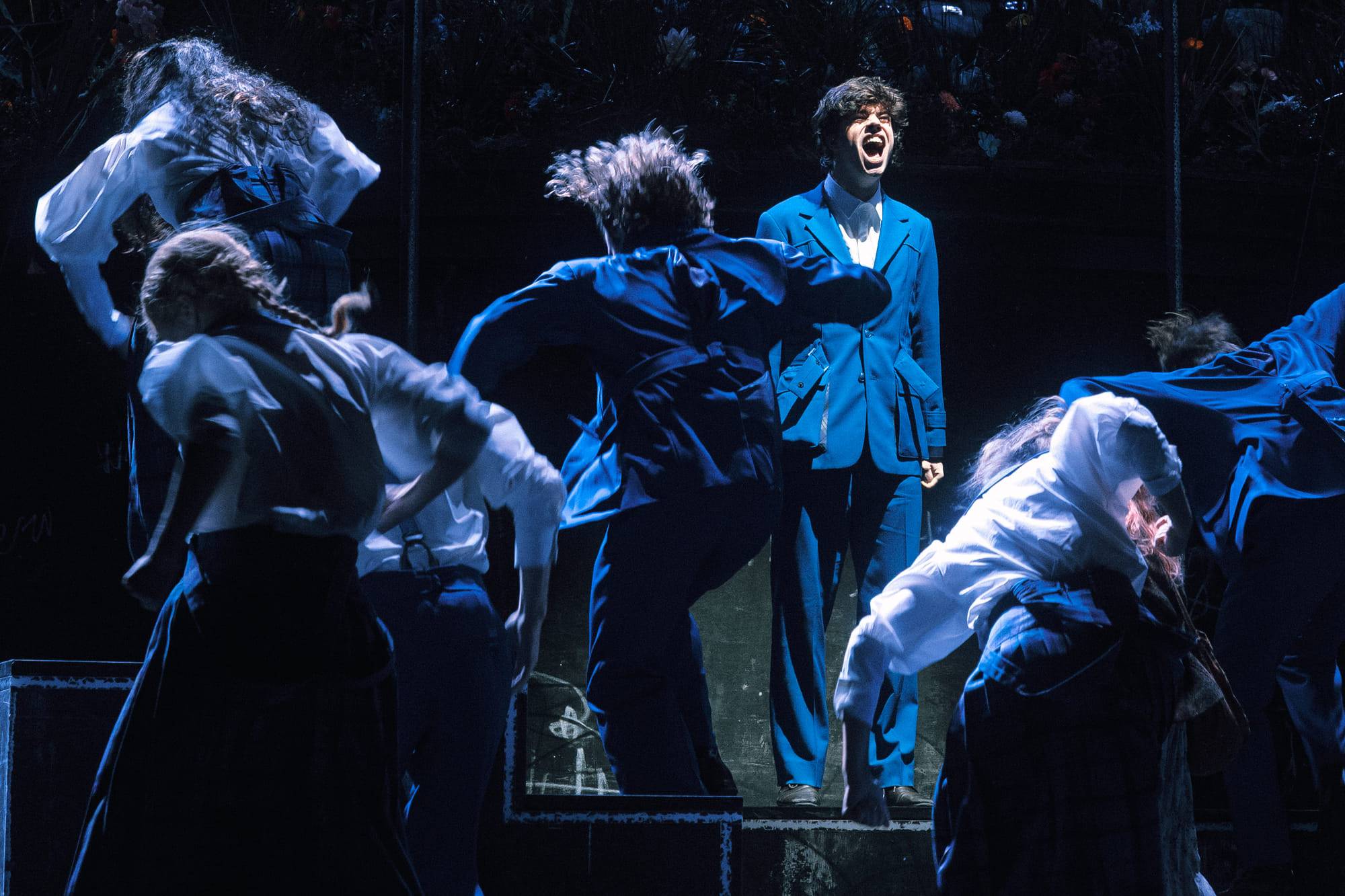
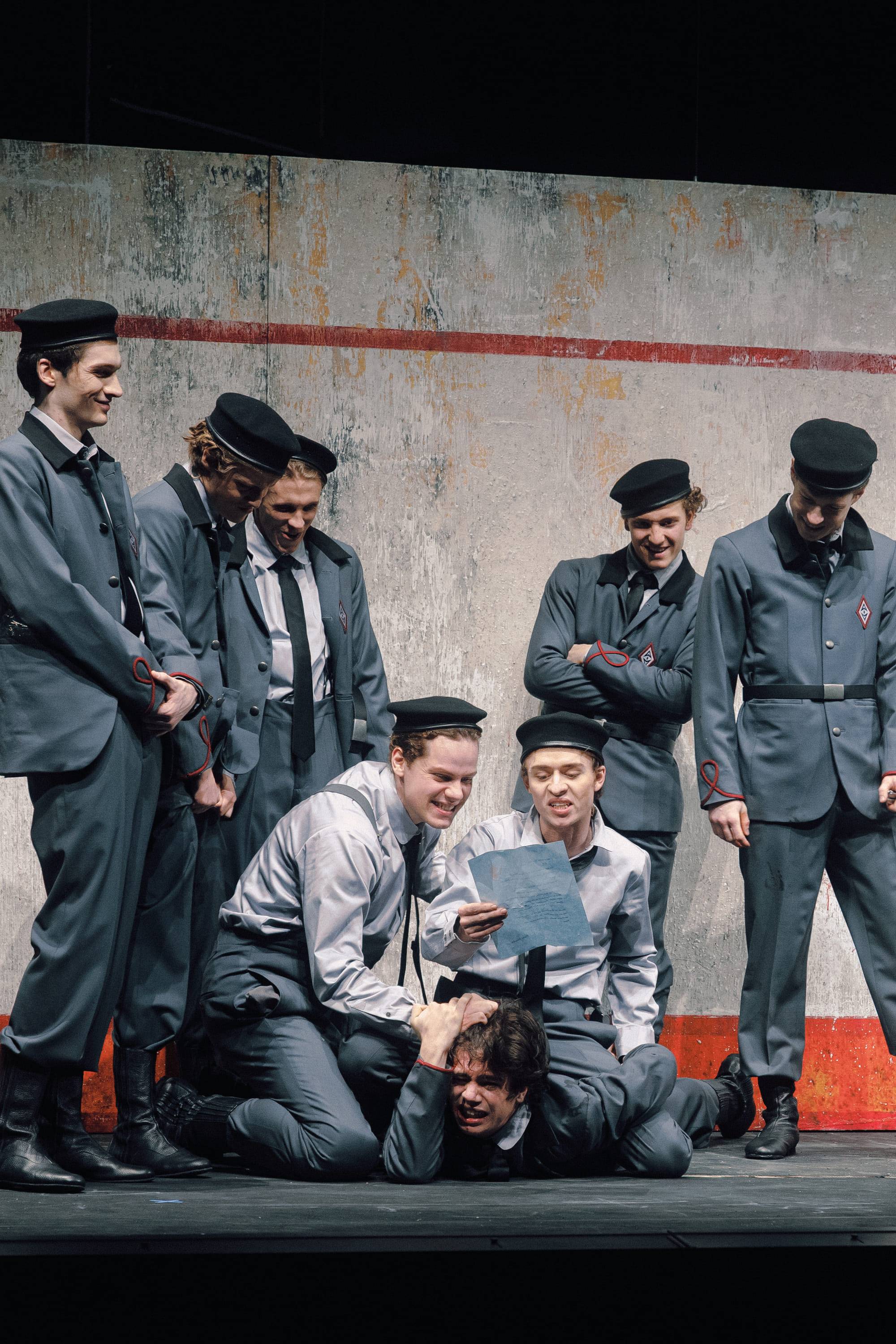
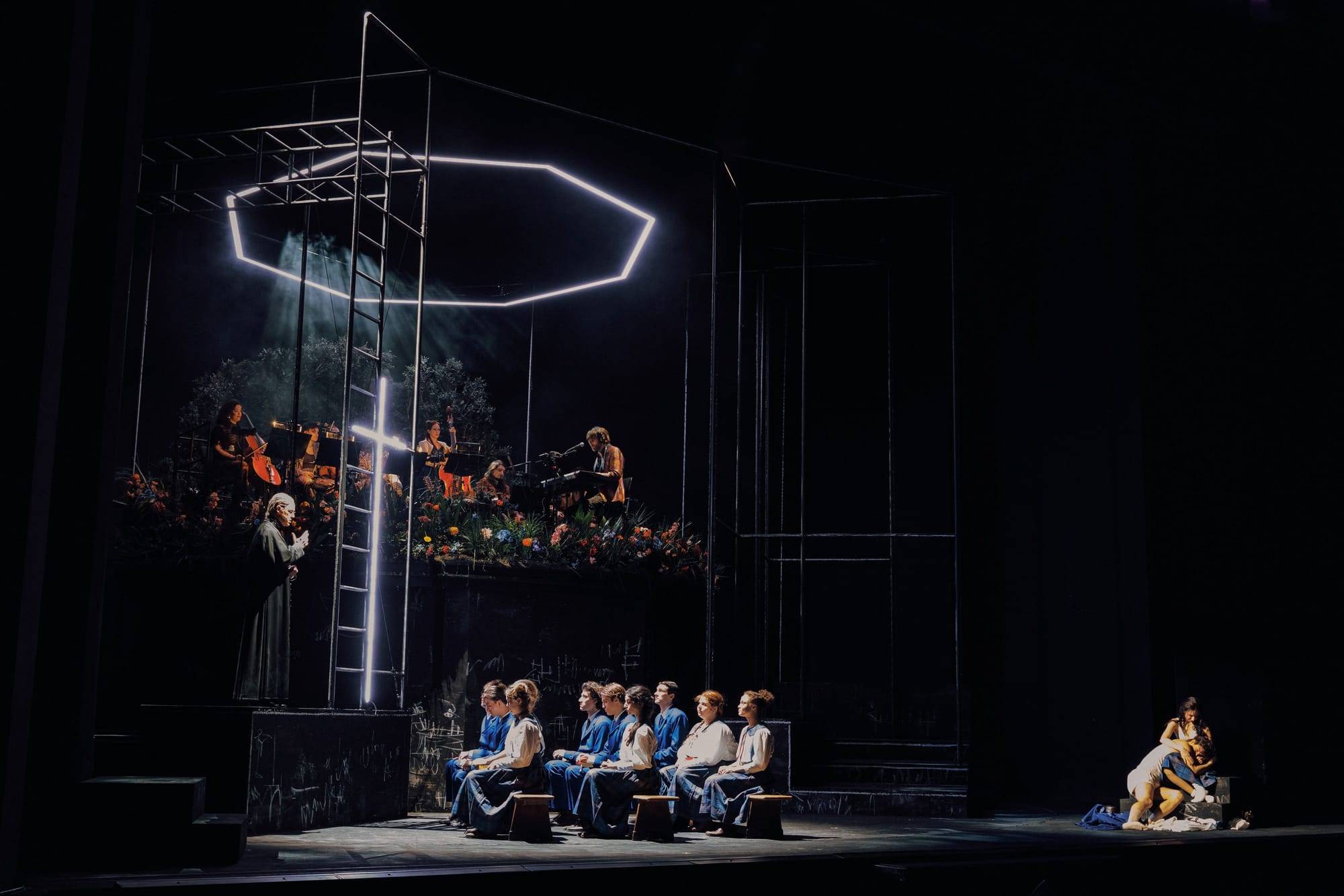
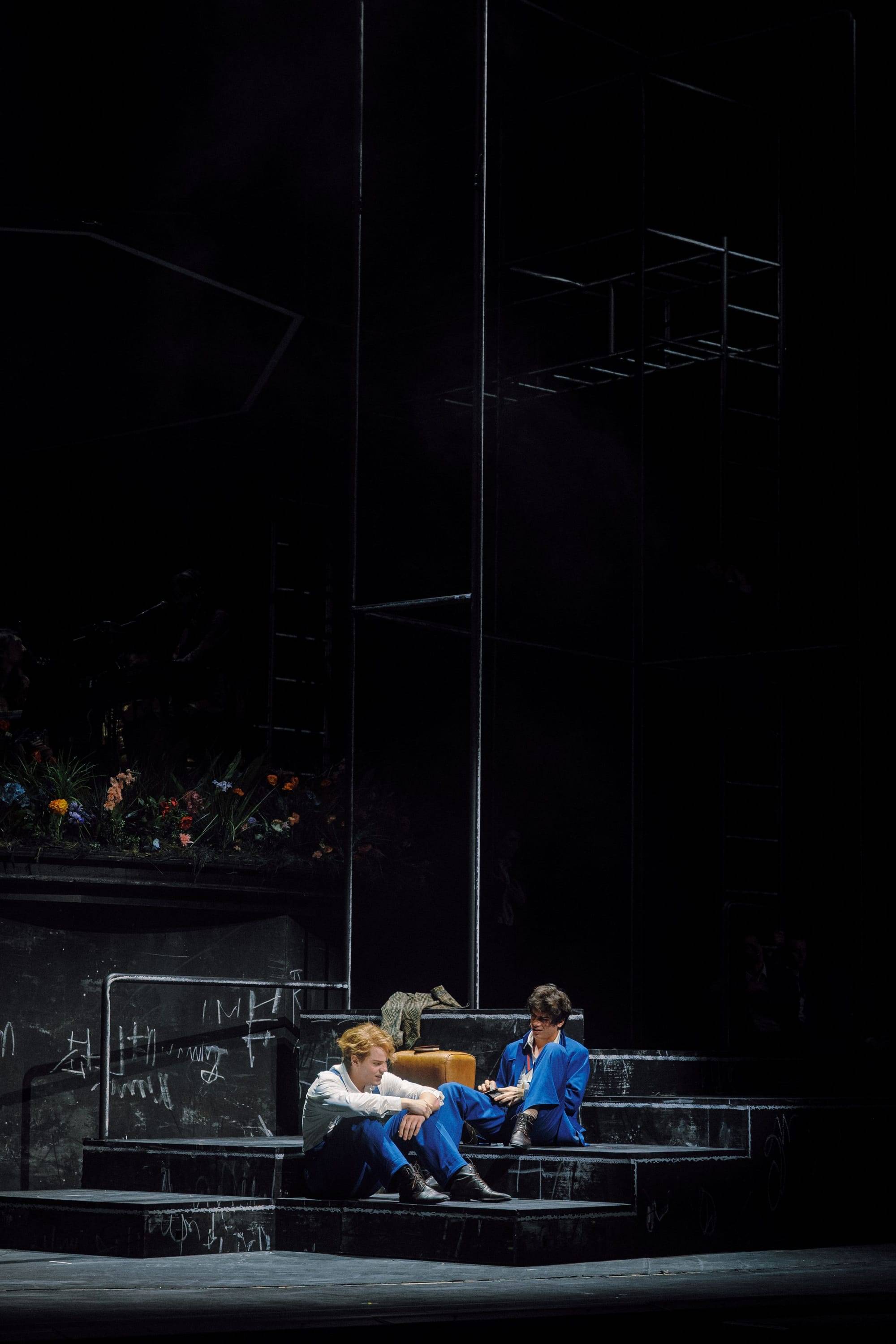
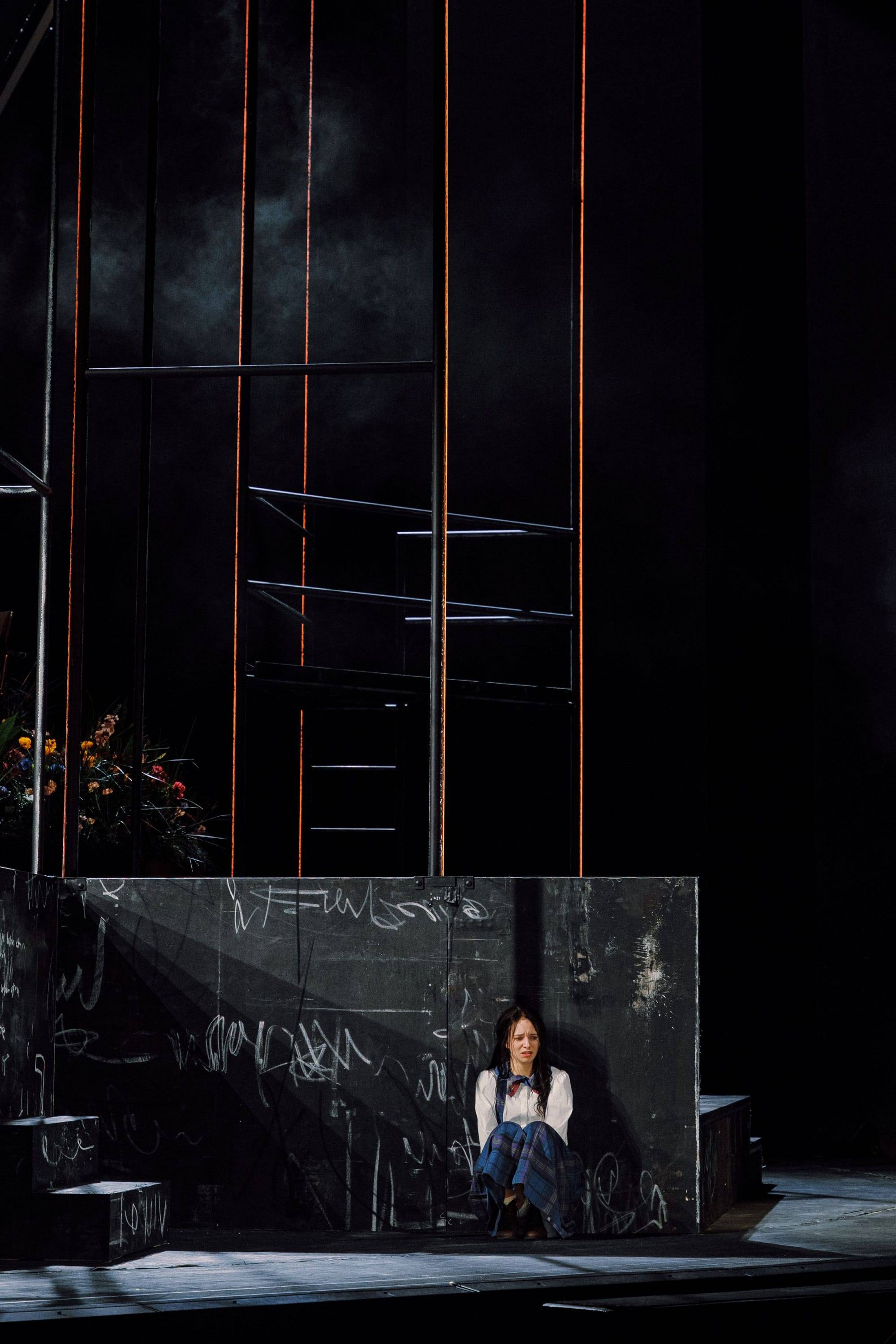
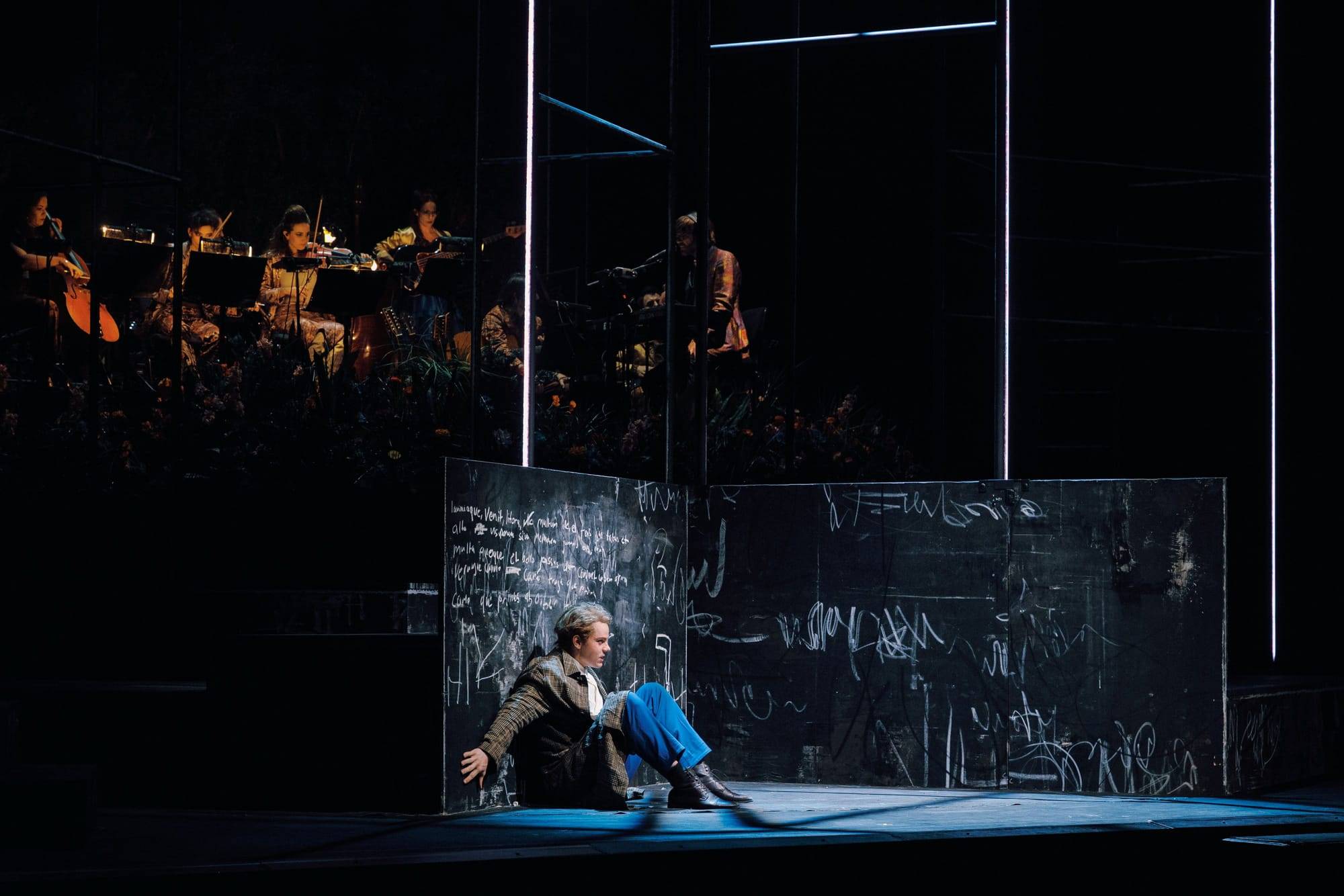
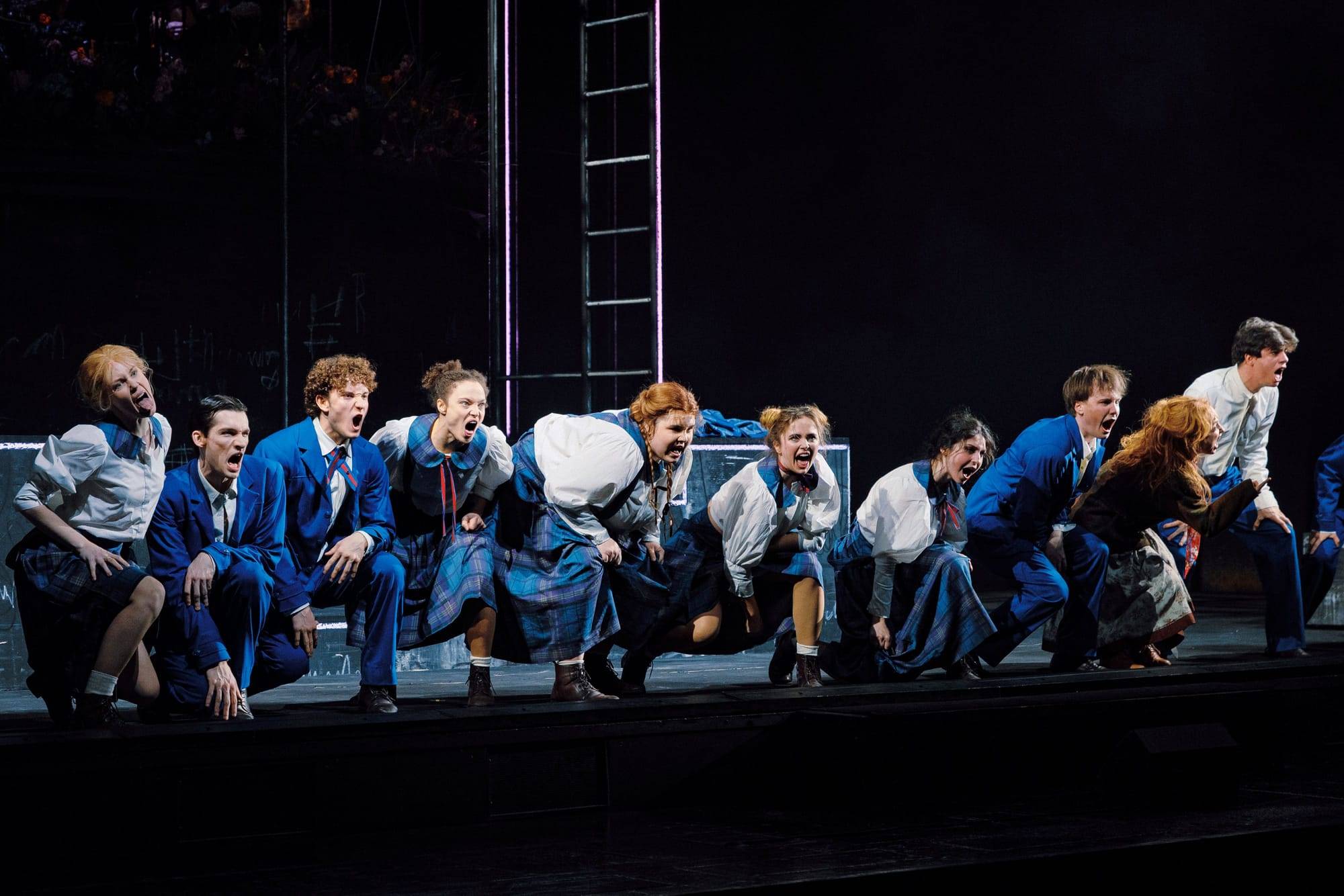
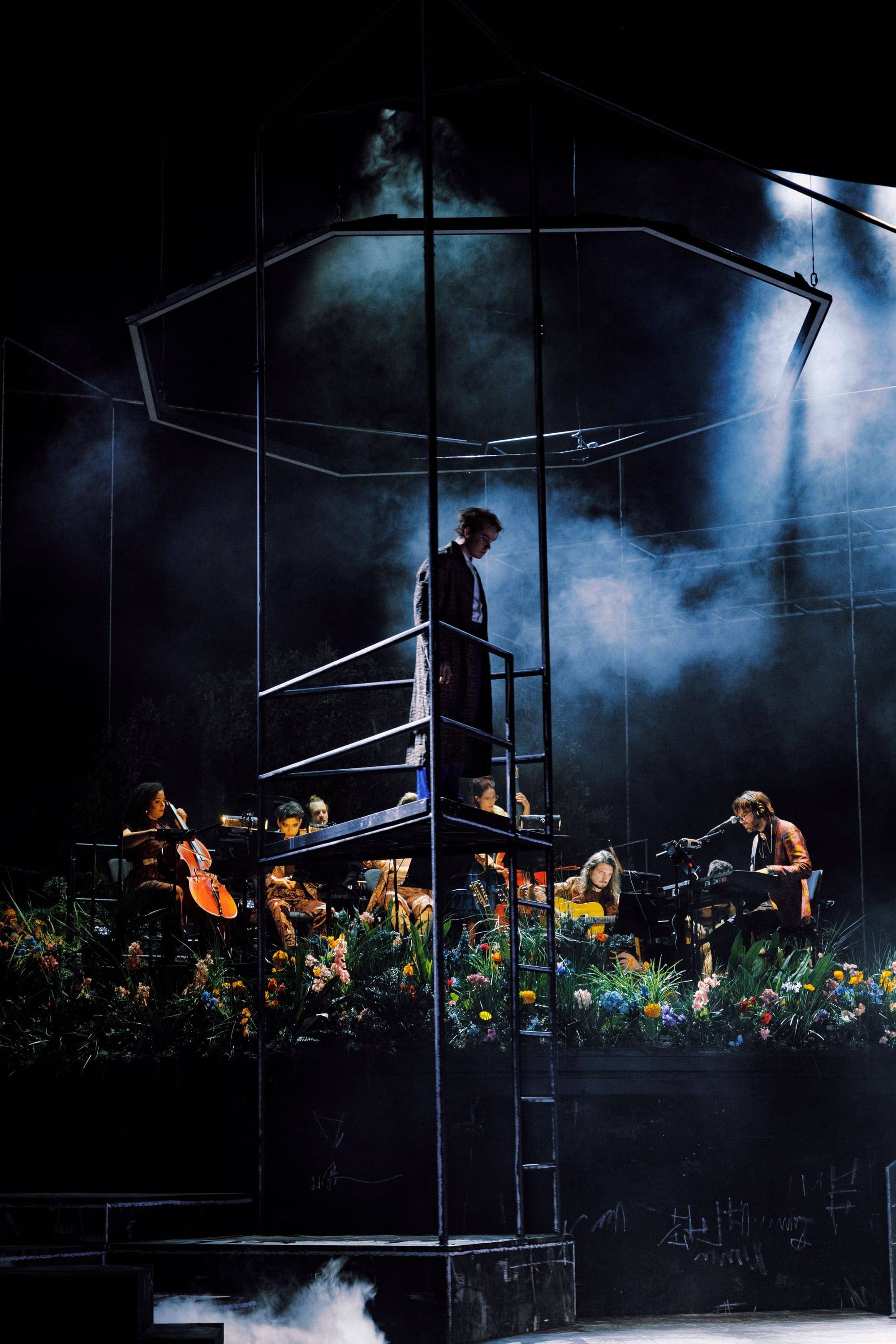
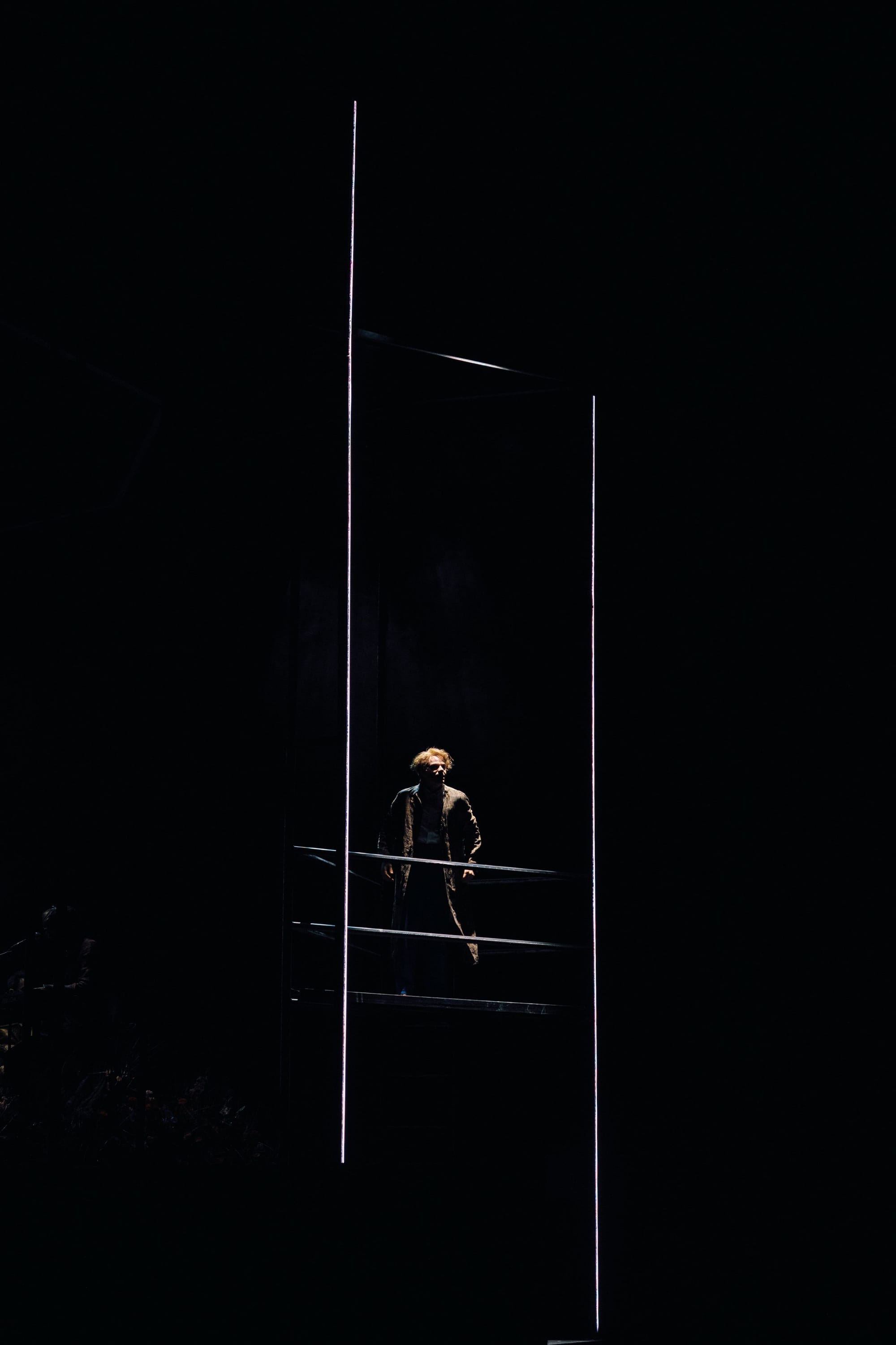
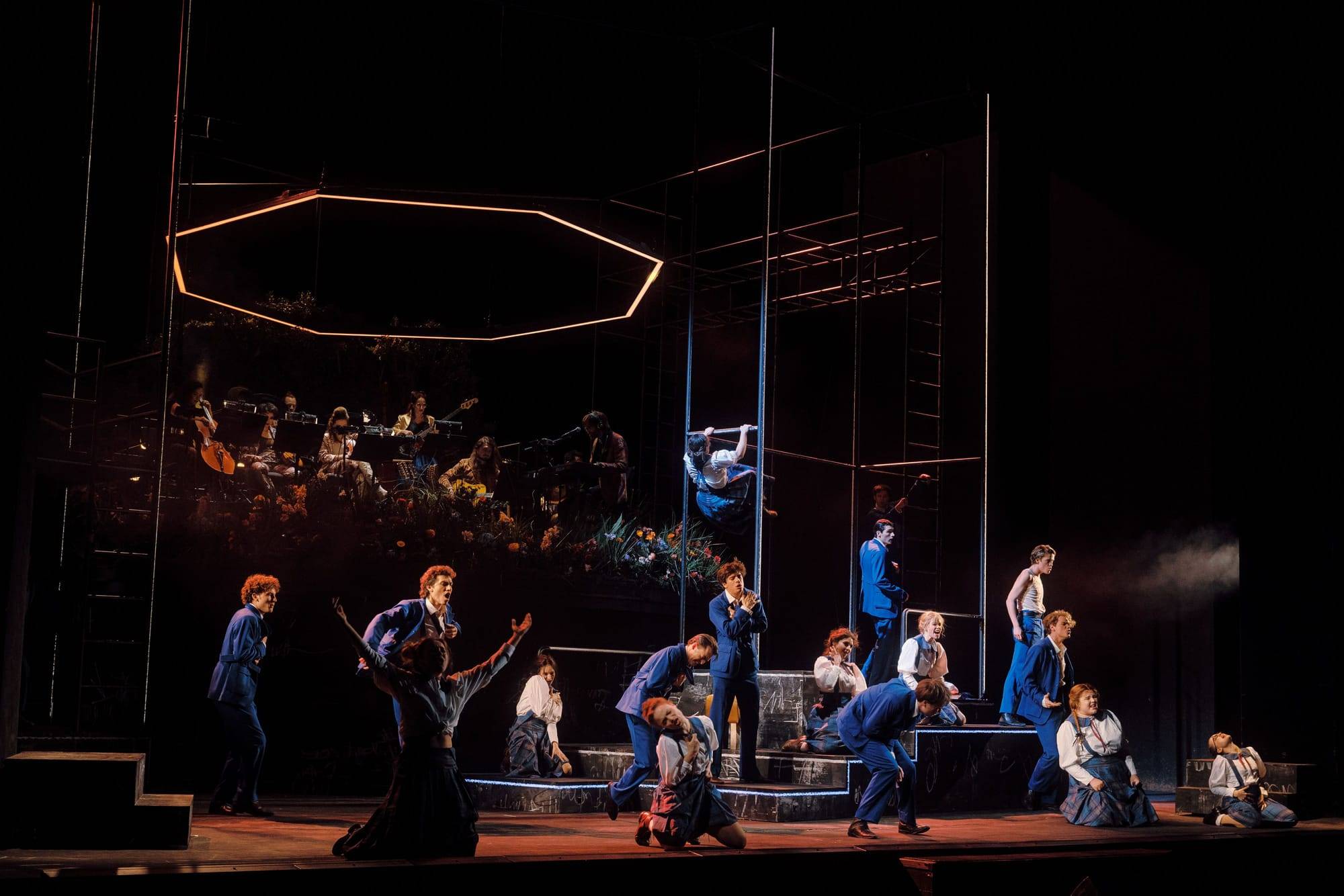
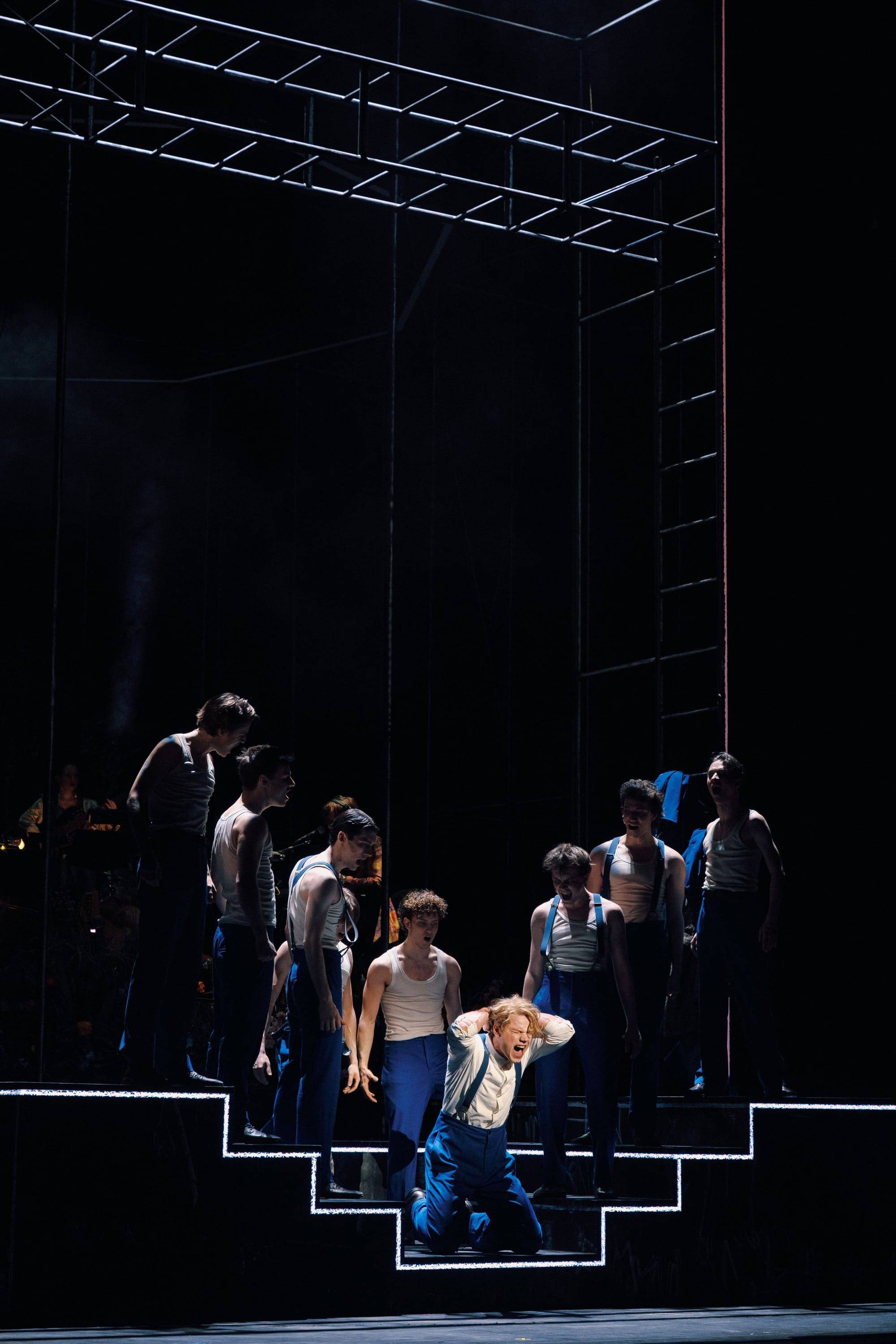
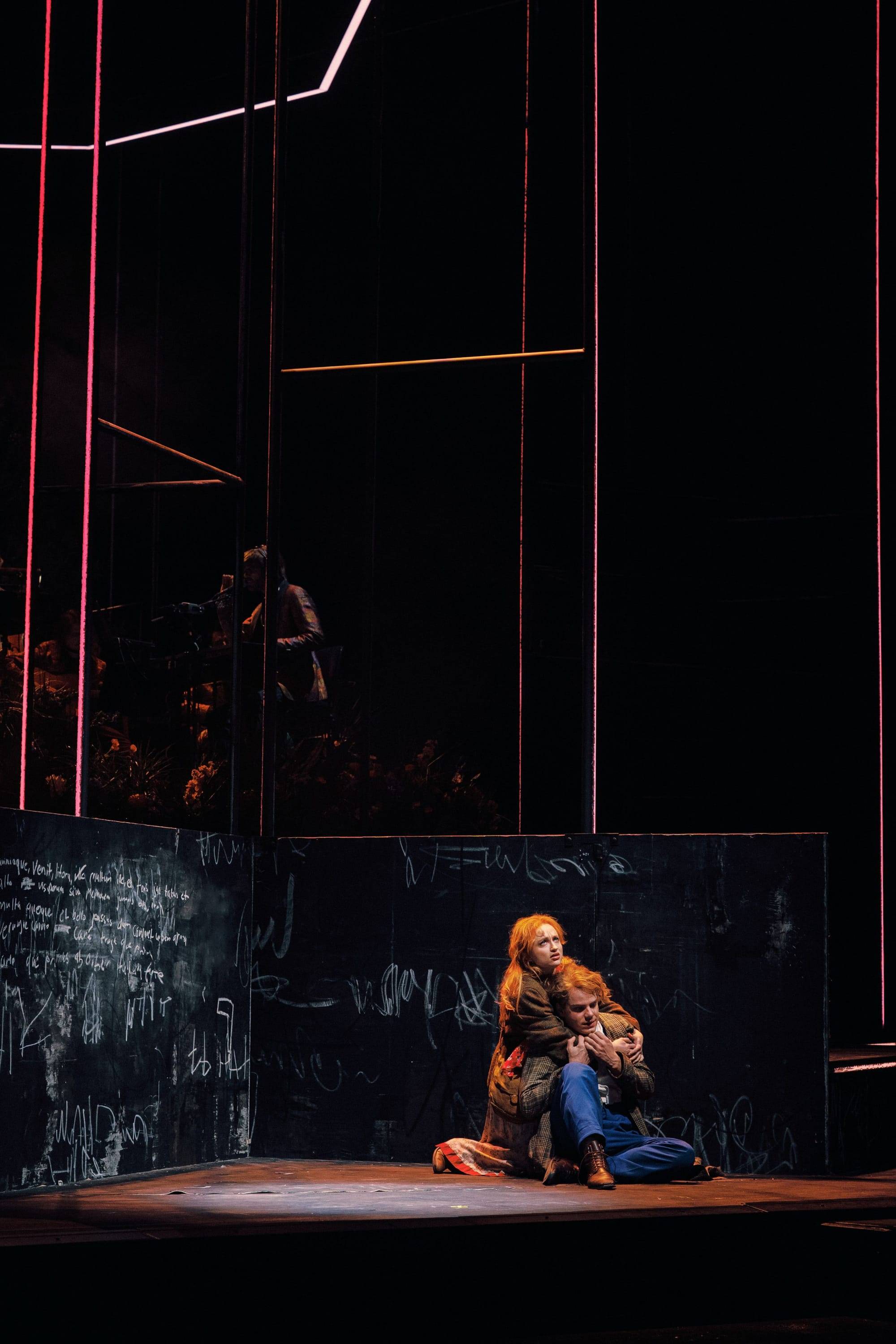
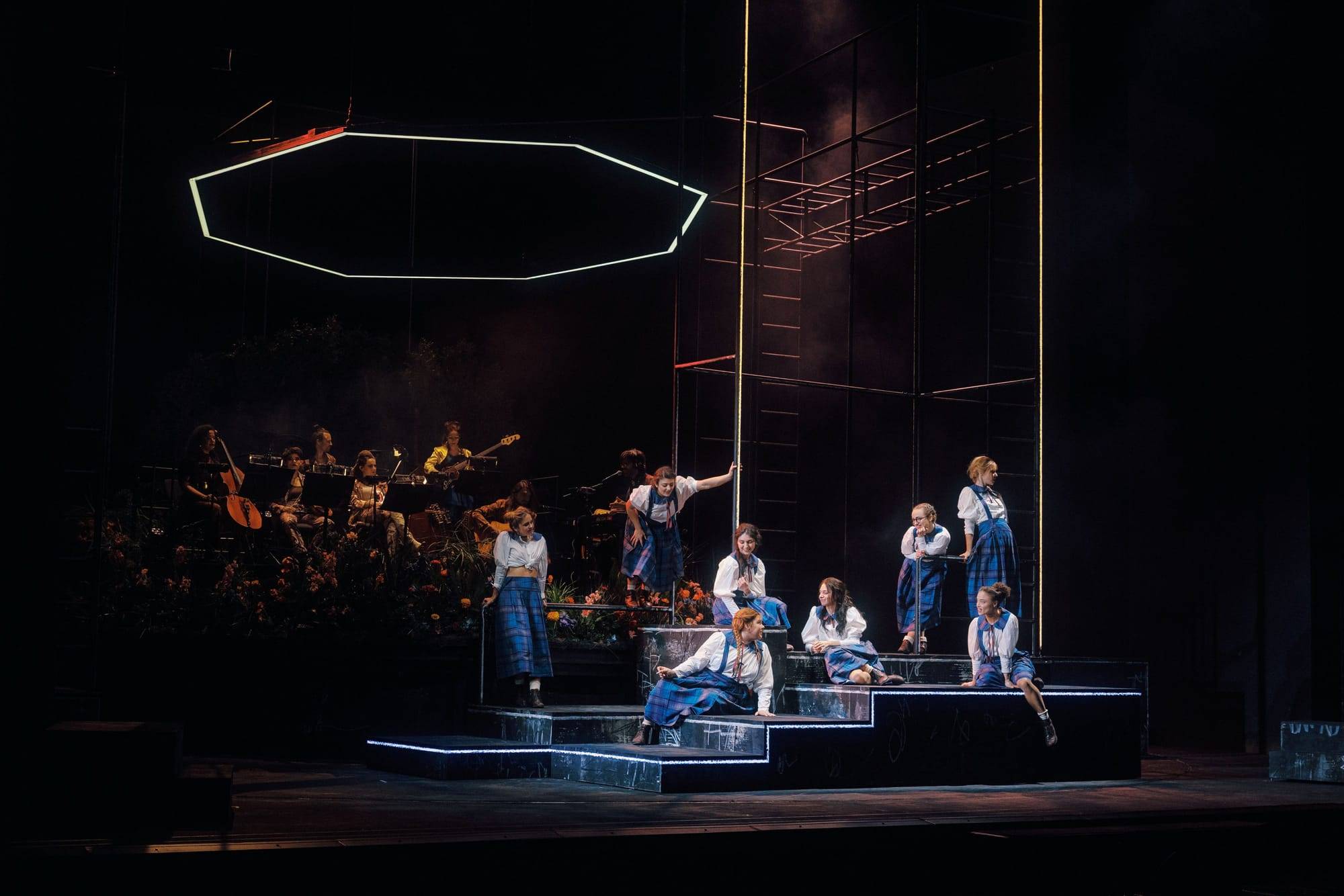
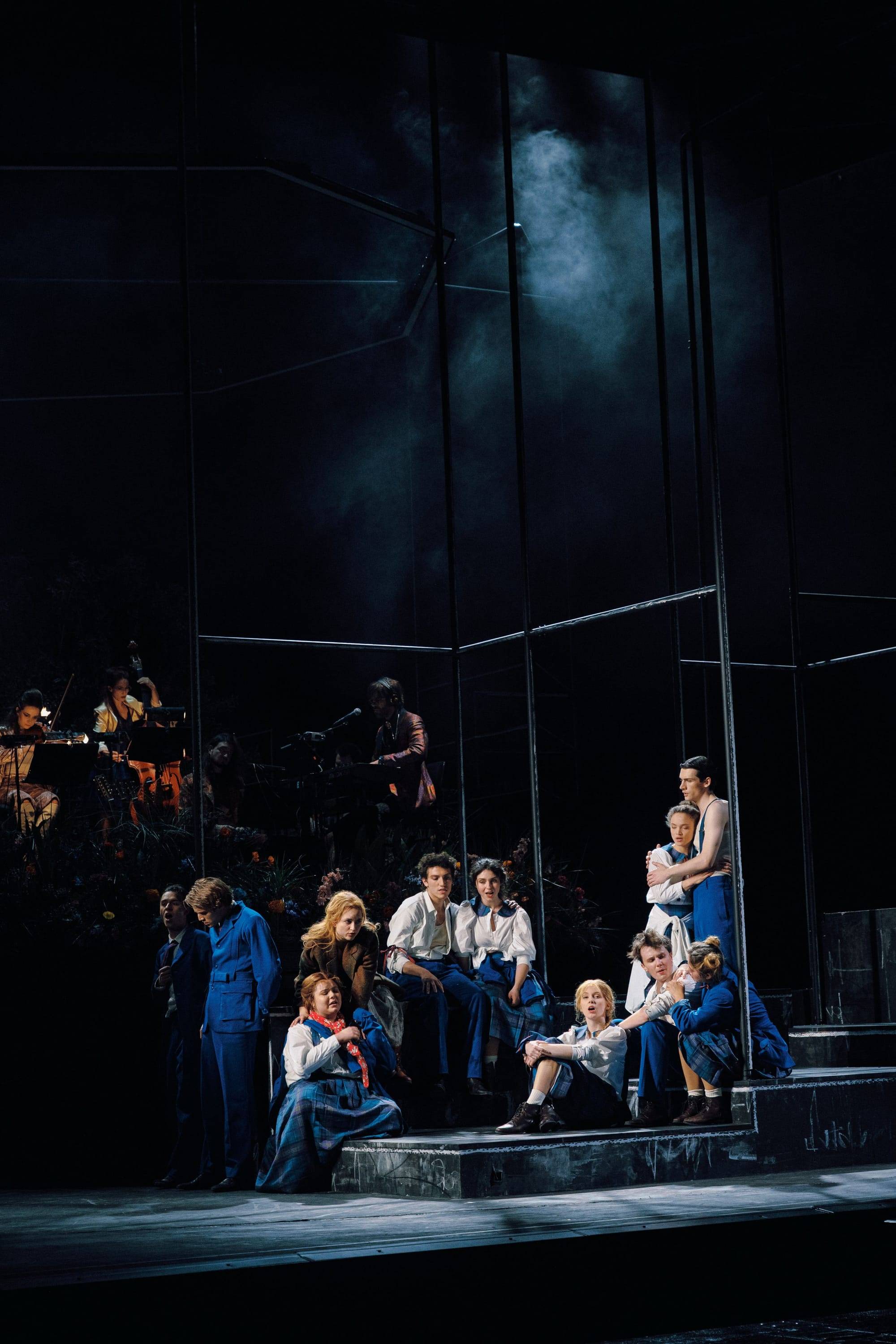
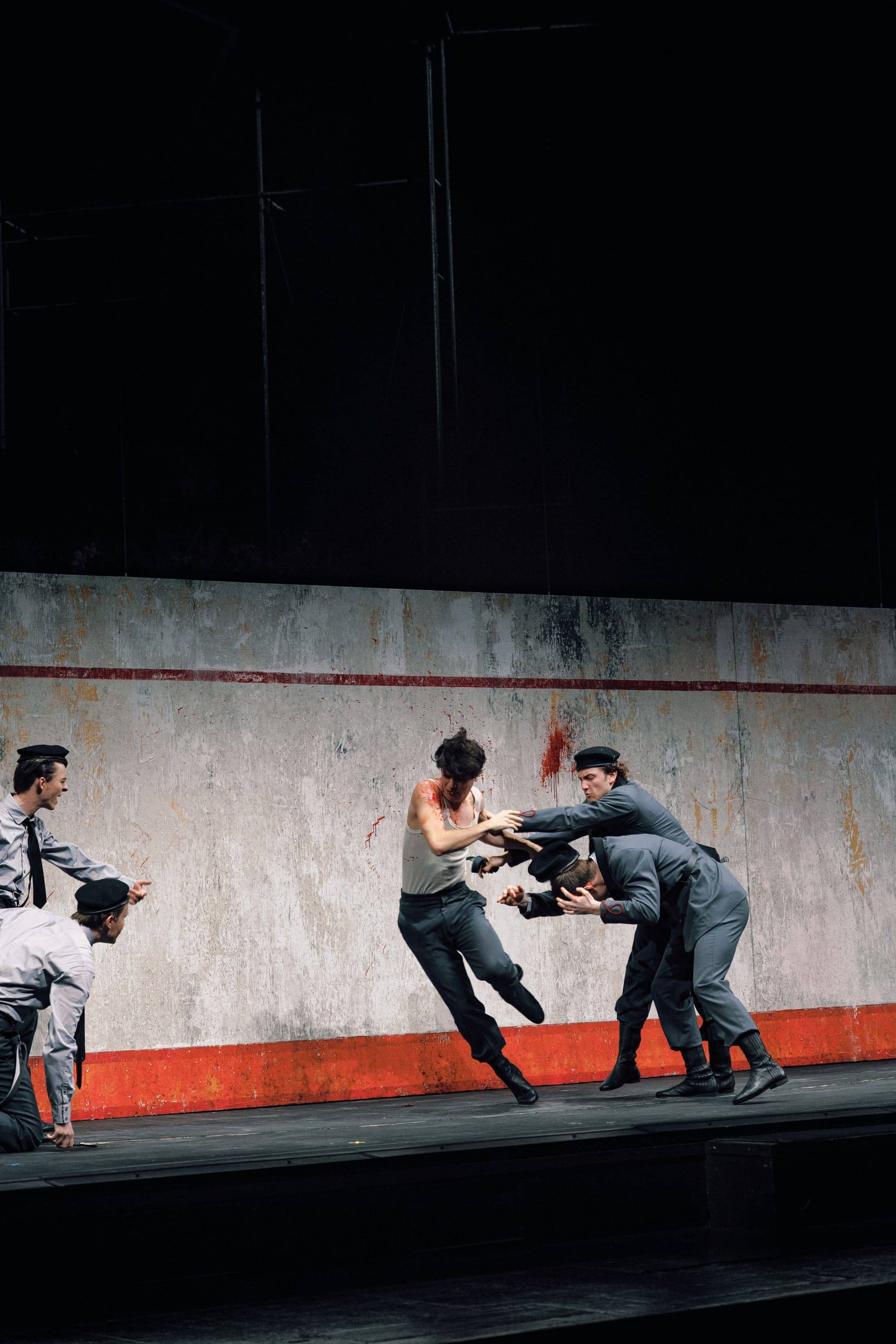
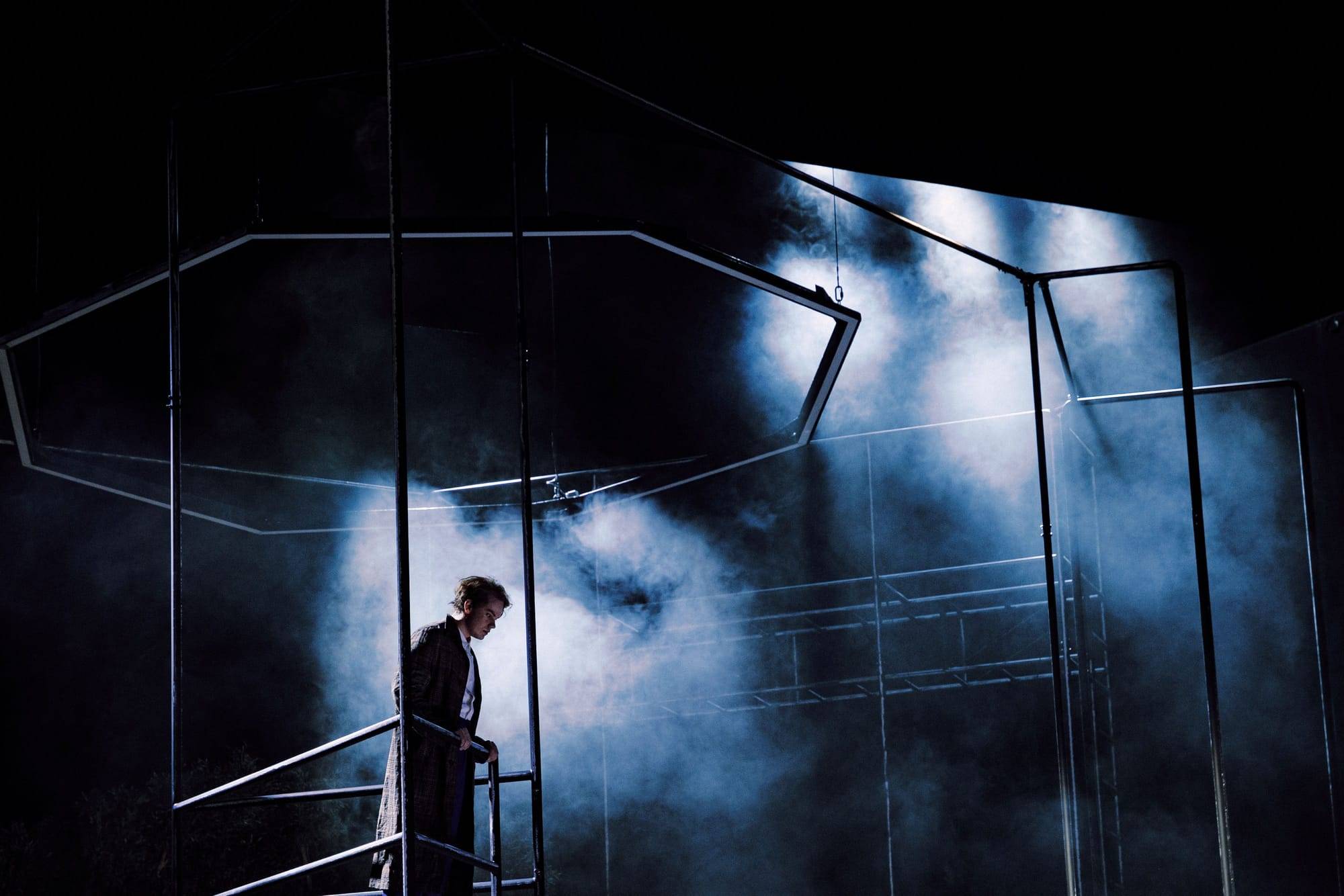
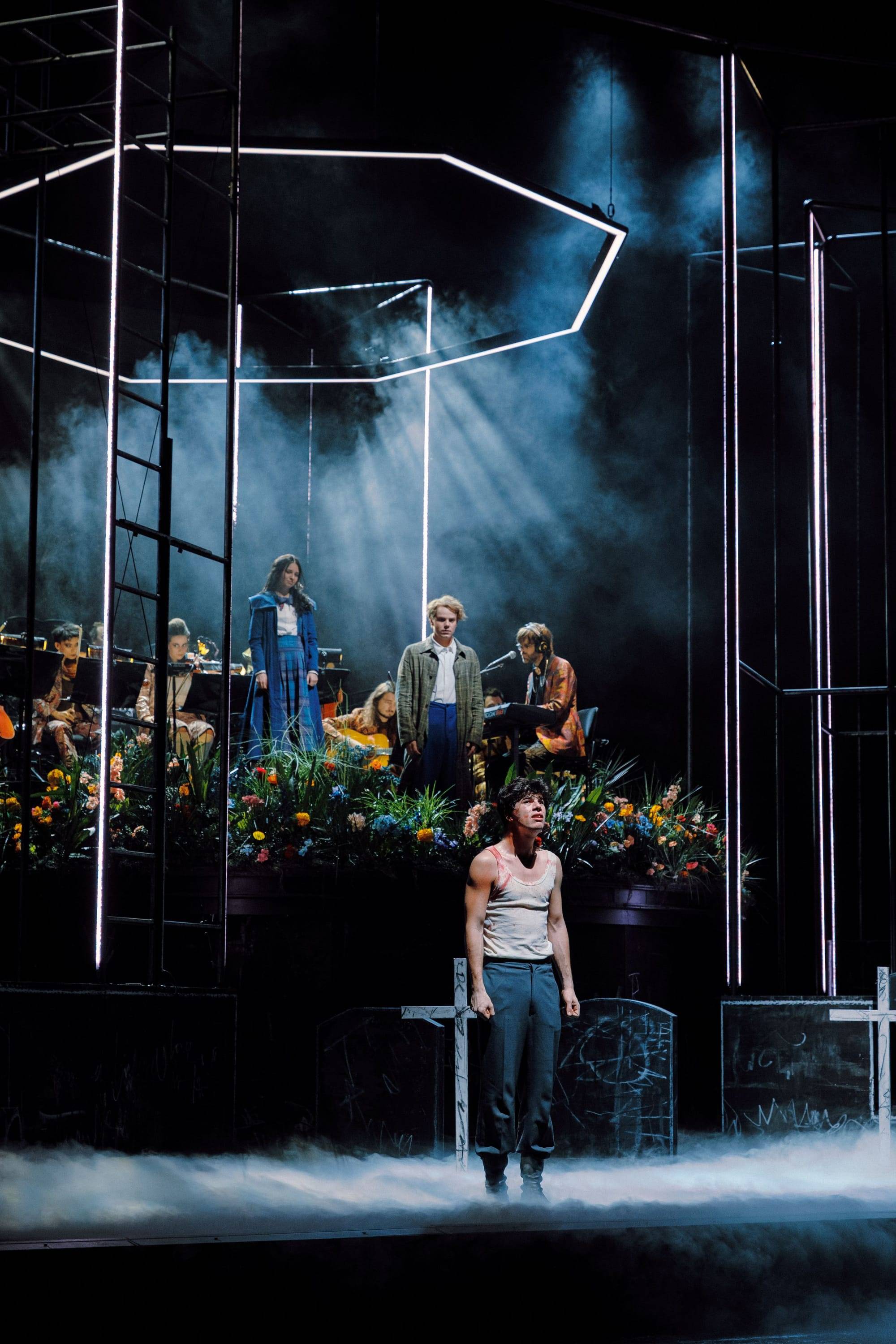
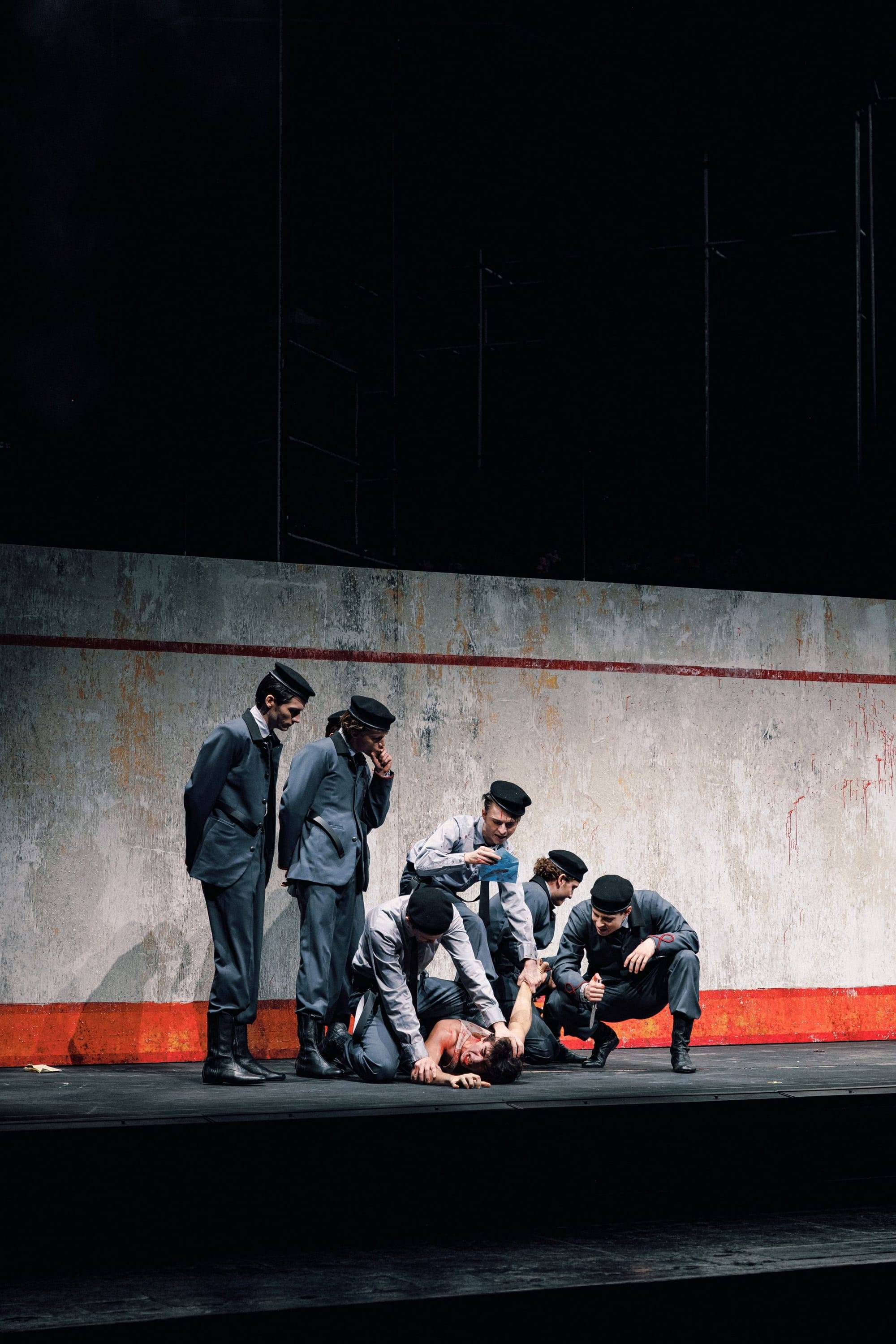
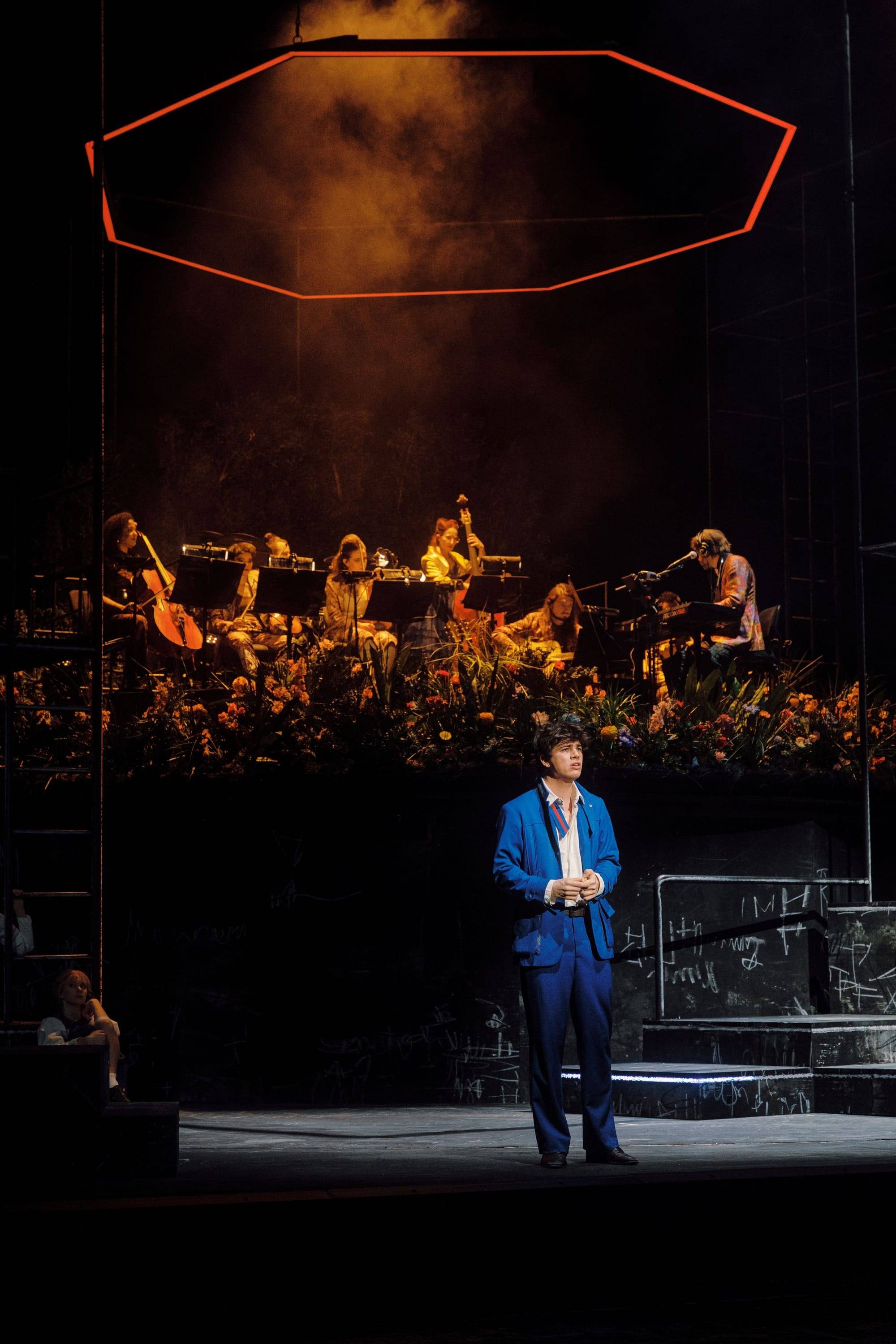
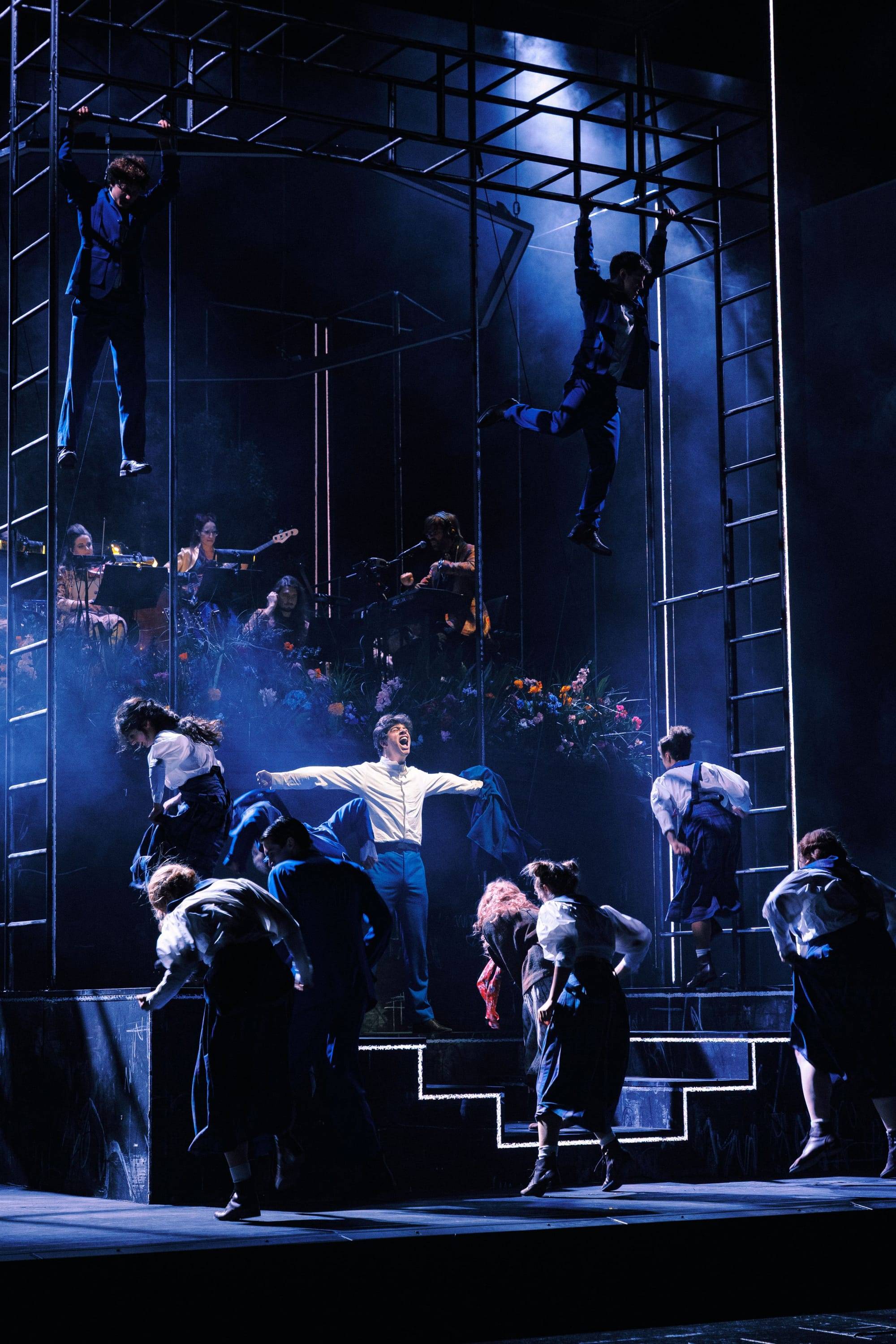
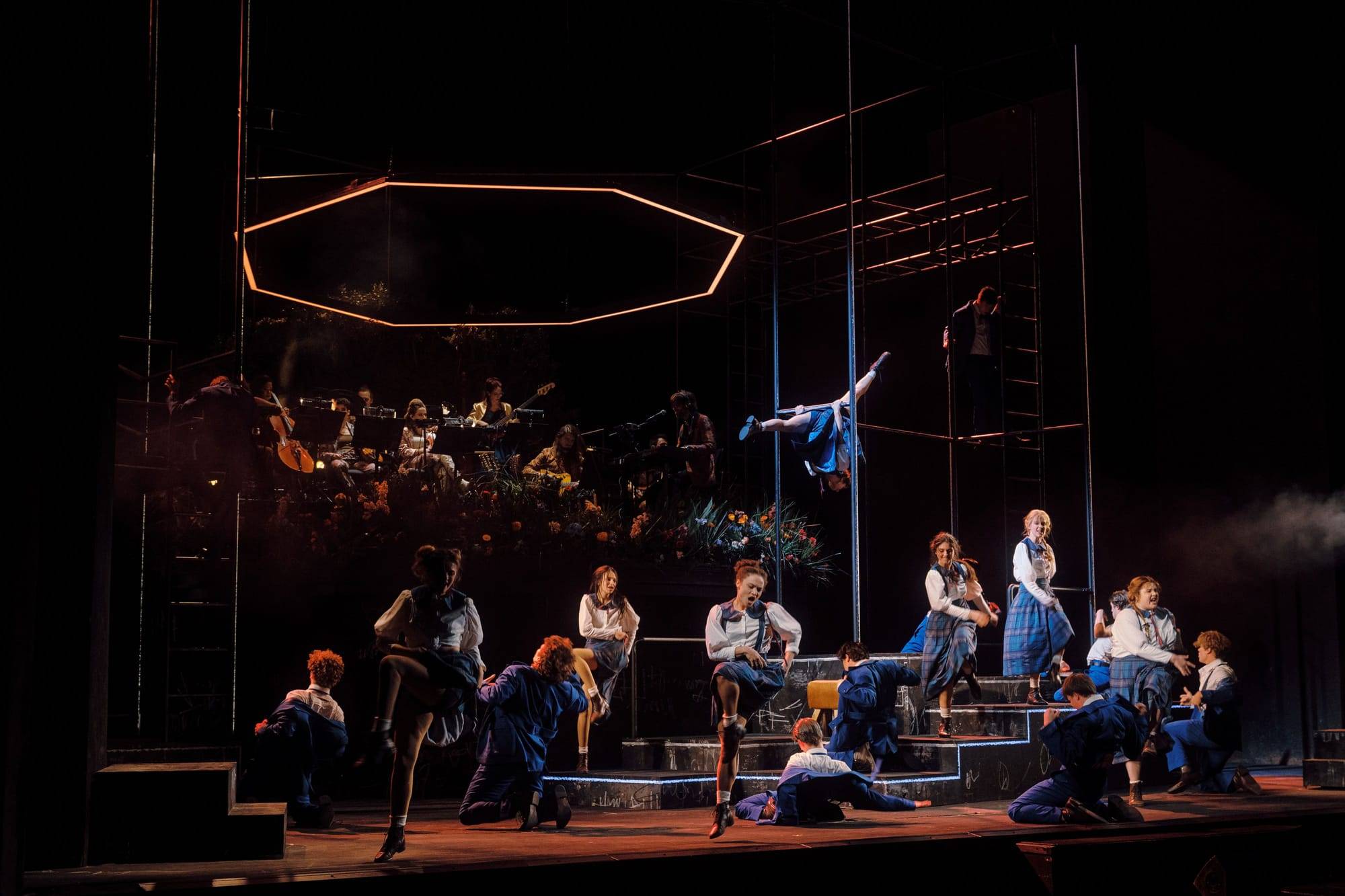
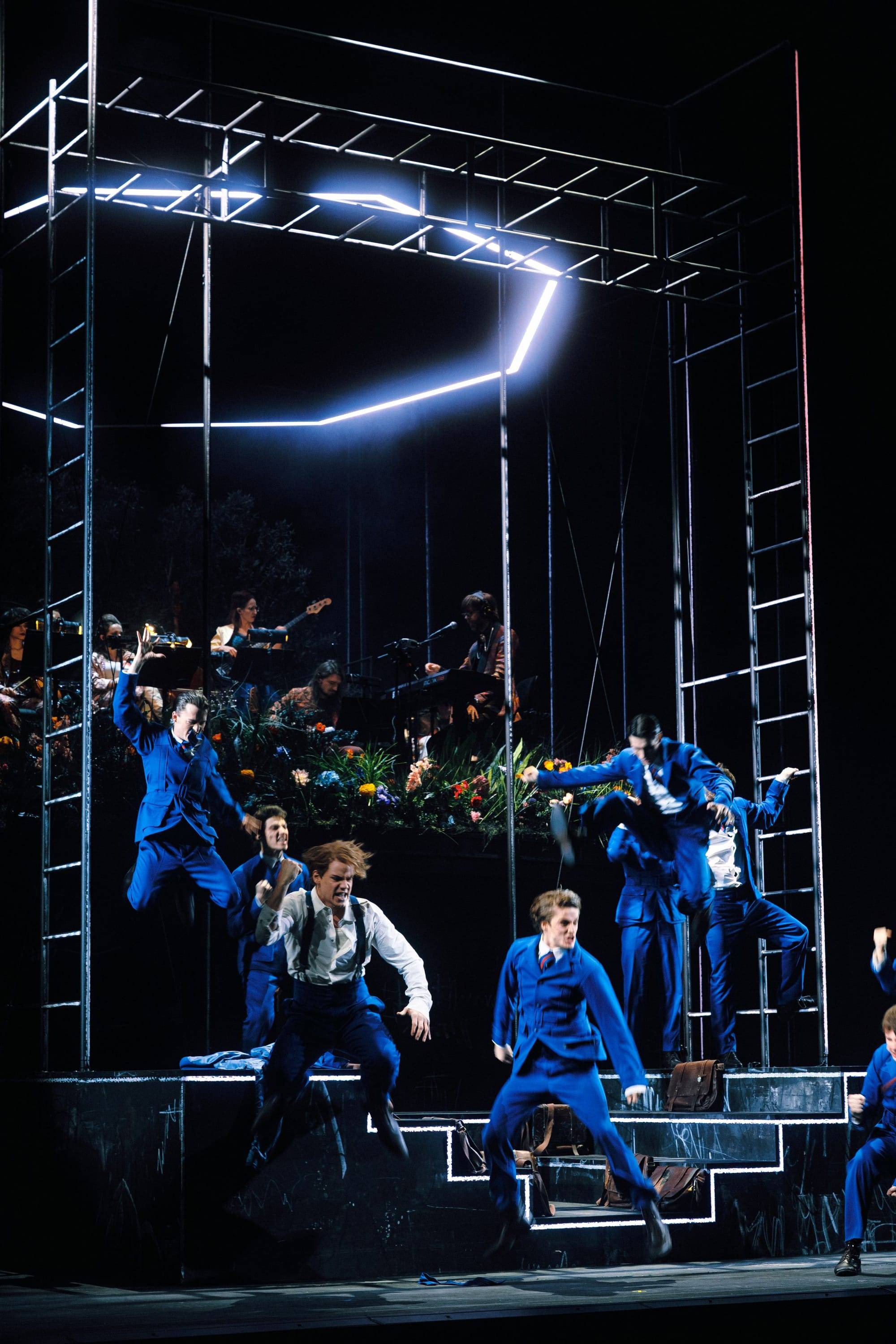
The stage is modeled after historic playgrounds: poles and scaffolding as tall as the stage, erected on the revolving stage, are reminiscent of historic climbing frames and can also be used by the performers for climbing and gymnastics movements. As the revolving stage rotates, different settings—school, church, forest, etc.—come into focus; however, the climbing frames, a few walls, and platforms always form the backdrop, and the locations are not depicted realistically. The structure is also illuminated by LED lights located along the edges and on the poles. The band is positioned in the center of the revolving stage. They are seated in the midst of a paradise-like garden, represented by plants and flowers arranged around the band in the center of the stage. The band’s costumes are colorful, but the costumes of the actors and actresses are based on historical costumes from the period in which *Spring Awakening* is set: Germany at the end of the 19th and beginning of the 20th centuries. In other words, the costumes are subdued in color, reminiscent of school uniforms, though each character personalizes their own.
Articles from our Weborello
“Magnificent Young Voices”: Press Reviews of the Musical Spring Awakening
“It could be the start of the next cult production,” read one review of the acclaimed premiere of the musical Spring Awakening.

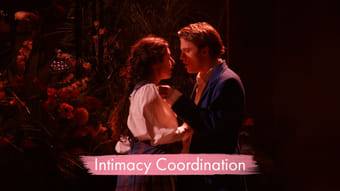
Responsibility and Respect: Intimacy Coordinator
In the artistic team of our musical premiere ofSpring Awakening, there is a position called Intimacy Coordinator. What exactly does that involve? And how does this role change the rehearsal process?

5 reasons you shouldn’t miss Spring Awakening
Spring Awakening is a rock musical based on Frank Wedekind’s famous play Frühlings Erwachen. On 21 February 2026, the production will premiere at the Volksoper with a very young ensemble. We have put together five good reasons why you absolutely shouldn’t miss this performance!
.jpg)
Rehearsals begin for the musical Spring Awakening
The ensemble of the musical Spring Awakening is working intensely toward our next premiere: On February 21, 2026, the gripping rock musical about the challenges of growing up will celebrate its premiere at the Volksoper.
.jpg)
Press comments
At the end, everyone rose to their feet in applause; it may well have been the start of the next cult production.
Die Presse
23. February 2026
Spring Awakening takes us into the most drastic time of life. And it shows that a musical does not have to be light fare to inspire. (…) Youthful energy, suffering and love — you leave the Volksoper hoping that one day we will do better.
Kurier
23. February 2026
The young performers act, tumble, fight, and sing their hearts out, impressing especially in the dramatic scenes that give them the opportunity to fully develop their roles.
Kronen Zeitung
23. February 2026
You would have to be very out of touch with yourself not to swallow back tears here; to remember that time when everything seemed enormous and insurmountable — things that are now simply part of adult routine. The musical by Duncan Sheik (music) and Steven Sater (book and lyrics) brings all of this vividly back to mind (…).
Kurier
23. February 2026
The Volksoper Wien’s presentation of Spring Awakening stands as one of the most electrifying and emotionally resonant musicals of the 2025/26 season. This acclaimed rock musical (...) retains its raw emotional impact while gaining new life and context within the Volksoper’s innovative staging.
European News Agency
23. February 2026
